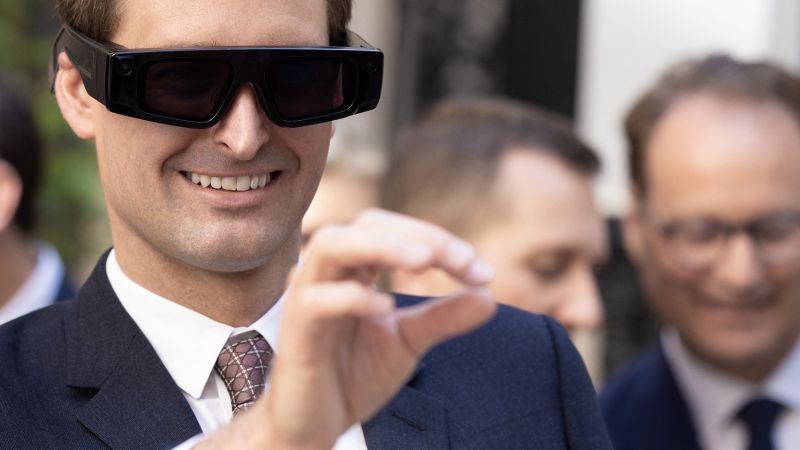
Several tech companies, including Snap, Meta, and Google, are investing heavily in AI-powered smart glasses, betting that advancements in artificial intelligence will make them more useful and appealing than previous iterations like Google Glass; the smart glasses market is projected to grow significantly, with ABI Research estimating shipments to increase from 3.3 million units in 2024 to nearly 13 million by 2026, driven by AI's ability to process information and provide real-time assistance, though challenges remain in addressing privacy concerns and convincing consumers of their necessity.
The technology sector is witnessing a renewed and significant push into AI-powered smart glasses, with major players like Meta, Google, and Snap committing substantial resources, driven by advancements in artificial intelligence that promise to overcome the limitations of earlier attempts such as Google Glass. Current AI models capable of simultaneous image, video, and speech processing, alongside conversational responses, are seen as key enablers for creating genuinely useful and user-friendly eyewear. Meta has reported early traction, selling two million pairs of its Ray-Ban Meta AI glasses since their 2023 debut, while Snap has announced AI-equipped eyewear for 2026, and Google is integrating its Gemini assistant into prototype glasses. Market research firms project substantial growth: ABI Research estimates smart glasses shipments will rise from 3.3 million units in 2024 to nearly 13 million by 2026, and IDC forecasts the market for Meta-like smart glasses will expand from 8.8 million units in 2025 to almost 14 million in 2026. This strategic pivot is fueled by the saturation of the smartphone market and the ambition to develop new hardware ecosystems around AI. However, significant hurdles remain, including addressing consumer privacy concerns, justifying the necessity of another tech device, achieving fashionable designs, and managing costs, with current models like Meta's priced around $300. The recent decline in global smartwatch shipments serves as a pertinent reminder of consumer selectivity for ancillary technology, underscoring the challenge of convincing a broad audience to adopt smart glasses despite the industry's long-term vision of glasses potentially succeeding smartphones.
AI-powered research, real-time alerts, and portfolio analytics for institutional investors.
Request DemoOverall Sentiment
moderately positive
Sentiment Score
0.60
Ticker Sentiment
