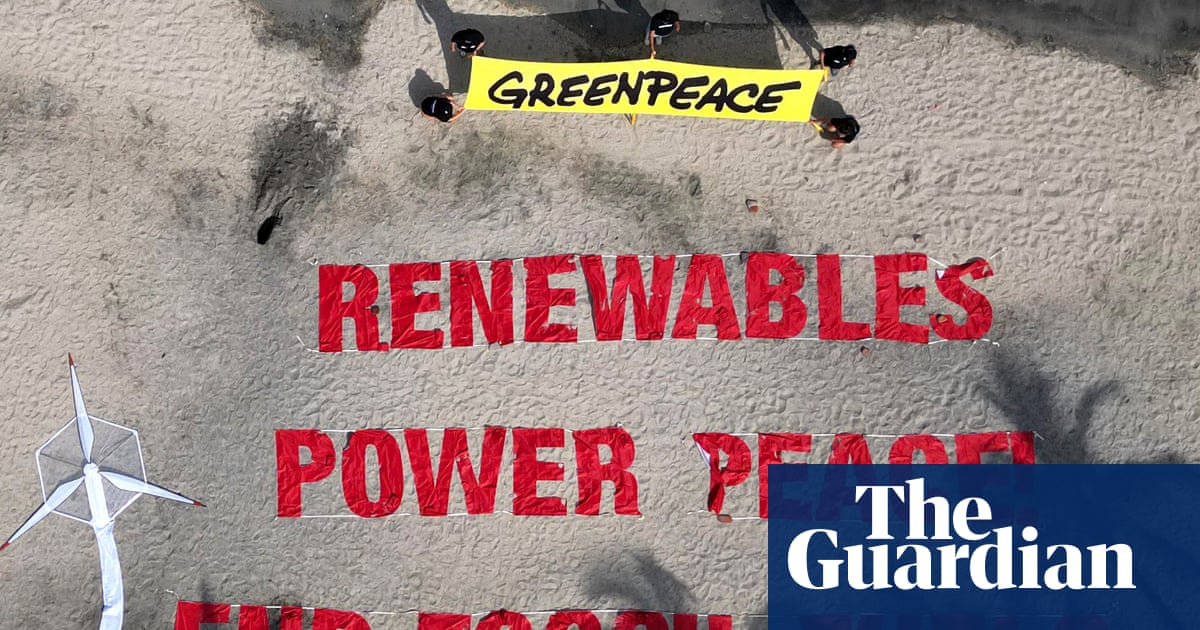
Oil prices have surged to their highest level since Russia’s invasion of Ukraine after US-Iran tensions raised the risk of prolonged disruption in the Gulf and Strait of Hormuz. The article argues that the spike in fossil-fuel costs is accelerating global interest in solar, wind and nuclear power, with 59 countries at a Colombia summit agreeing to develop roadmaps to move away from fossil fuel dependency. The near-term tone is risk-off for energy markets, but structurally supportive for renewables and electrification.
The key market implication is not simply higher oil prices; it is a behavioral regime shift that makes energy security a capital-allocation priority rather than an abstract climate preference. That tends to accelerate permitting, procurement, grid capex, and domestic manufacturing subsidies for electrification, especially in jurisdictions trying to avoid both US fossil leverage and Chinese hardware dependence. The first-order beneficiaries are not just pure-play renewables, but also enabling infrastructure: transmission, transformers, power electronics, grid software, and storage supply chains that become the bottleneck once governments move from targets to execution. For equities, the more important second-order effect is that persistent oil shocks improve the relative economics of electrification across transport and distributed generation, but with a lag of quarters, not days. That argues for a slower-burn rerating in EV and clean-tech names rather than an immediate beta spike, because consumer adoption and fleet replacement respond to fuel inflation only after confidence in price persistence builds. Tesla is the cleanest listed proxy here, but the bigger opportunity may be in suppliers to the electrification stack that benefit regardless of whether any single EV brand wins share. The contrarian risk is that this is a policy headline masquerading as a secular inflection. If the Iran situation de-escalates or supply disruption proves temporary, crude can unwind faster than governments can re-engineer energy systems, leaving the ‘renewables boost’ narrative under-monetized in the near term. Another key constraint is the China dependence problem: any rush into electrification raises procurement and national-security concerns that can delay projects, so the trade is likely to be messy and uneven rather than a straight-line green rally. Net: the near-term trade is less about chasing solar and more about owning the picks-and-shovels of grid buildout while maintaining a selective long on EV optionality. The biggest medium-term winners are companies that sit between energy policy and physical deployment, because they get paid whether the transition is driven by climate goals or by fear of imported fossil fuel volatility.
AI-powered research, real-time alerts, and portfolio analytics for institutional investors.
Request DemoOverall Sentiment
mildly positive
Sentiment Score
0.15
Ticker Sentiment
