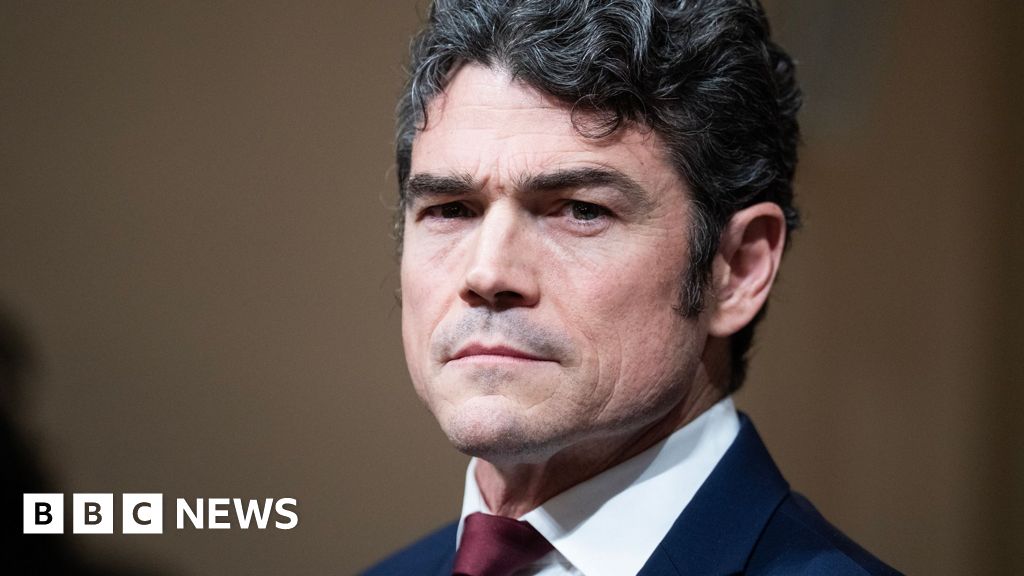
National Counterterrorism Center Director Joe Kent resigned, publicly opposing the Trump administration's war in Iran and urging the president to 'reverse course.' Kent — a 45-year-old US special forces and CIA veteran whose wife was killed in Syria — said Iran posed 'no imminent threat' and accused pro-Israel influence and media misinformation, becoming the most high-profile internal critic of the US-Israeli operation. The resignation raises political and geopolitical uncertainty and could modestly increase risk premia on defense and geopolitics-sensitive assets. Immediate broad market impact is likely limited, but monitor for further high-level departures or escalation that could move oil, defense stocks, or overall risk sentiment.
A high-profile internal fracture in national security decision-making increases short-term policy uncertainty and therefore market risk-aversion over days–weeks. Expect compression in risk assets driven by flows into safe havens (USTs, gold) and a jump in realized volatility; these moves will be punctuated by news events and statements, creating tradeable spikes rather than a smooth trend. Defense primes are the obvious headline beneficiaries if the conflict persists, but procurement lead-times and budget politics mean revenue upside is lumpy and realized over 6–24 months. Conversely, sectors sensitive to travel, insurance, and global logistics will see immediate demand shocks and higher operating costs; shipping and reinsurance spreads widen quickly on geopolitical headlines. Politically, visible internal dissent raises the probability of a policy pivot or accelerated diplomacy within 2–8 weeks as the administration seeks to close ranks with voters and stakeholders; that is the primary reversal catalyst. Tail risks include broader regional escalation (months) that would sustain risk-off beyond tactical windows and create structural fiscal implications—higher deficits and longer-term upward pressure on rates if sustained. Net: treat the next 2–6 weeks as a volatility-rich environment where directional trades should be paired with event hedges. Size defense exposures for duration (6–18 months) but fund them with short-dated risk-off hedges (days–weeks) and keep conviction nimble to a de-escalation signal (diplomatic ceasefire, high-level meetings) which would generate rapid mean-reversion.
AI-powered research, real-time alerts, and portfolio analytics for institutional investors.
Overall Sentiment
mildly negative
Sentiment Score
-0.20
