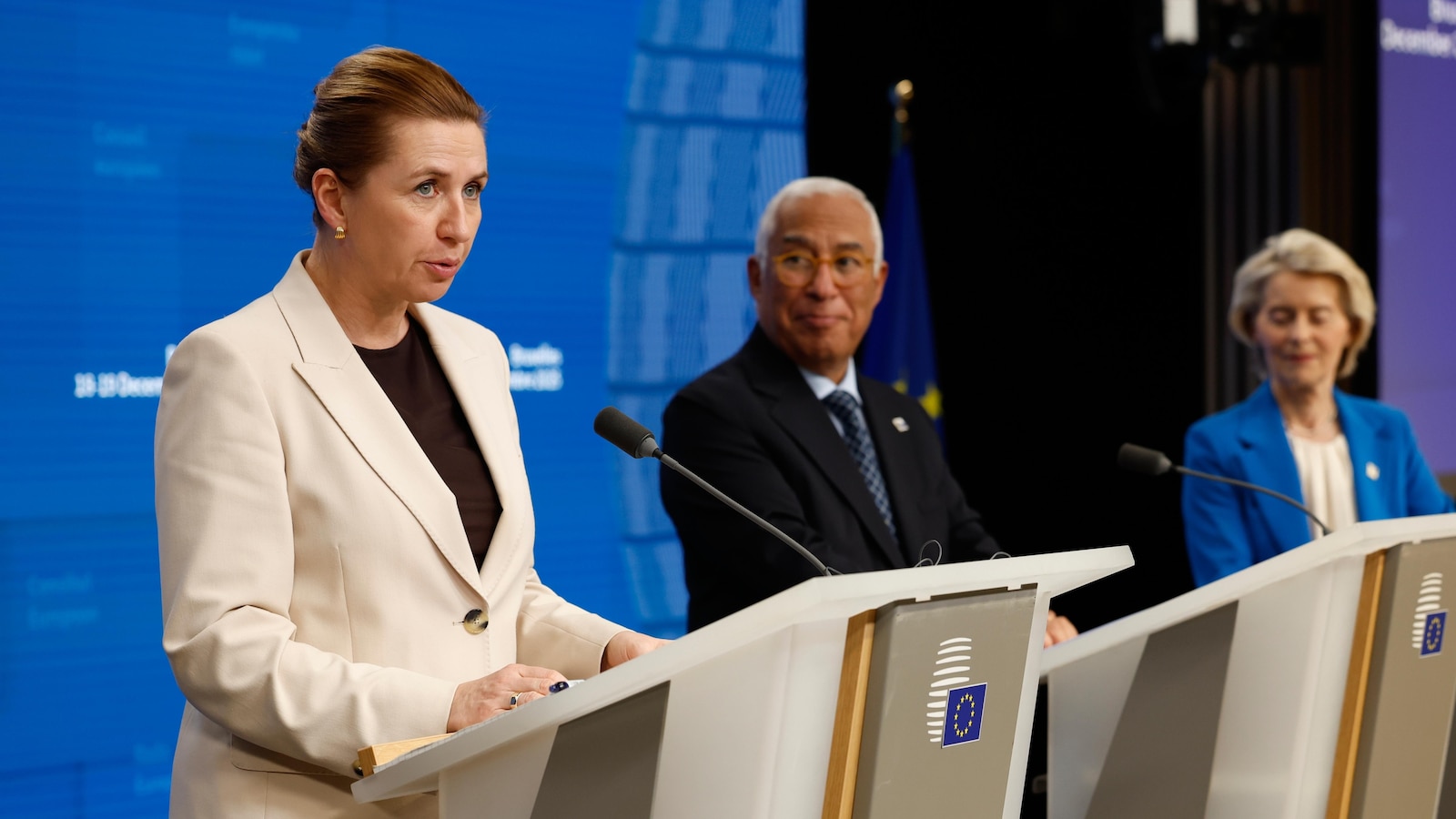
EU leaders approved a €90 billion interest-free loan package to Ukraine for 2026-27 to cover military and budgetary needs after plans to use frozen Russian assets collapsed on legal and Belgian objections. The IMF estimates Ukraine needs €137 billion for 2026-27; roughly €210 billion of Russian assets are frozen in Europe (about €193 billion at Euroclear), and Russia’s central bank has sued Euroclear, complicating seizure/reparations plans. The EU will instead borrow on capital markets while reserving rights to use immobilized assets later; several member states (Hungary, Slovakia, Czechia) opposed the package politically but did not block it.
Market structure: The EU’s decision to fund a €90bn interest-free loan for Ukraine by borrowing on capital markets shifts risk from ad-hoc asset seizure to sovereign/EU-issued debt issuance — expect incremental EUR sovereign supply and at least +10–30bps pressure on core Euro yields in the first 6–12 months if issuance is front-loaded. Clear winners: European defense manufacturers (RHM.DE, LDO.MI, HO.PA, BA.L) and commodity suppliers to defense; losers: clearing/settlement incumbents (Euroclear operational/legal risk), Russian-linked asset holders, and politically exposed sovereigns like Hungary. Short-term demand for safe EUR assets may increase but will be met with larger supply, raising term premia.
Risk assessment: Tail risks include Russian retaliation (cyber or energy shocks), Belgian/Euroclear legal rulings that disrupt settlement (days–weeks), and political fragmentation if Hungary/others escalate — each could cause >100bps moves in sovereign spreads or double-digit equity drawdowns. Immediate (days) risk: legal headlines and Euroclear lawsuit developments; short-term (weeks–months): primary market pricing and issuance execution risk; long-term (quarters–years): precedent of using immobilized assets as repayment that could reduce global legal certainty and raise clearing costs. Hidden dependency: market appetite for large EU joint issuance; failure forces fiscal transfers or rating pressures.
Trade implications: Tactical plays: long European defense equities via 6–12 month call spreads to capture accelerated defense budgets; hedge EU-financial tail with 3-month put spreads on EURO STOXX Banks (SX7E). Credit trades: buy 6–12 month CDS protection on Hungary (expect 50–150bps widening) and short German Bund futures modestly (size 0.5–1% NAV) to express higher term premium. FX/sovereign pair: long PLN vs HUF (1–3% NAV) over 3–12 months to capture political divergence; increase hedges upon adverse legal rulings.
Contrarian angles: Consensus may underprice legal/operational risk from Euroclear litigation and overrate immediate EUR strength from political support; a negative Belgian legal opinion or Russian countermeasures would be a forced-deleveraging catalyst. Historical parallel: post-2014 sanctions created multi-year defense upside and elevated EM Europe sovereign stress — expect similar asymmetric payoff. If markets overreact (10–15% selloff in EU financials), selectively add core European banks at 5–8% yields and trim defense exposure at >40% rally to lock gains.
AI-powered research, real-time alerts, and portfolio analytics for institutional investors.
Request DemoOverall Sentiment
mixed
Sentiment Score
0.12
