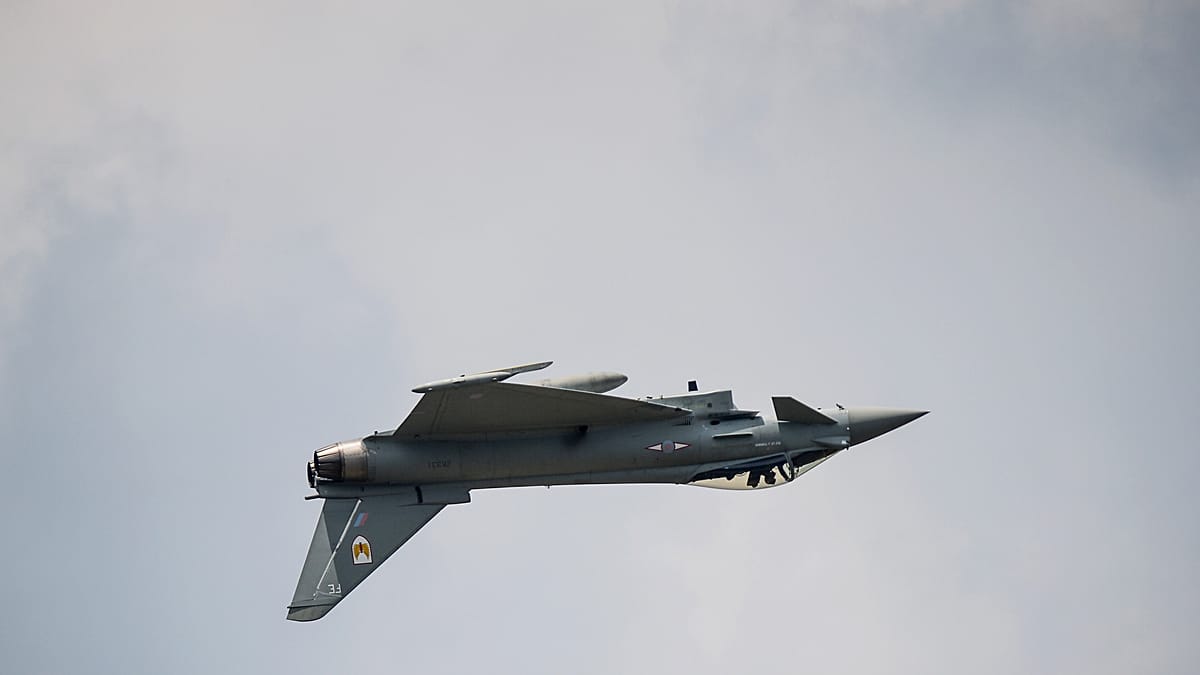
The British Defence Ministry said Typhoon FGR4 jets, supported by a Voyager refuelling tanker, conducted joint strikes with France Saturday on an underground facility north of Palmyra in Homs province alleged to be an Islamic State weapons and explosives storage site; Paveway IV guided bombs targeted access tunnels and initial assessments indicate the target was successfully engaged and the area was devoid of civilian habitation. The action, coming amid ongoing coalition operations and after recent U.S. strikes following an ambush that killed two U.S. troops and a civilian interpreter, highlights persistent IS activity (estimated 5,000–7,000 members) and reinforces regional geopolitical risk—likely to have limited immediate market impact but to sustain modest risk‑off sentiment and potential sensitivity in energy and risk assets if escalation occurs.
Market structure: Tactical winners are defense primes and suppliers (LMT, RTX, NOC, ITA ETF) that see near-term order re‑rating if governments signal follow‑on strikes or accelerated procurement; losers are EM risk assets, regional airlines/tourism and locally exposed energy mid‑majors where short disruptions can spike costs. Cross‑asset: expect immediate risk‑off flow — safe‑haven bid for USD, JPY, gold (+1–2%) and 5–15bp decline in core yields; oil may gap +1–4% on headlines but sustained moves require wider Gulf exposure.
Risk assessment: Tail risks include escalation to wider regional conflict (low probability) that could drive Brent +10–25% and crash risk assets; sanctions or supply‑chain shocks could force multi‑quarter impacts on energy and shipping insurers. Timeframes: immediate (hours–days) headline volatility; short (weeks–3 months) tactical repositioning; long (quarters–years) only if sustained policy/force commitments change procurement budgets. Hidden dependencies include proxy escalation, insurance premium repricing, and European energy policy responses.
Trade implications: Favor tactical, limited-risk exposures — buy defense exposure via options to cap downside, hedge equities with duration and VIX, and treat oil longs as short-lived — fade rallies with defined-risk short spreads. Pair ideas: long ITA (or LMT) vs short consumer discretionary/airlines to capture relative safety; buy 1–3m IEF to hedge equity risk. Entry windows: act within 48–72 hours of headline stability; trim as volatility normalizes or if yields rise >15bp.
AI-powered research, real-time alerts, and portfolio analytics for institutional investors.
Request DemoOverall Sentiment
moderately negative
Sentiment Score
-0.30
Contrarian angles: Market may overprice permanent defense upside — procurement lead times mean earnings lift is lumpy; oil knee‑jerk rallies commonly mean‑revert (histor parallels: 2018/2019 limited strikes). Unintended consequence: higher marine/inventory insurance benefits insurers (e.g., AON) and freight‑rate arbitrage — consider selective long-insurer exposure vs short cyclical travel. Be prepared to reverse within 2–8 weeks if no wider escalation occurs.
