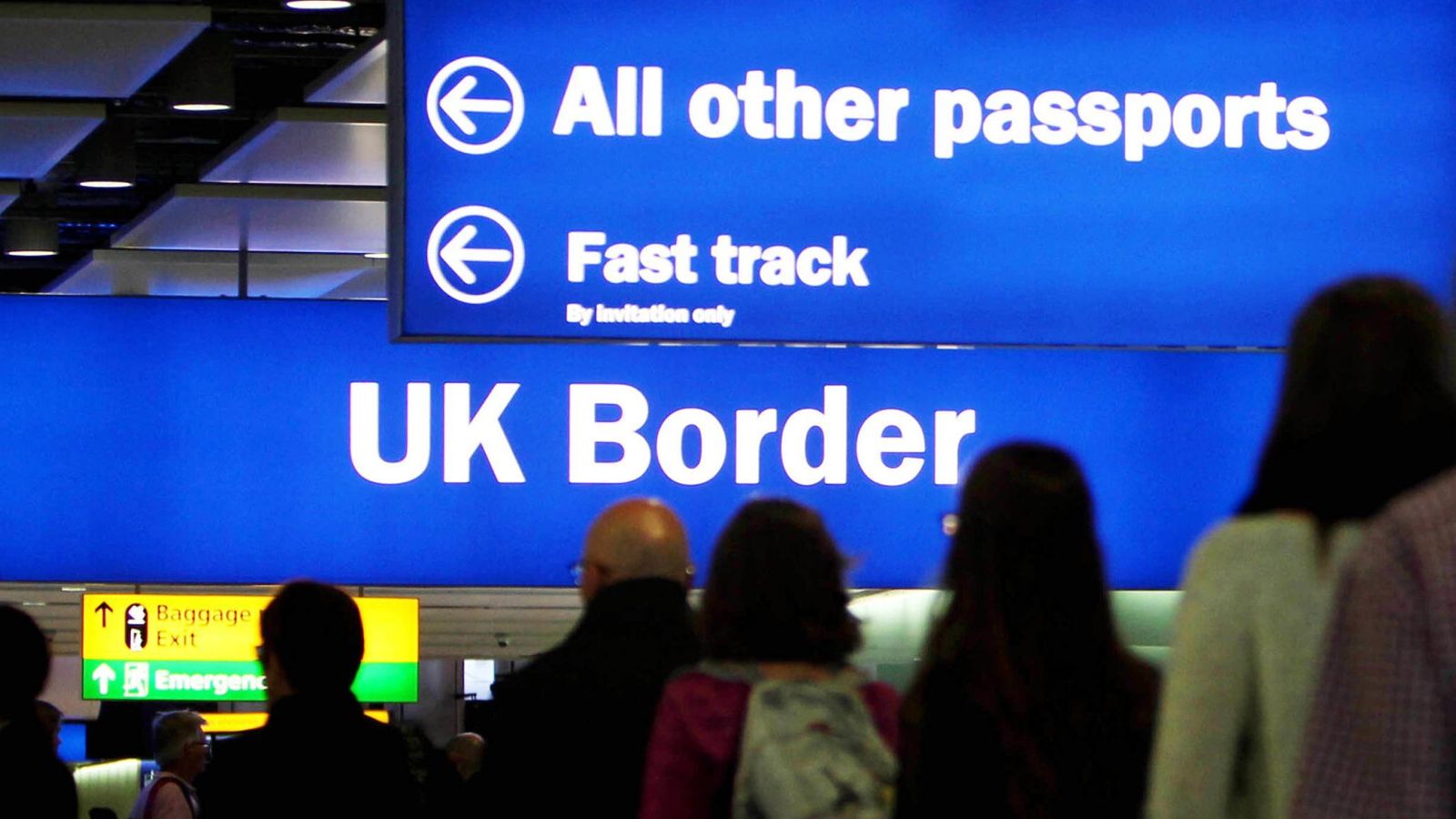
The UK has begun enforcing its Electronic Travel Authorisation (ETA) scheme from 25 February 2026, meaning British dual nationals can no longer enter the UK on only a foreign passport and must present a British passport or a Certificate of Entitlement (£589) or face denied boarding; applying for a British passport costs £94.50. Airlines and carriers must verify documents pre-departure; the ETA (£16, multi-entry, six-month stays, two-year validity, planned rise to £20) applies to non-visa nationals from 85 countries, physical certificates will be digitized and must be linked via a UKVI account — a change that raises consumer costs and could cause localized travel disruption but is unlikely to move financial markets materially.
Market structure: Winners are identity/ID-verification and border-tech vendors (GBG.L, Thales HO.PA, Serco SRP.L) who capture recurring fees and integration contracts as carriers outsource ETA checks; expect 5–15% revenue uplifts for mid-tier vendors over 12 months if they win UK contracts. Losers are short-haul carriers and reservation platforms (IAG.L, EZJ.L, TUI.L) facing higher pre-departure compliance costs, denied-boarding incidents and customer-service payouts; expect incremental per-passenger unit cost pressure of ~£1–£5 and a small hit to ancillary revenue in the first 3 months of enforcement.
Risk assessment: Immediate tail risks (days–weeks) include airline operational disruption and PR spikes from denied-boardings; moderate probability but high impact (stock moves >10%). Short-term (0–6 months) risks are litigation and increased insurance claims; long-term (6–24 months) risk is persistent compliance costs but growing revenue for identity vendors. Hidden dependencies: carriers’ IT integration capability and third-party onboarding timelines; a rollout failure could force the government to pause ETAs, reversing winners/losers quickly.
Trade implications: Go long GBG.L (or Thales exposure) 2–3% NAV with 6–12 month horizon, target +25–40%, stop -12% if contract news absent in 90 days. Short IAG.L or EZJ.L 1–2% with 3-month horizon if weekly boarding-denial reports >50 incidents (catalyst), target -15%, stop +10%. Implement pair trade: long GBG.L vs short IAG.L (ratio 2:1) to isolate border-tech upside vs carrier execution risk; consider 4–6 week ATM call spreads on GBG for capital efficiency.
Contrarian angles: Consensus downplays passport and certificate cost asymmetry — expect a surge in passport applications (cheaper £94.50 vs £589) creating a 30–60 day backlog that benefits HMPO contractors and ID vendors more than airlines are harmed. Historical parallel: EU ETIAS rollout caused temporary disruption but produced durable identity-tech contracts; if rollout stalls, IDS vendors could be oversold short-term—opportunity to buy dips under 15% off peak. Also monitor RDDT regulatory noise (recent fines) as a separate small negative catalyst for social-platform ad markets.
AI-powered research, real-time alerts, and portfolio analytics for institutional investors.
Request DemoOverall Sentiment
neutral
Sentiment Score
0.00
Ticker Sentiment
