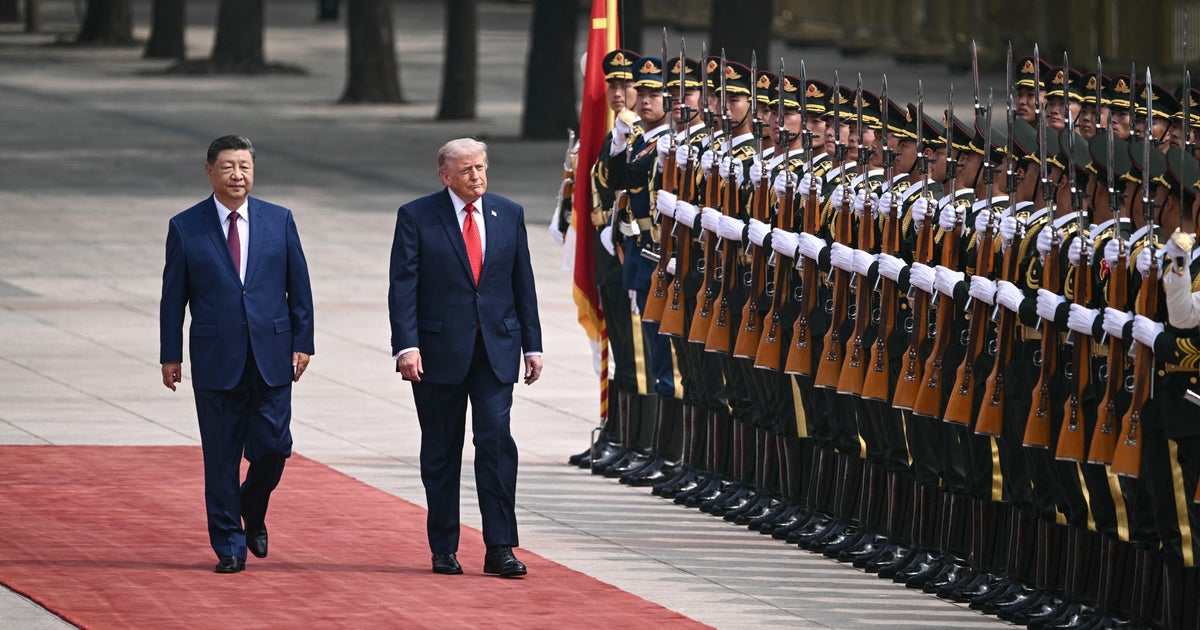
Trump and Xi met in Beijing to discuss trade, tariffs, rare earths, and broader U.S.-China tensions, with both sides signaling interest in stabilizing relations after last year's trade war. The agenda also includes Iran, Middle East oil flows, and Taiwan, keeping multiple geopolitical flashpoints in focus. The meeting is broadly constructive in tone but leaves major policy uncertainties unresolved, which could affect markets tied to chips, rare earths, and global trade.
The immediate market signal is not a breakthrough deal but a reduced probability of a near-term escalation shock. That matters because positioning across semis, consumer hardware, and EV supply chains has been discounting a harsher tariff regime than both sides appear willing to tolerate; the first-order beneficiary is not alpha from better fundamentals, but lower tail-risk and lower implied volatility. In that setup, the most attractive expression is not outright beta long China exposure, but selective longs in names with asymmetric downside if negotiations fail and limited upside if they simply stabilize. The deeper second-order effect is bargaining leverage around chokepoints, not tariffs themselves. If access to critical inputs and export permissions becomes the framework, then companies with China revenue, China manufacturing, or China-bound advanced components gain optionality, while suppliers farther down the chain may face margin pressure as policy concessions get priced in. That is particularly relevant for the AI hardware stack: a stable lane for advanced chip exports can lift shipment expectations, but any “managed” access also caps enthusiasm because it preserves regulatory overhang and makes every incremental approval headline-driven rather than durable. Taiwan and Iran remain the real convexity risks. Taiwan language can reprice defense, semiconductor, and shipping volatility in hours, while the Iran angle is a slower burn through oil and freight costs over weeks to months; a wider Middle East conflict would likely dominate any trade détente in the short run. The market may be underestimating how a temporary U.S.-China thaw could actually increase sensitivity to any negative surprise later, since complacency tends to compress hedging demand and leave crowded longs vulnerable to one headline. Consensus is probably too focused on headline de-escalation and not enough on the fact that this is a negotiation over strategic dependencies. That means the upside case is incremental and path-dependent, while the downside case remains discontinuous. In other words: reduce policy premium first, then buy only where the underlying earnings sensitivity is real and the geopolitical reversal risk is explicitly bounded.
AI-powered research, real-time alerts, and portfolio analytics for institutional investors.
Request DemoOverall Sentiment
neutral
Sentiment Score
0.05
Ticker Sentiment
