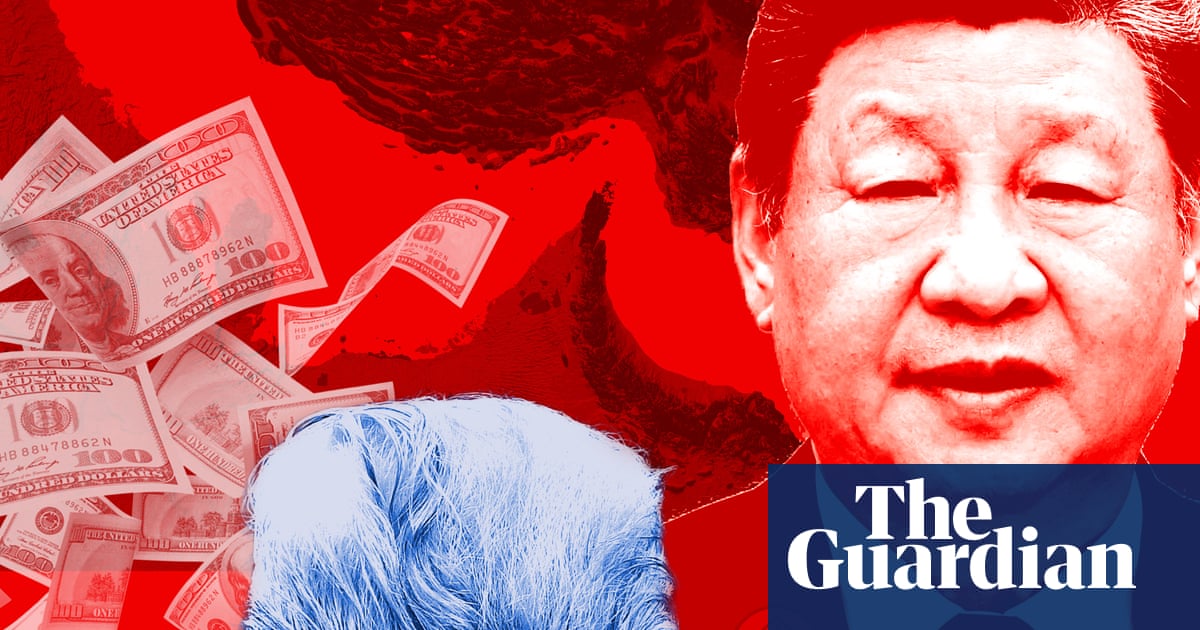
Trump is set to travel to China with a high-profile tech delegation including Tim Cook, Elon Musk, and CEOs from Micron, Cisco, and Qualcomm, raising the possibility of AI and semiconductor-related announcements. The article also highlights a growing regulatory push in the US toward White House review of frontier AI models, alongside intensifying cybersecurity risks from autonomous AI-driven hacking. The piece is broadly informational, but it underscores rising policy and security scrutiny across the AI and chip sectors.
The market read-through is less about headline diplomacy and more about bargaining power across the AI and hardware stack. A China-facing tech summit with Apple, Qualcomm, Micron, Cisco and Tesla in the room increases the odds of selective concessions, but the asymmetry is that any easing would likely be narrow, temporary, and tied to specific product classes rather than a broad policy reset. That favors companies with diversified assembly and end-markets, while leaving semis with concentrated China exposure vulnerable to policy whiplash. The bigger second-order effect is that Washington is drifting toward a China-style model of pre-clearance for frontier AI, which raises compliance costs and slows release velocity for everyone but disproportionately helps scaled incumbents. Larger labs can absorb model review delays and legal overhead; smaller players lose one of their few advantages, which should widen the gap in distribution and compute access over the next 6-12 months. For cyber names, the implication is mixed: rising autonomous-hacking risk increases demand, but it also accelerates a buyer’s-market dynamic where enterprises demand proof of efficacy before spending, compressing sales cycles for less differentiated vendors. The market is probably underpricing how quickly AI-enabled cyber threats can become a budget line item. If the Google/Palo Alto framing is right, this is not a 2027 story; it is a 2-4 quarter procurement cycle as CISOs reallocate from point tools to platform defenses and red-team automation. That should be supportive for the strongest platforms, but negative for adjacent software names exposed to security-spend crowding-out and for companies with large internal-coding footprints that expand attack surface. Contrarian view: the obvious long AI-security trade may be crowded, while the overlooked trade is that regulatory drag on model deployment could cap near-term monetization for the very large-cap AI beneficiaries. In other words, the policy impulse is modestly bullish for cyber spend and modestly bearish for incremental AI hype multiple expansion. The risk to this view is a fast, China-related concession that sparks a relief rally in hardware and semis, but that would likely be a trading pop rather than a durable trend.
AI-powered research, real-time alerts, and portfolio analytics for institutional investors.
Request DemoOverall Sentiment
neutral
Sentiment Score
-0.05
Ticker Sentiment
