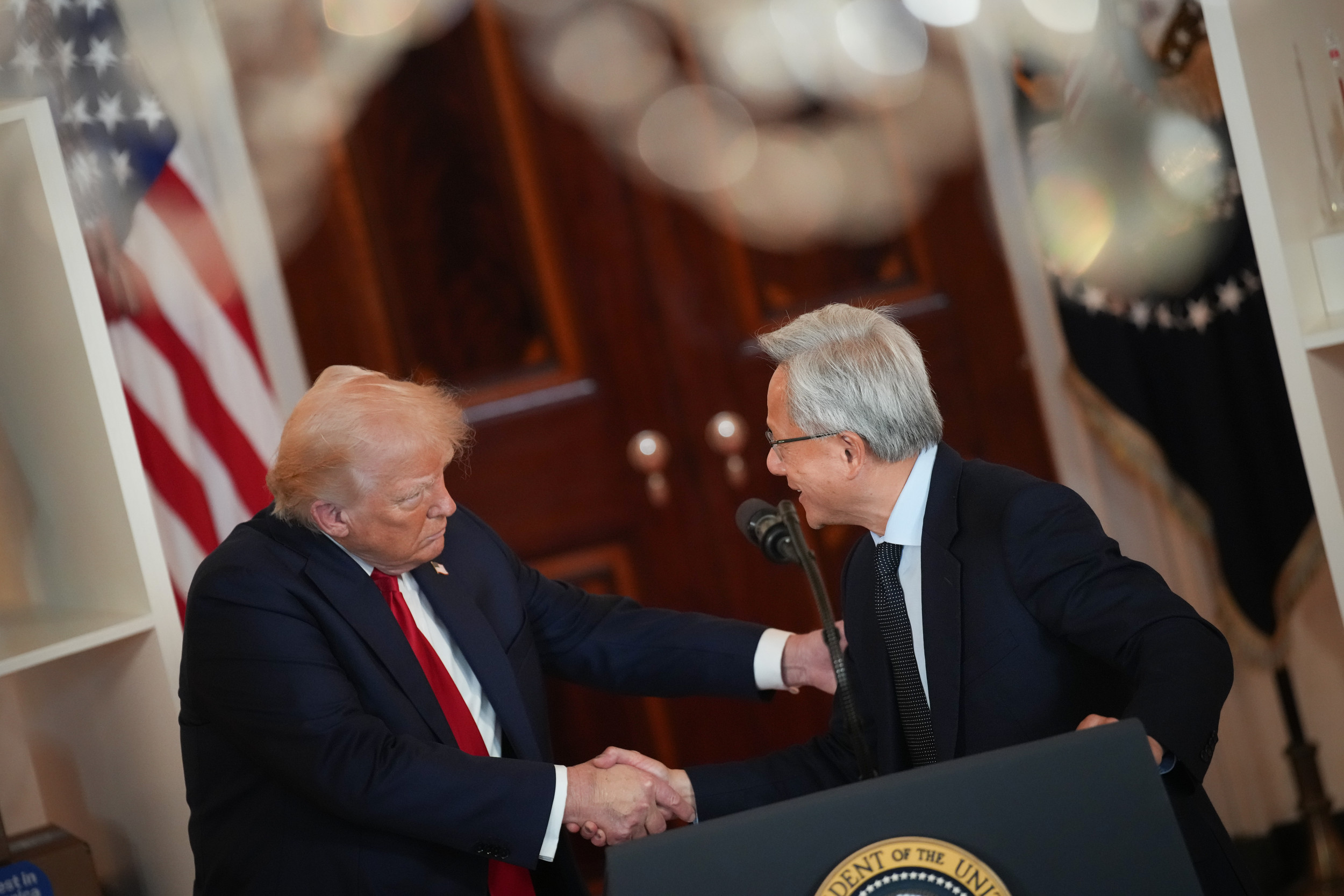
The Trump administration has cleared Nvidia and AMD to resume sales of certain less powerful AI chips to China, an unprecedented move contingent on the U.S. government receiving a 15% revenue share from these transactions. This policy shift reopens a significant market for the chipmakers, potentially generating billions for the U.S. Treasury, but faces strong criticism from lawmakers and security officials who argue it undermines national security by turning export controls into a revenue stream and sets a dangerous 'pay-to-play' precedent.
The Trump administration has enacted a significant policy reversal by permitting Nvidia and Advanced Micro Devices to resume sales of specific, less powerful AI processors (Nvidia's H20 and AMD's MI308) to the Chinese market. This decision is contingent upon an unprecedented condition: a 15% revenue share paid directly to the U.S. government. This move reopens a substantial revenue stream for both companies in a market projected to spend $100 billion on AI this year; Bernstein Research estimates Nvidia alone could generate approximately $23 billion in revenue, yielding over $3 billion for the U.S. Treasury. However, the policy is highly controversial, drawing sharp criticism from lawmakers and national security experts who argue it dangerously transforms export controls from a security tool into a revenue instrument, potentially setting a 'pay-to-play' precedent. The administration frames the payment as a licensing condition, not a tax, and has linked the deal to broader trade negotiations involving rare-earth minerals. This transactional approach to export licensing, which could expand to include scaled-down versions of Nvidia's advanced Blackwell chips, introduces both a material financial opportunity and significant regulatory and geopolitical risk for the involved semiconductor firms.
AI-powered research, real-time alerts, and portfolio analytics for institutional investors.
Overall Sentiment
mixed
Sentiment Score
0.10
Ticker Sentiment
