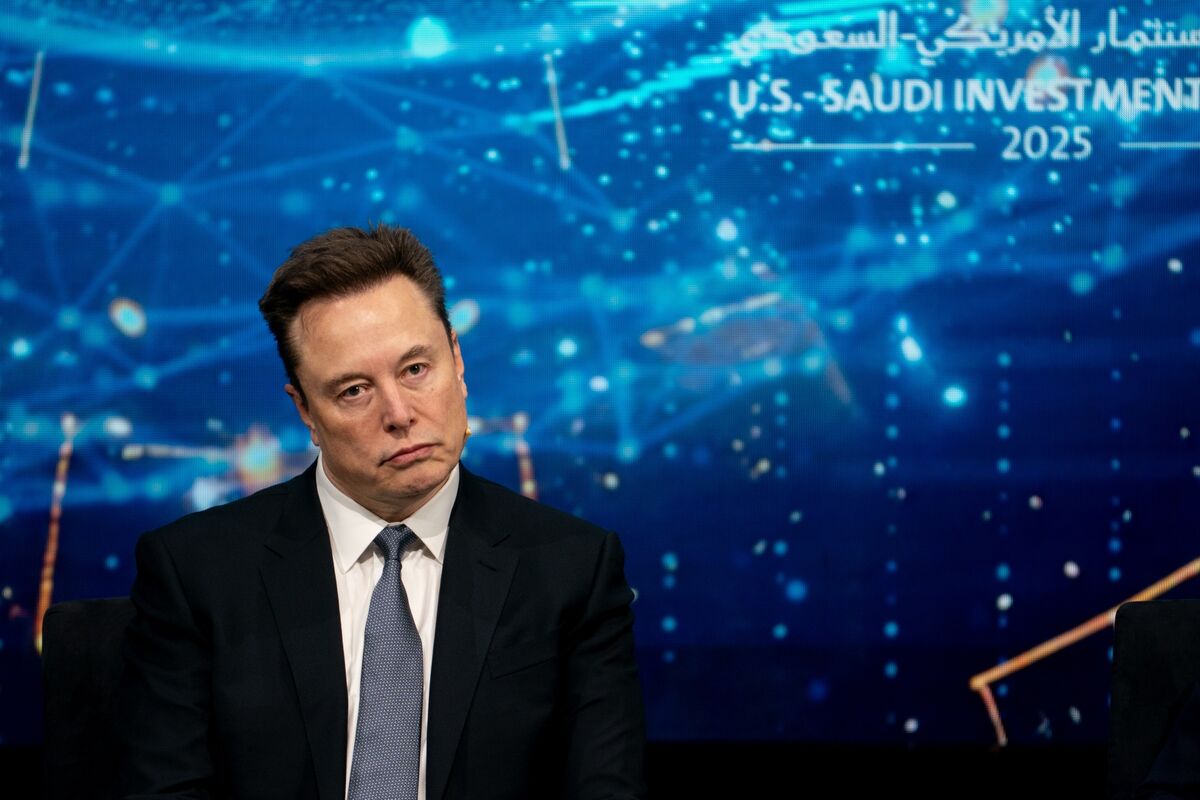
Elon Musk announced plans to enter semiconductor production, calling it “the most epic chip-building exercise” and claiming it will scale AI chip capacity by orders of magnitude. The declaration highlights the ongoing AI chip crunch and supply-chain constraints but is highly speculative with significant execution and capital-intensity risk; near-term market impact is likely limited, while incumbent AI-chip suppliers and semiconductor equipment makers could see low-single-digit stock moves if plans advance. Monitor follow-on capex details, timeline, and regulatory/technological barriers for signs of tangible market effects.
The market reaction to headline semiconductor ambitions understates the binding physical constraints: leading-edge fabs take roughly 24–36 months to reach volume and require capital on the order of ~$10–20B each plus access to a tiny pool of EUV scanners (order-of-magnitude ~40 units/year capacity worldwide). That mismatch between rhetoric and physics means the immediate, measurable effect is on the tooling and materials supply chain — not instant wafer output — creating a multi-quarter reallocation fight for equipment, photoresist, and skilled integration labor.
Second-order winners are therefore capital goods and process IP providers that can't instantly expand capacity: think high-end lithography, deposition/etch tool vendors, and specialty materials — these players get orderbook visibility and pricing power while foundries that already own capacity (and preferred supplier slots) can monetize scarcity. Conversely, any firm promising near-term, in-house production of advanced AI silicon faces a twofold risk: structural underutilization if ramped too small and margin collapse if they attempt to buy scarce tooling at premium prices.
Time horizon segmentation matters. Over days–weeks this is a sentiment event (volatility in equipment and small-cap semiconductor names). Over 3–12 months, expect WFE orderbooks and supplier guidance to re-rate — a 10–30% incremental WFE growth is plausible if hyperscalers and new entrants accelerate orders. Over years the true test is execution: if a new vertically integrated producer manages to secure tooling and subsidized financing, it could permanently alter foundry economics and force tiering of compute buyers; failure or pulled orders would produce sharp negative revisions for equipment suppliers and a sentiment-driven drawdown.
AI-powered research, real-time alerts, and portfolio analytics for institutional investors.
Request DemoOverall Sentiment
mildly negative
Sentiment Score
-0.05
