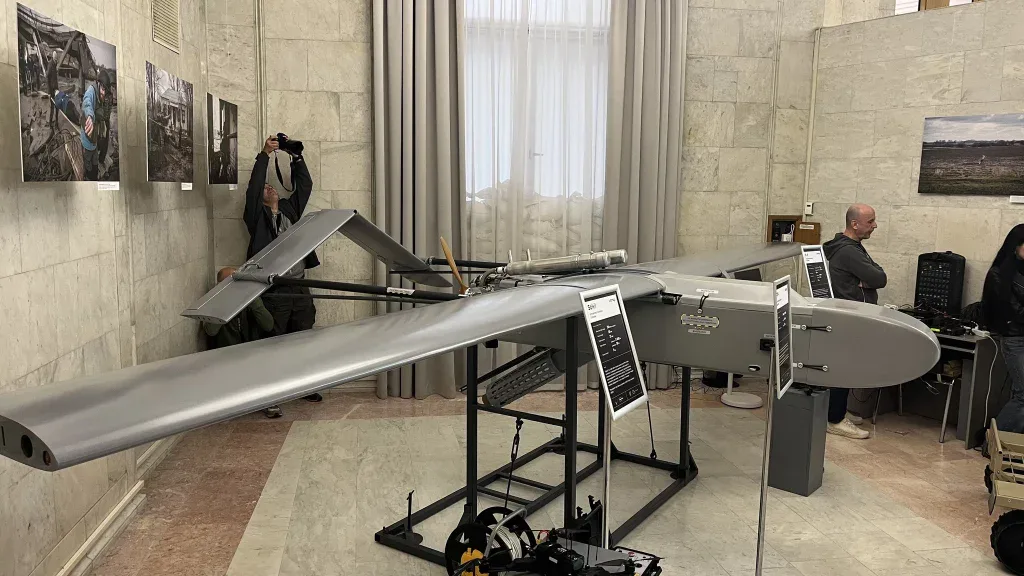
Ukraine’s Unmanned Systems Forces have begun using Fire Point FP-2 drones carrying unguided aerial rockets to attack Russian air-defense and communications targets, including a strategic hub of the Russian Black Sea Fleet. The tactic is designed to suppress or distract air defenses, EW systems, and other frontline defenses so follow-on drones can penetrate more effectively. The article describes this as an evolving battlefield capability, with possible future laser guidance to improve accuracy.
This is not primarily a weapons headline; it is a force-multiplier story for low-cost attritable systems. The key second-order effect is that Russia’s air-defense inventory gets forced into a higher expenditure-rate regime: even if the drones do not reliably kill high-value nodes, they can compel radar activation, displacement, and interceptor use, which raises the marginal cost of every subsequent strike attempt. That favors the side able to manufacture and iterate cheaply, and it weakens the economics of static defense architectures built around expensive interceptors and fixed emission patterns.
The deeper implication is for procurement priorities across NATO and allied defense primes. Demand should increasingly tilt toward counter-UAS sensing, passive detection, electronic warfare, loitering interceptors, short-range air defense, and mobile command-and-control rather than only high-end aircraft or long-range missile inventory. Suppliers with exposure to modular electronics, autonomy software, and short-cycle battlefield adaptation should see more durable order momentum than legacy platform vendors tied to multi-year programs with slower spec refresh.
The main risk to the trade is tactical adaptation on the defensive side: once defenders harden emissions discipline, add more mobile SHORAD, and improve fusion of passive sensors, the effectiveness of these drone escort tactics can decay quickly. Another reversal factor is if the concept remains battlefield-specific and fails to scale beyond front-line suppression into deep strike, which would limit budget impact to a niche segment rather than creating a broad procurement wave. Expect the market to misread this as a pure Ukraine headline; the real investable theme is accelerated defense spending toward counter-drone stacks over the next 6-24 months.
Contrarian view: the market may overpay for headline drone winners while underpricing enablers and countermeasures. If every side learns the same lesson, the net result is not just more drones — it is more layered air defense and more EW intensity, which supports a wider set of defense electronics names than pure-play unmanned platforms. In that scenario, the highest quality earnings surprise may come from firms selling detection, jamming, and command software rather than from the drone OEMs themselves.
AI-powered research, real-time alerts, and portfolio analytics for institutional investors.
Request DemoOverall Sentiment
neutral
Sentiment Score
0.10
