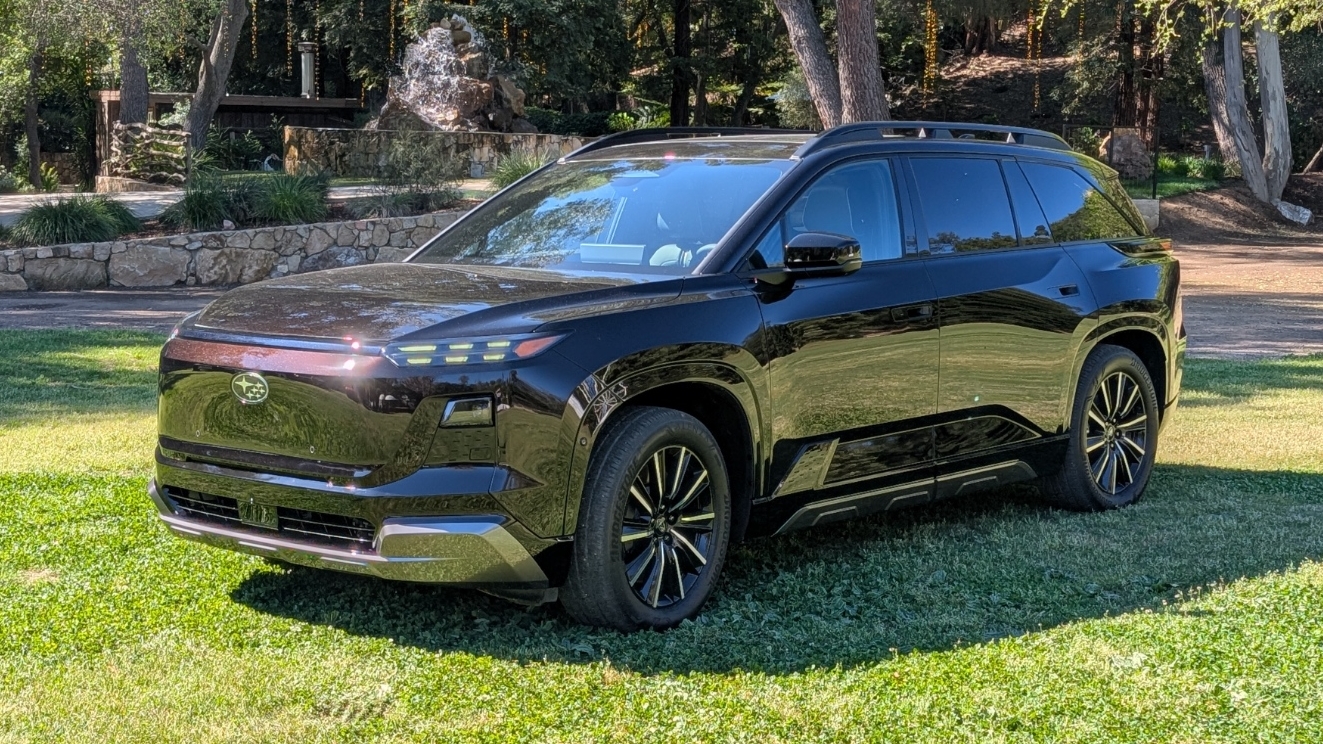
Subaru on April 1, 2026 debuted the Getaway, claiming greater power than the Toyota Highlander EV while maintaining comparable efficiency. At the New York International Auto Show, industry executives urged U.S. policy stability, a strong intracontinental trade deal and more localized production in response to Chinese threats — recommendations that could affect regional supply-chain and manufacturing strategy.
A recent product shift that raises the bar on the power-versus-efficiency trade forces the industry to re-price engineering differentiation rather than pure range figures. The immediate second-order consequence is a move in marginal value from battery energy density to motor/inverter torque density and thermal-management IP; suppliers who can deliver kW/kg improvements at fixed pack-level kWh capture pricing power. Expect OEM procurement specs and validation cycles to shift within 12–24 months, creating a narrow window for tier‑1 vendors to lock design wins before platform freezes.
Geopolitical and trade-pressure commentary at the show accelerates an already‑underway bifurcation in capital allocation: capex to onshore/nearshore assembly, and working capital into regionalized supplier networks. The economic trade is clear — higher fixed costs and lower logistics/tariff volatility versus the old low‑capex, long‑supply‑line model — implying winners are suppliers with scalable regional footprints and modular manufacturing; losers are low‑margin exporters reliant on long supply chains. Expect a multi‑year (2–5 year) CAPEX cycle as OEMs retool and tier‑1s expand local plants, which will show up first in booking and tool‑order flow over the next 6–18 months.
Key risks that could reverse current momentum are macro demand softness, a raw‑materials shock (nickel/cobalt) that re-prices pack economics, or abrupt policy shifts that rollback incentives/trade protections. Near‑term headlines can move sentiment in days, but durable competitive repositioning plays out over quarters; monitor design‑win disclosures and supplier factory announcements as high‑signal catalysts. The consensus tends to over-index on vehicle specs and underweight supply‑chain footprint — that gap creates actionable pair trades exploiting regionalized manufacturing exposures versus China‑centric players.
AI-powered research, real-time alerts, and portfolio analytics for institutional investors.
Request DemoOverall Sentiment
mildly positive
Sentiment Score
0.15
