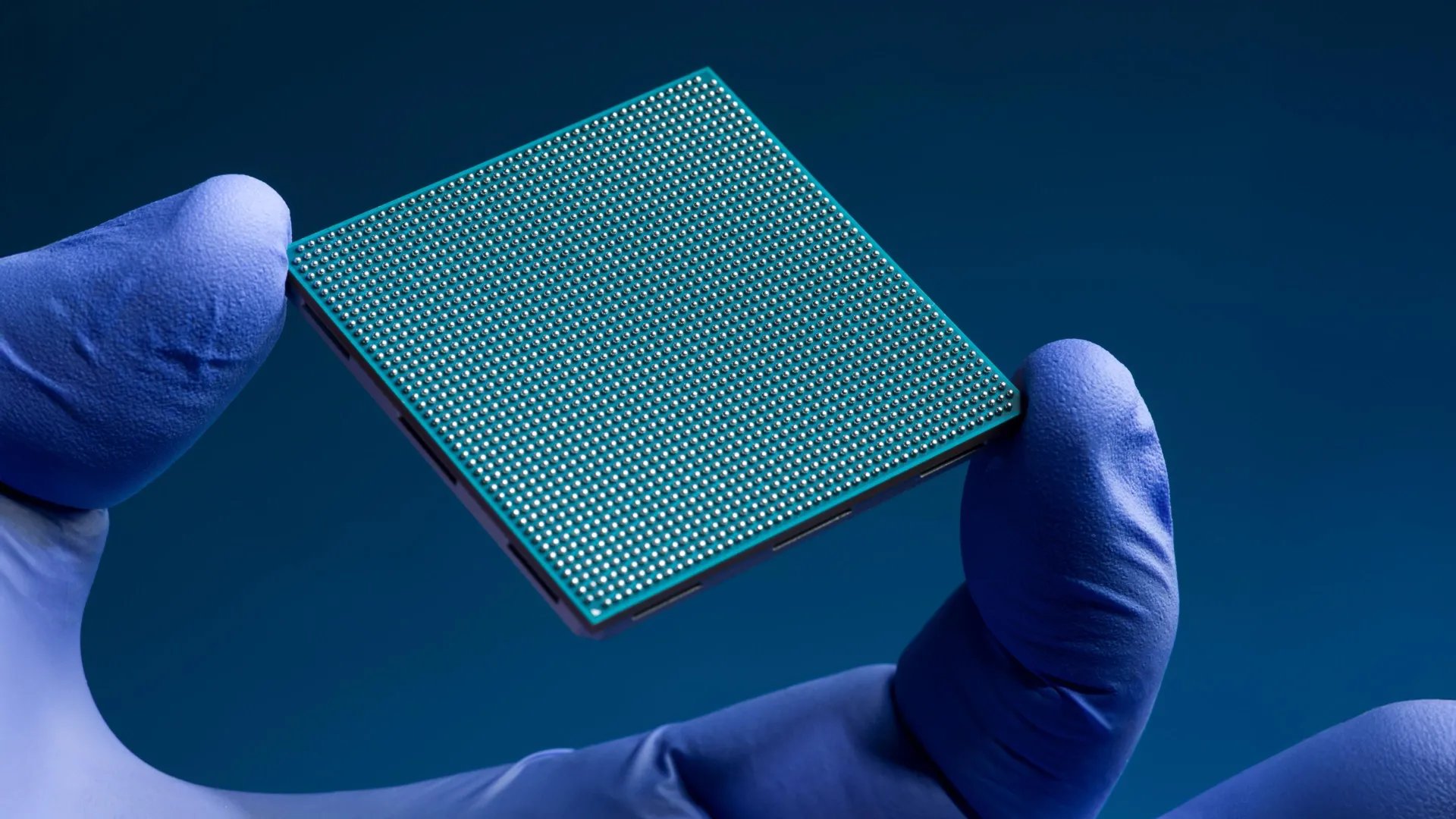
NASA says its radiation-hardened space SoC is delivering roughly 500x the performance of current spacecraft chips while undergoing extreme radiation, thermal, shock, and landing-scenario testing. If certified, the chip could enable AI-powered autonomous spacecraft, faster onboard science, and future Moon and Mars missions, with potential spillover into aviation and automotive applications through Microchip. The news is strategically important for space computing, but near-term market impact is likely limited.
This is less a headline about space hardware and more a validation event for the edge-computing stack: radiation-tolerant processing, autonomy software, and mission-critical packaging. If the chip performs as advertised, the economic winner is not just the named supplier but the entire ecosystem that can now justify more compute-intensive payloads without adding mass, power draw, or comms dependency. That creates a longer-duration procurement cycle for specialized semis, advanced packaging, and embedded software suppliers with aerospace qualifications. For MU, the most important second-order effect is that space-grade SoCs are a proof point for high-reliability compute demand, but the revenue impact is likely indirect and delayed. The real leverage sits in memory and storage content per node: more onboard AI, more sensor fusion, and more data retention increases BOM intensity even in low-unit-volume systems. The market may still underappreciate how defense and aerospace programs can become early adopters of higher-margin, qualification-heavy silicon when commercial AI demand normalizes. The contrarian risk is that investors extrapolate a science milestone into near-term revenue. Space adoption is slow, qualification is measured in quarters to years, and a single program win rarely scales quickly enough to move large-cap semiconductor earnings. The bigger catalyst would be follow-on orders from defense and aviation applications if this architecture migrates from prototype to fielded systems; failure in radiation, thermal cycling, or landing tests would likely defer that by 6-12 months and compress enthusiasm fast. Consensus may also be missing that autonomy reduces dependence on ground stations, which shifts value from bandwidth providers toward onboard compute and sensor-processing vendors. That is structurally bullish for companies selling ruggedized edge AI, but only if they can meet low-volume, high-margin requirements without contaminating execution in their core businesses. The tradeable window is likely the next 3-6 months, around test readouts and partner disclosures, not the eventual space deployment cycle.
AI-powered research, real-time alerts, and portfolio analytics for institutional investors.
Request DemoOverall Sentiment
moderately positive
Sentiment Score
0.62
Ticker Sentiment
