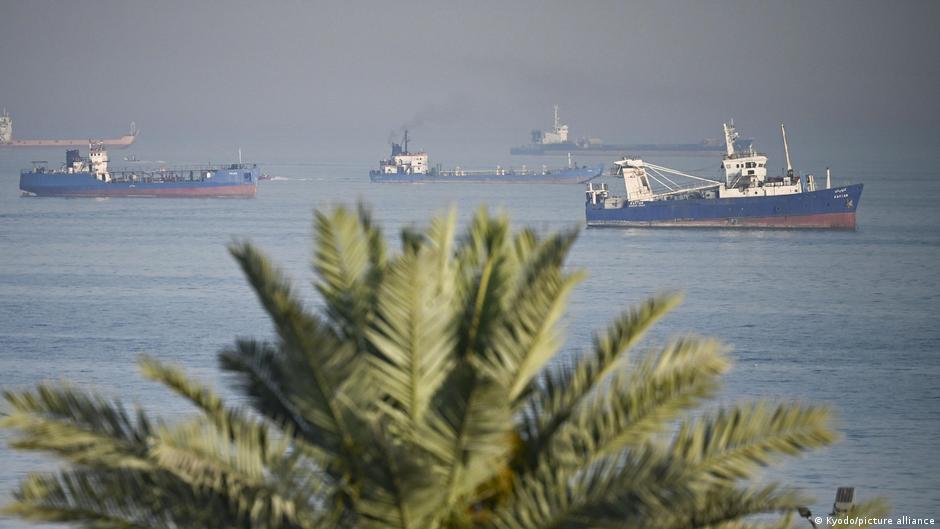
Iran said more than 30 ships were allowed to pass through the Strait of Hormuz overnight, including a number of Chinese vessels, but stressed that ships linked to an "enemy state" remain blocked. The update comes amid a blockade that has disrupted a critical route for roughly one-fifth of global oil and LNG flows, while the US says Iranian oil loadings at Kharg Island have fallen to zero for three days. The standoff adds significant geopolitical risk to energy markets, shipping, and regional FX.
This is less a binary “open/closed” shipping event than the start of a managed-access regime, which is usually more dangerous for markets because it creates uneven friction rather than a clean shutdown. If Beijing is being granted preferential passage, the market should assume a two-tier corridor: politically connected flows move first, while everyone else faces higher compliance costs, longer wait times, and higher insurance premia. That setup is bearish for marginal barrels and LNG cargoes even if headline throughput looks superficially stable. The second-order winner is not just energy producers outside the region, but also non-Gulf exporters that can arbitrage displaced demand into Asia. US Gulf LNG, Atlantic Basin crude, and potentially West African grades gain relative bargaining power if Asian buyers start paying up for reliability. The immediate losers are refiners and shipping intermediaries exposed to spot freight volatility; their margins get squeezed from both directions because higher bunker costs and route uncertainty hit before commodity prices fully reprice. The key catalyst window is days, not months: if the corridor remains selectively open, the market may initially fade the story, but the real risk is a single enforcement incident that re-prices the whole insurance stack. Conversely, any sign of a broader political accommodation can collapse the risk premium quickly, because the market is not pricing a durable wartime normal yet. The contrarian read is that the move is underappreciated for industrials and chemicals: higher feedstock volatility and delayed deliveries can hit earnings even if headline oil spikes only modestly. What matters most is that this is a logistics shock with optionality embedded in diplomacy. That tends to create violent intraday reversals, but the medium-term effect is usually persistent margin transfer from transport-dependent sectors to upstream supply and asset-heavy logistics with routing flexibility. Expect dispersion to widen across integrated energy, refiners, tankers, and airlines rather than a simple index-level macro move.
AI-powered research, real-time alerts, and portfolio analytics for institutional investors.
Request DemoOverall Sentiment
strongly negative
Sentiment Score
-0.55
