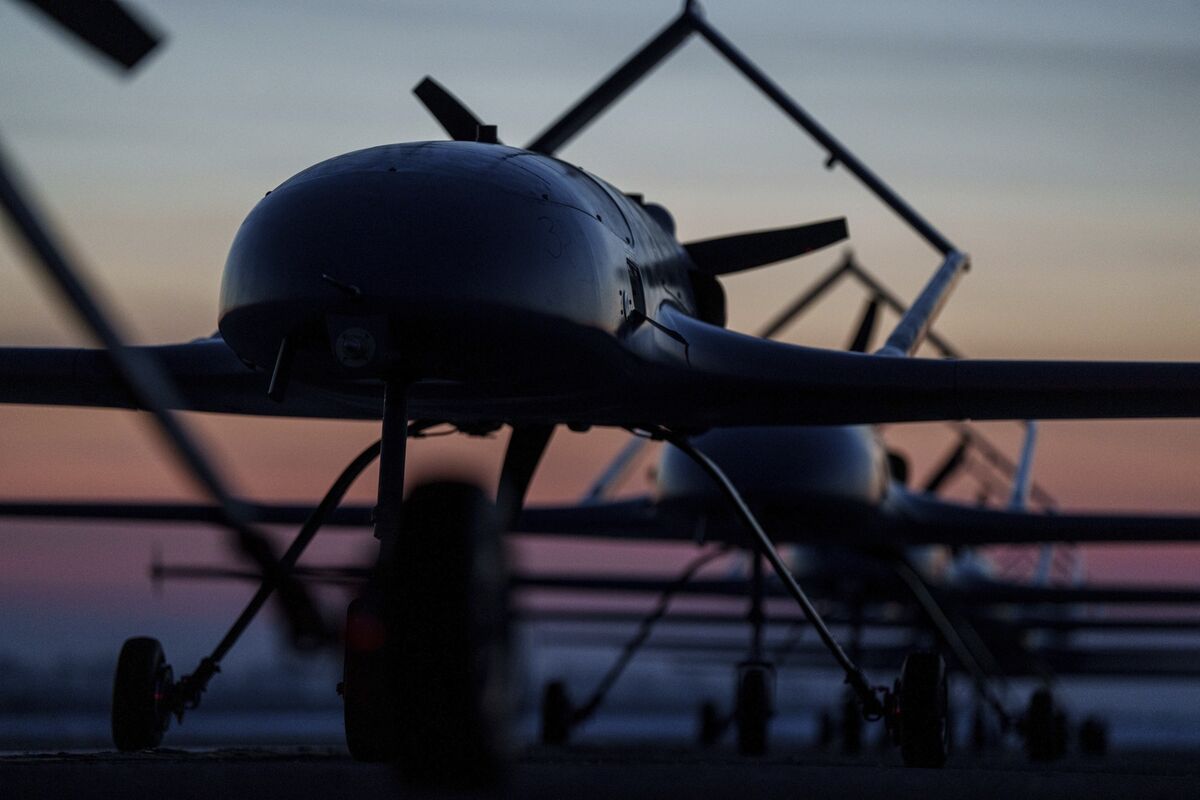
Ukraine intensified attacks on Russian oil infrastructure in November, using drones to strike refineries at least 14 times according to Bloomberg’s compilation of public statements, and also targeted tankers as the US pursues a peace initiative in the nearly four-year conflict. The scale and frequency of strikes represent a record escalation that could curtail Russian refining capacity and disrupt seaborne oil flows, adding a geopolitical risk premium to energy markets and increasing upside risk for oil prices and volatility in regional assets.
Market structure: Repeated Ukrainian strikes raise the odds of recurring, episodic disruptions to Russian refinery output and tanker availability, tightening refined-product balances in Europe/Black Sea in the near term (potentially 0.2–0.8 mbpd of product flow at risk intermittently). Winners are non-Russian producers, US refiners with access to export infrastructure, and owners of late-model tanker capacity who capture higher charter rates; losers are Russian refiners/exports, insurers, and any players reliant on cheap Russian diesel/jet fuel.
Risk assessment: Tail risks include a major escalation (port blockades, strike on export hubs) pushing Brent >$100 within days and global refined-product shortages, or conversely rapid diplomatic de‑escalation that knocks oil vol down 30–50% in weeks. Immediate (0–14 days) is higher oil volatility and FX stress for RUB; short-term (1–3 months) winter demand can amplify supply shocks; long-term (6–24 months) repeated damage could permanently lower Russian refining capacity and re-route trade flows.
Trade implications: Tactical trades should capture higher oil prices/volatility and widened crack spreads: long Brent exposure and long US refiners (capture cracks), selective longs in defense contractors for higher procurement, and FX/credit shorts of Russian-linked instruments. Use options to asymmetrically express event risk (60–90 day structures). Position sizing should be limited (single-digit percent) with explicit stop/profit triggers tied to Brent and crack metrics.
Contrarian angles: The market may overprice permanence of disruption — historical parallels (Abqaiq 2019) show sharp but transient spikes; if attacks wane or Russia reroutes exports, oil can backtrack rapidly. Conversely, higher insurance and re-routing costs could structurally reduce tanker supply and sustain elevated freight and refined-product margins for 6–18 months, benefiting select shipowners and refiners more than upstream producers.
AI-powered research, real-time alerts, and portfolio analytics for institutional investors.
Request DemoOverall Sentiment
moderately negative
Sentiment Score
-0.45
