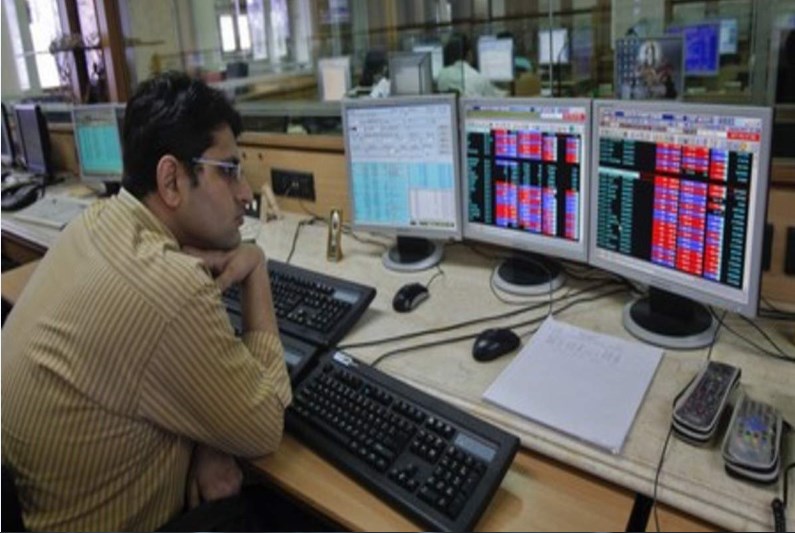
India’s Nifty 50 rose 0.05% to a 1-month high and the Sensex gained 0.03%, with advance/decline breadth still negative on both the NSE and BSE. NTPC hit a 52-week high, while India VIX jumped 10.49% to 19.01, crude oil surged 5.69% to $87.29 a barrel, Brent rose 4.78% to $94.70, and gold fell 1.27% to $4,817.40. USD/INR strengthened 0.36% to 92.93, reflecting a weaker rupee alongside elevated volatility and firmer energy prices.
The immediate setup is less about the headline index drift and more about regime change in cross-asset risk. A 10%+ jump in implied volatility alongside a sharp move higher in crude and a weaker rupee usually signals the market is starting to price a geopolitical risk premium rather than a simple one-day macro wobble. That tends to favor domestically insulated, pricing-power sectors and hurt import-sensitive businesses in the next 1-3 sessions, even if the equity index itself looks flat. The more interesting second-order effect is dispersion within India. Higher oil and FX pressure typically feeds through first to transport, paints, airlines, chemicals, and consumer discretionary via margin compression and working-capital stress; banks can initially benefit from rate/credit repricing but usually lag if the move persists and the market starts discounting slower demand. PSUs and upstream/commodity-linked names can hold up, but if crude stays elevated for several weeks, the broader market usually transitions from a sector rotation trade into an earnings-downgrade trade. Contrarian view: the market may be underpricing how quickly a ceasefire/talks headline can unwind the entire move, because event-driven oil spikes often mean-revert faster than equities can re-rate. The real risk is not the first leg up in energy; it is a second leg via higher India inflation expectations, which can force a tighter policy/rate narrative and cap valuations for rate-sensitive pockets. If crude remains above the mid-80s for more than 2-4 weeks, the trade shifts from tactical hedging to a more durable relative-value short on domestic cyclicals versus energy beneficiaries.
AI-powered research, real-time alerts, and portfolio analytics for institutional investors.
Overall Sentiment
neutral
Sentiment Score
0.05
Ticker Sentiment
