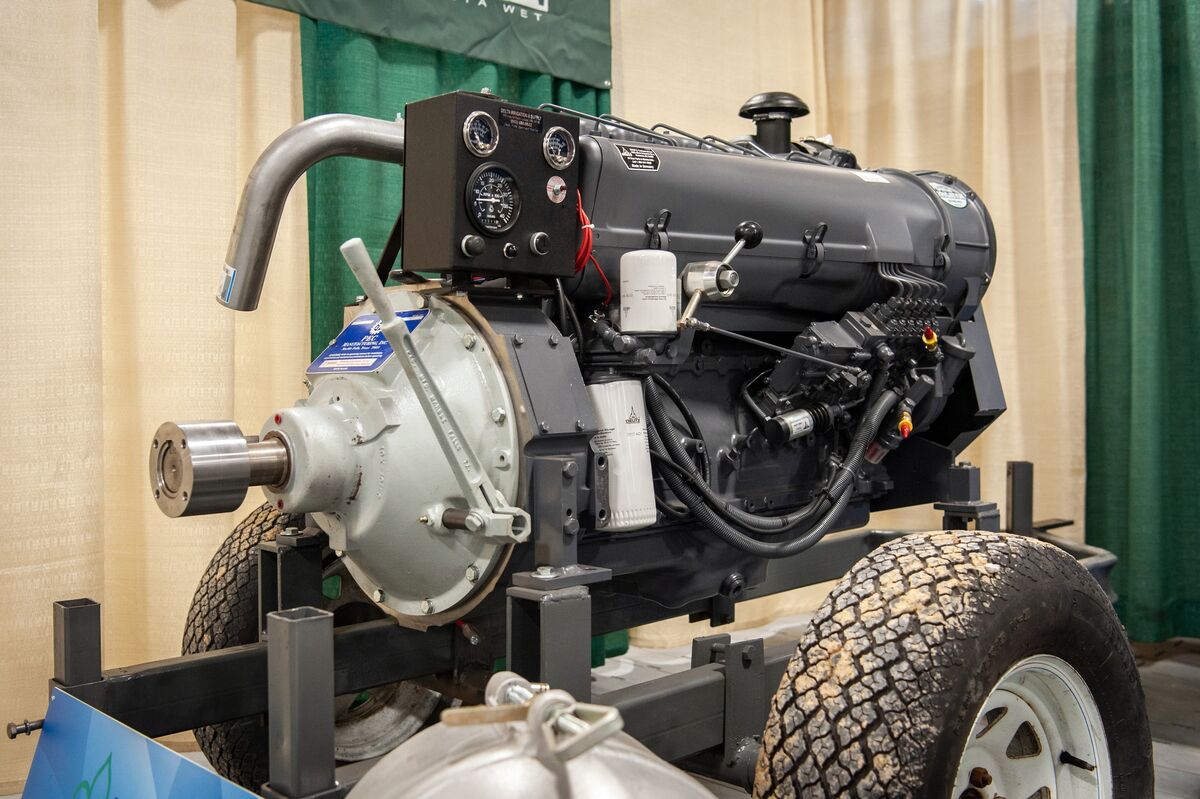
Deutz AG expects revenue to rise roughly 20% to as much as €2.5 billion (~$2.9 billion) in 2026, driven partly by expansion into military engine applications. The move to capture defense spending linked to Europe’s rearmament materially shifts the company’s end-market exposure and could boost growth and margins versus a purely agricultural focus.
Deutz’s pivot into military applications reallocates the company’s scarce engineering, certification and production capacity toward higher-margin, longer-tail work — the real value accrues from multi-year spare-parts and MRO streams rather than one-off OEM unit sales. Historically, properly executed defense programs convert into recurring revenue that can lift adjusted EBITDA margins by several hundred basis points as aftermarket content reaches 25–35% of lifecycle revenue; the timing of that lift is program-dependent and often back-loaded by 12–36 months.
The supply-chain second-order effects are concrete: qualification and security-cleared manufacturing become gatekeepers, creating outsized pricing power for precision-machining shops, ruggedized power-electronics vendors and specialty alloy suppliers who can cope with 6–9 month premium lead times. At the same time, commodity-tier suppliers and non-qualified tooling shops face margin compression and potential volume loss as OEMs internalize critical subsystems and demand localization.
Key risks cluster around program execution and political cycles: tender wins can be rescinded, export approvals delayed, or budgets reprioritized — events that tend to play out over 3–18 months and will quickly expose lumpiness in reported backlog and working capital. Over a longer horizon (3–10 years), accelerating electrification and modular powerpack designs cap diesel-driven defense TAM, so treat near-term wins as front-loaded optionality rather than permanent secular expansion.
Practical monitoring priorities are clear: watch for signed framework contracts (not just MoUs), disclosures on local-content clauses, cadence of spare-parts order flow, and margin bridges in quarterly reports. These datapoints will be the fastest and cleanest signals to scale exposures up or down ahead of production ramps.
AI-powered research, real-time alerts, and portfolio analytics for institutional investors.
Overall Sentiment
strongly positive
Sentiment Score
0.55
