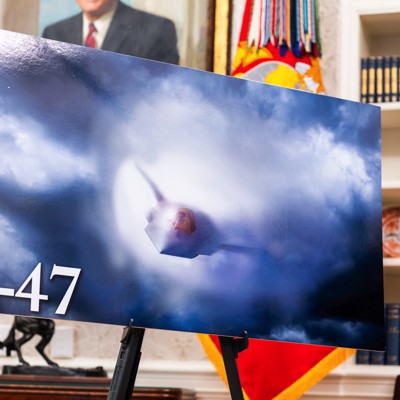
$5.0 billion requested for the Air Force’s F-47 sixth-generation fighter versus $140 million requested for the Navy’s F/A-XX (including $72M from a proposed reconciliation bill). Congress previously boosted F/A-XX funding to nearly $1.7 billion enacted (including ~$750M reconciliation) while the F-47 received ~$3.5 billion in 2026 ($2.5B baseline + $900M reconciliation). The budget also requests 85 F-35s (32 funded discretionary, 53 via reconciliation): 38 for the Air Force, 37 for the Navy, and 10 for the Marine Corps, signaling potential contractor and congressional contention over program priorities.
The administration’s procurement tilt functions as a strong directional signal to prime contractors and their suppliers: capital and skilled labor will flow to the program that looks most likely to secure sustained baseline funding. That creates a near-term incumbency advantage for the prime that can convert into multi-year production awards, supplier exclusivity, and elevated margins — but it also concentrates execution risk (workforce, tooling, supplier bottlenecks) into a narrower slice of the industrial base.
A congressional rebound for the other service remains the highest-probability counterbalance over the next 3–12 months; lawmakers have repeatedly used appropriations to force parallel development paths or split awards, which would blunt the incumbent prime’s commercial benefits and re-divide supplier revenue pools. For competitors not selected, the logical pivot is to adjacent portfolios (missiles, sensors, EW, space resilience) where existing tech can be re-sold, creating asymmetric upside for firms with modular systems but leaving airframe-focused suppliers exposed.
Key catalysts to watch are acquisition-strategy releases, appropriations markups, and any announced prime–supplier exclusivity agreements — each can move valuation sentiment quickly. Tail risks include a technical setback or a political reversal that redirects baseline funding, which would compress the winning prime’s forward cashflows and could cause a rapid multiple contraction if execution is delayed; monitoring supplier hiring and subcontract awards gives the earliest real-economy read on program momentum.
AI-powered research, real-time alerts, and portfolio analytics for institutional investors.
Request DemoOverall Sentiment
neutral
Sentiment Score
0.00
Ticker Sentiment
