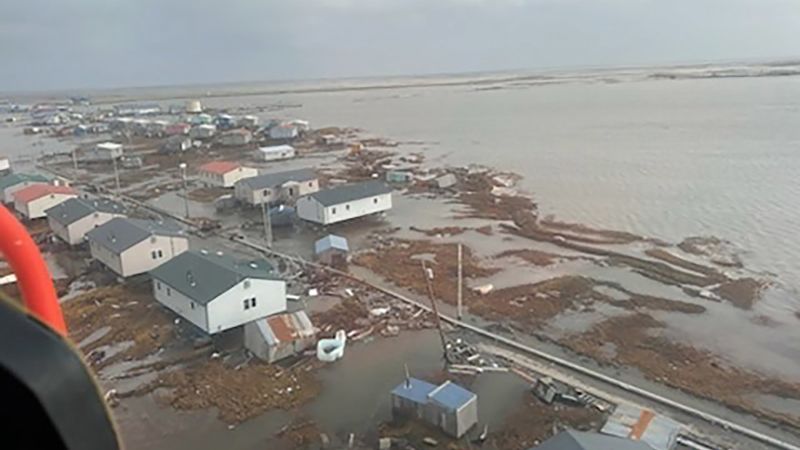
Recent government budget cuts, specifically from the Department of Government Efficiency, are implicated in a critical shortage of weather balloon data in western Alaska, which likely contributed to inaccurate forecasts for a powerful storm that caused significant unexpected damage and casualties. The National Weather Service (NWS) is now reportedly hiring to address these staffing and data collection deficiencies, underscoring the direct impact of government resource allocation on critical public services and the potential for unforeseen natural disaster-related disruptions.
The recent severe storm in western Alaska exposed critical deficiencies in weather forecasting, directly attributable to significant reductions in weather balloon coverage. These data gaps, stemming from February's Department of Government Efficiency (DOGE) budget cuts and subsequent National Weather Service (NWS) layoffs, led to inaccurate storm path and intensity predictions for Typhoon Halong's remnants. Initial model projections failed to identify the communities that ultimately bore the brunt of the storm, resulting in unexpected devastation.
This forecasting failure incurred substantial human and economic costs, including at least one fatality, missing persons, and over 1,000 displaced individuals, alongside widespread storm surge flooding and wind gusts up to 107 mph. Specific data collection points, such as Kotzebue and St. Paul Island, experienced complete cessation of balloon launches, while others saw reduced frequency or communication issues. This "nightmare scenario" highlights the direct link between fiscal policy and critical public safety infrastructure.
While the immediate market impact score is low at 0.1, reflecting limited direct corporate exposure, the incident carries significant implications for governmental risk management and future fiscal policy. The NWS is actively hiring to address these service outages, indicating a recognition of the need to restore critical capabilities. This event may prompt increased scrutiny on government budget allocations for essential public services and infrastructure resilience, particularly in regions vulnerable to natural disasters.
AI-powered research, real-time alerts, and portfolio analytics for institutional investors.
Overall Sentiment
extremely negative
Sentiment Score
-0.85
