
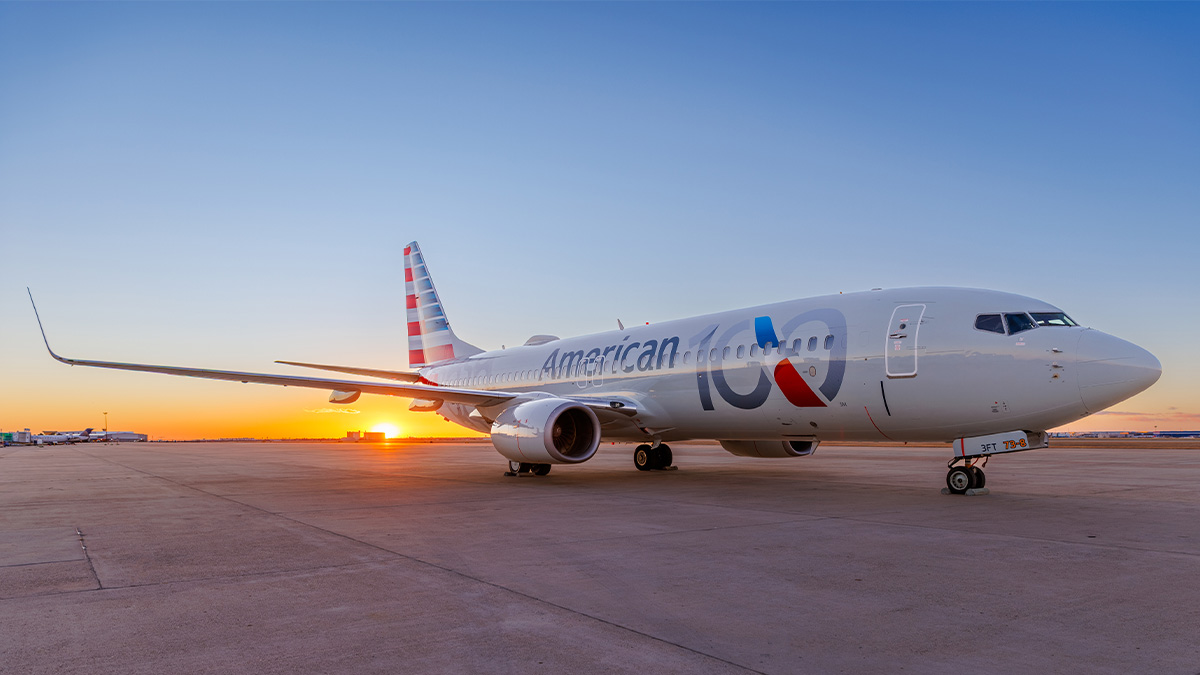
American Airlines is marking its 100th anniversary with customer activations across 11 locations, special centennial liveries, themed lounge offerings, and limited-edition merchandise. The article highlights the airline’s scale at more than 6,000 daily flights to over 350 destinations in 60+ countries and positions the centennial as a brand and customer-engagement event rather than a financial update. The news is positive for brand sentiment but unlikely to materially move shares.
This is a brand-management event first and an earnings event second. The near-term monetization is likely through ancillary revenue, loyalty engagement, and premium-cabin mix rather than any meaningful unit-revenue lift from the ceremony itself, but the activation cadence matters because it is designed to reinforce pricing power on the business traveler and frequent-flyer cohort where switching costs are highest. If executed well, it can also modestly improve employee morale at a time when labor reliability remains a key differentiator in airline shares.
The bigger second-order effect is competitive: American is trying to turn legacy into a forward-looking premium narrative while Delta remains the market’s default “quality” airline and United continues to gain share with network expansion. That means the move should be judged by whether it nudges corporate travel managers and loyalty members toward share retention, not by the marketing splash alone. The key bull case is that small improvements in brand affinity can compound into better booking mix and loyalty economics over several quarters, especially in hub-heavy markets where American is already deeply embedded.
The main risk is that this is cosmetic unless accompanied by service consistency, tighter schedule integrity, and better premium-product execution. Airlines have a long history of spending on image while unit costs, irregular ops, and labor friction quietly erode the benefit; if the broader sector softens or fuel/revenue trends deteriorate, a centennial campaign will not protect margins. On the other hand, because sentiment is mildly positive and expectations are low, any evidence of improved premium demand or stronger loyalty engagement could support a short-duration re-rating over the next 1-3 months.
The contrarian read is that the market may be underestimating how much narrative control matters for an airline with a mixed service reputation. A decade of brand damage can be repaired incrementally if management uses the centennial to push a cleaner premium message and converts nostalgia into loyalty-program activity, but only if this is the start of an operating cadence rather than a one-off PR cycle.
AI-powered research, real-time alerts, and portfolio analytics for institutional investors.
Request TrialOverall Sentiment
mildly positive
Sentiment Score
0.20
Ticker Sentiment
