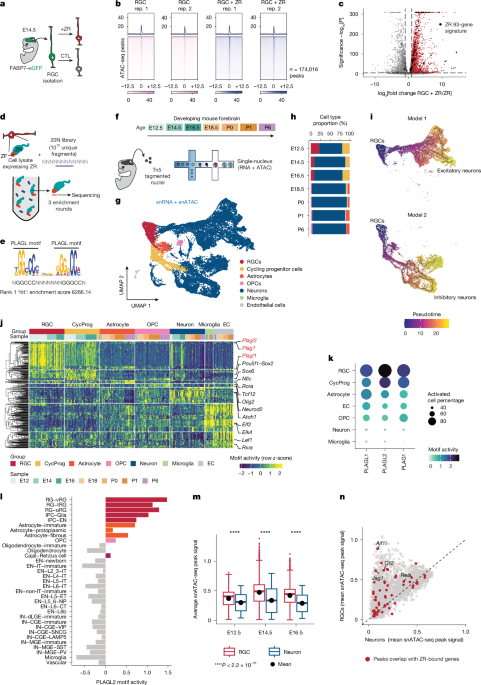
Study shows ZFTA–RELA (ZR) fusion exploits embryonic PLAG/L-family chromatin accessibility (GGGCC consensus) in radial glial and cycling progenitor cells to initiate supratentorial pediatric ependymoma, binding existing accessible sites rather than broadly remodeling chromatin. Using snMultiome (mouse developmental atlas and 21 human tumors), CSI binding assays, and in vivo TrackerSeq barcoding, authors find a small proliferative progenitor-like subpopulation drives growth and dominant clones establish the full tumor cellular hierarchy, implying therapeutic strategies could target the sustained PLAG/L cistrome, fusion-driven transcriptional activation domains, or promote terminal differentiation.
This study tightens the link between advanced single‑cell multi‑omic workflows and a recurring‑revenue layer of consumables, barcoding libraries and specialized assay kits. That creates a durable TAM tail for platform and reagent vendors—not from one off research grants but from repeated clinical/diagnostic runs if the field moves toward CLIA/regulated assays; a conservative adoption path would monetize consumables first, instruments later, compressing capital intensity but lengthening cash‑flow realization to 12–36 months.
A second‑order commercial lever is IP around lineage barcoding and CSI‑style motif assays: groups that control easy‑to‑deploy, validated barcode libraries or motif‑pull down kits can erect licensing fences and service models for translational oncology centers. That raises both licensing upside for incumbents and litigation/regulatory risk for smaller kit vendors that base business models on open‑source protocols—expect consolidation or defensive patenting over 1–2 years.
Clinically, the most important gating items are reimbursement, CLIA validation and pediatric trial readouts; none are binary or immediate. Revenue inflection for vendors therefore depends on 1) a handful of reference labs adopting multiome diagnostics, and 2) payor recognition—each a 12–36 month catalyst. A credible downside is rapid academic standardization (cheap, open protocols) that suppresses commercial margins and forces platforms to compete on service and scale rather than IP.
Finally, strategic M&A is the highest‑probability market event: sequencing incumbents or large instrument OEMs will either buy or emulate best‑in‑class single‑cell barcoding workflows to protect margins. That is a 6–24 month playbook—watch deal flow among core sequencing, reagent and lab‑automation vendors as the earliest leading indicator.
AI-powered research, real-time alerts, and portfolio analytics for institutional investors.
Request DemoOverall Sentiment
neutral
Sentiment Score
0.00
Ticker Sentiment
