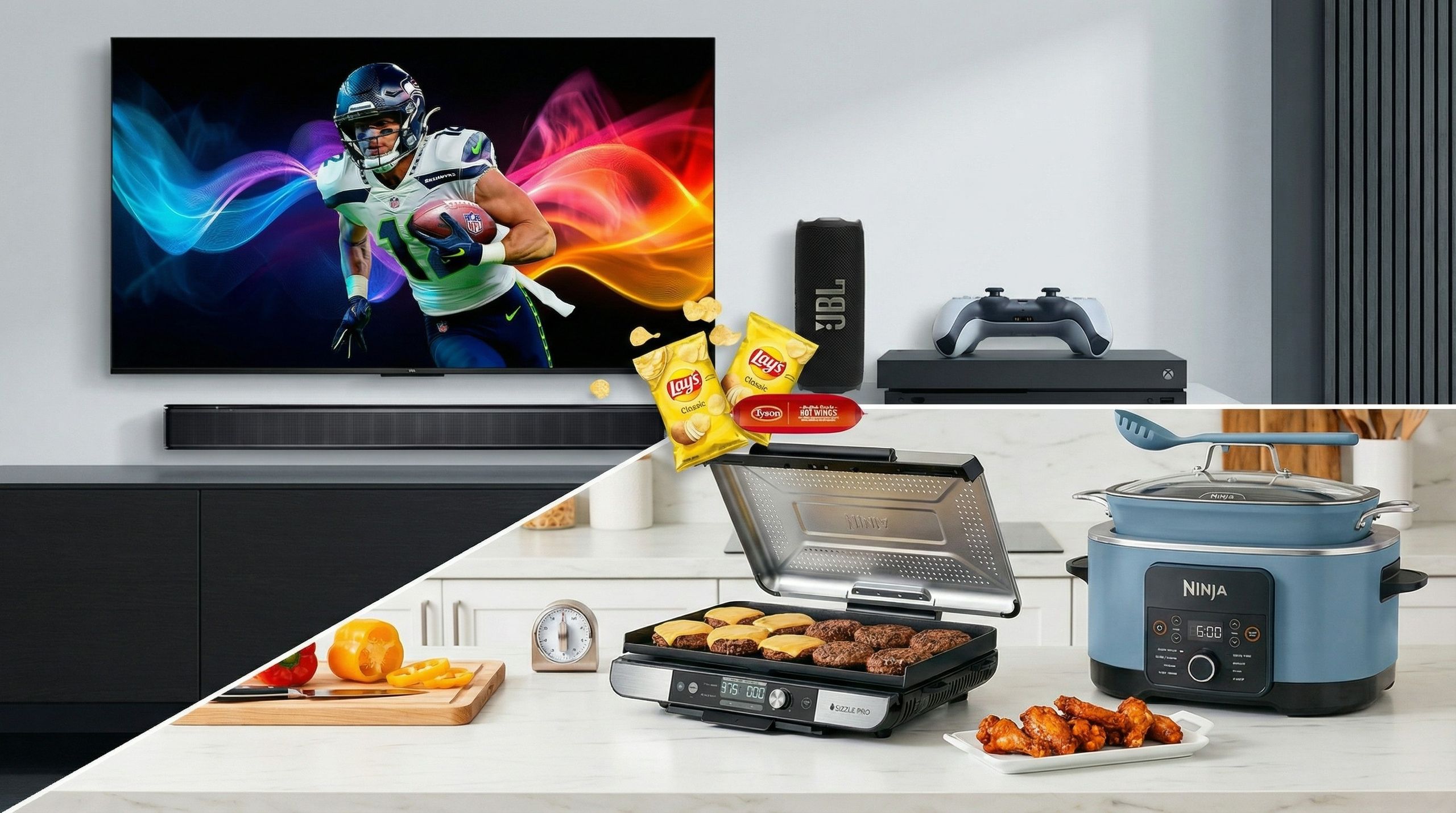
Retailers are promoting last-minute Super Bowl in-store pickup deals across consumer electronics and home appliances, highlighted by a TCL 75" QM6K 4K Mini‑LED TV for $799 (was $1,299) at Best Buy, an LG 55" C5 OLED for $1,199 (was $1,999), Roku Streambar SE for $79 (was $99), Ninja Air Fryer Pro XL for $119 ($60 off) and a Ninja Foodi Possible Cooker Pro for $109 (was $169). The promotion targets increased foot traffic and incremental sales in TVs, soundbars, appliances and party items ahead of the game; while potentially boosting near-term retail comps for merchants like Best Buy and Walmart, the items are promotional and represent a limited, short‑term impact on public markets.
Market structure: Deep, event-driven promotional activity (TCL, LG discounts through BBY/WMT/AMZN) favors traffic-driven, margin-light winners—Best Buy (BBY) and platform exposure (ROKU, GOOGL via Google TV) get higher attach rates and ad/viewing minutes. General merchandisers (WMT, AMZN) can win volume but face margin compression on big-ticket electronics and grocery/snack promotions; expect gross-margin pressure of ~50–150bps for Q1 if promotions persist. Supply/demand appears tilted toward inventory-clearing: retailers are prioritizing sell-through over price stickiness, implying near-term supply elasticity and potential deflationary effects in consumer electronics prices.
Risk assessment: Tail risks include a markdown spiral (deeper discounts lowering ASPs by >10% across sets) and a consumer-demand shock if unemployment ticks up +0.5ppt—both would hit discretionary retail earnings for 2–4 quarters. Immediate (days) impact: traffic and one-off unit sales; short-term (1–3 months): inventory, returns, and margin reporting; long-term (2–12 quarters): secular substitution to streaming platforms and hardware commoditization affecting OEM pricing power. Hidden dependencies: ad-monetization (ROKU/GOOGL) and fulfillment capacity (AMZN/WMT) will amplify or blunt realized gains.
Trade implications: Favor tactical, size-constrained bets: long specialty electronics exposure vs broad merchandisers; use options to cap downside while leveraging ad/upgrade catalysts. Look for earnings/comp prints in Feb–Apr as execution gates; volatility should compress after results—ideal exit for short gamma positions. Cross-asset: modest retail strength is disinflationary for consumer electronics, supportive for equities but marginally negative for real yields if it signals weaker pricing power.
Contrarian angles: Consensus sees only a promotional win for retailers; it underestimates second-order margin damage and OEM consolidation risk—suppliers may accept lower ASPs to maintain ship volumes, pressuring suppliers’ margins for 2–4 quarters. Historical parallel: post-holiday 2019 electronics markdowns where retailers cleared inventory and supplier profits lagged; an unintended consequence is elevated returns/warranty costs that can erode the promotional uplift by ~20–30% of incremental gross profit.
AI-powered research, real-time alerts, and portfolio analytics for institutional investors.
Request DemoOverall Sentiment
mildly positive
Sentiment Score
0.30
Ticker Sentiment
