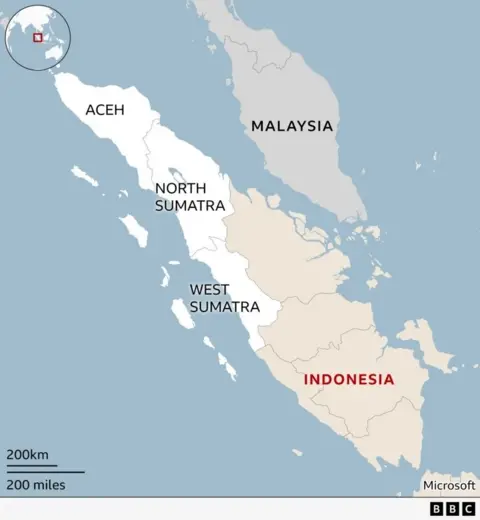
A rare cyclone-driven flooding event in Indonesia has killed more than 500 people, left around 500 missing, and affected roughly 1.4 million residents across Aceh, North Sumatra and West Sumatra, with extensive infrastructure damage (washed-away bridges, impassable roads) hindering relief and supply delivery. The humanitarian crisis, alongside regional heavy rains that have killed some 1,100 people across South and Southeast Asia, raises near-term risks to local economic activity, transport/logistics chokepoints and potential fiscal and reconstruction spending, while reigniting concerns about climate-driven intensification of extreme precipitation. Investors should monitor insurance loss estimates, government emergency spending and regional supply-chain disruptions that could affect commodities, transport and infrastructure-related exposures.
Market structure: Flooding in Sumatra and neighboring countries is an acute shock to logistics, agriculture (palm oil, rubber), local construction and short-term power/water delivery. Direct winners: heavy equipment (Caterpillar CAT, Komatsu 6301.T), emergency satellite/IoT comms (Iridium IRDM) and regional construction/materials (Semen Indonesia SMGR.JK, Wilmar F34.SI for palm oil price pass‑through). Losers: Indonesian equities/sovereign bonds (EIDO, IDR), regional insurers/reinsurers and logistics providers with road/bridge exposure.
Risk assessment: Immediate (days) risk is supply-chain paralysis and IDR weakness; short-term (weeks–3 months) is elevated insured losses and political backlash that can delay reconstruction; long-term (6–24 months) is persistent fiscal stimulus and reconstruction demand pushing materials/commodity readjustment. Tail risks include catastrophic insured losses >$2–5bn that widen reinsurance spreads and force equity dilutions; hidden dependency: port/plant closures in Sumatra concentrate export risk for global palm oil and rubber markets. Catalysts: government reconstruction budget announcements (expected within 30–90 days), reinsurance quarterly filings, and rainfall forecasts that could extend disruption.
Trade implications: Tactical long exposure to heavy equipment and select satellite communications for 1–6 months (expect 10–30% rerate if reconstruction accelerates), short tactical exposure to Indonesian equities/IDR for 0–3 months tied to liquidity outflows. Buy short-dated protection on global reinsurers (Swiss Re SREN.SW) if initial loss estimates exceed market expectations. Expect commodity (palm oil) tightness causing 5–20% price moves in 1–3 months depending on port access.
Contrarian angles: Consensus focuses on humanitarian/short-term selling; markets may underprice the multi-quarter reconstruction impulse — cement/steel/heavy-equipment makers often re-rate positively 3–12 months post-event. Conversely, initial spikes in reinsurance pricing could be overdone if losses remain within capital buffers; look for idiosyncratic mispricings in high-quality reinsurers 2–6 weeks after first-loss estimates are released. Historical parallels: 2011 Thailand floods caused sharp short-term pain but led to 6–12 month cyclical upside in construction and equipment names.
AI-powered research, real-time alerts, and portfolio analytics for institutional investors.
Request DemoOverall Sentiment
strongly negative
Sentiment Score
-0.60
