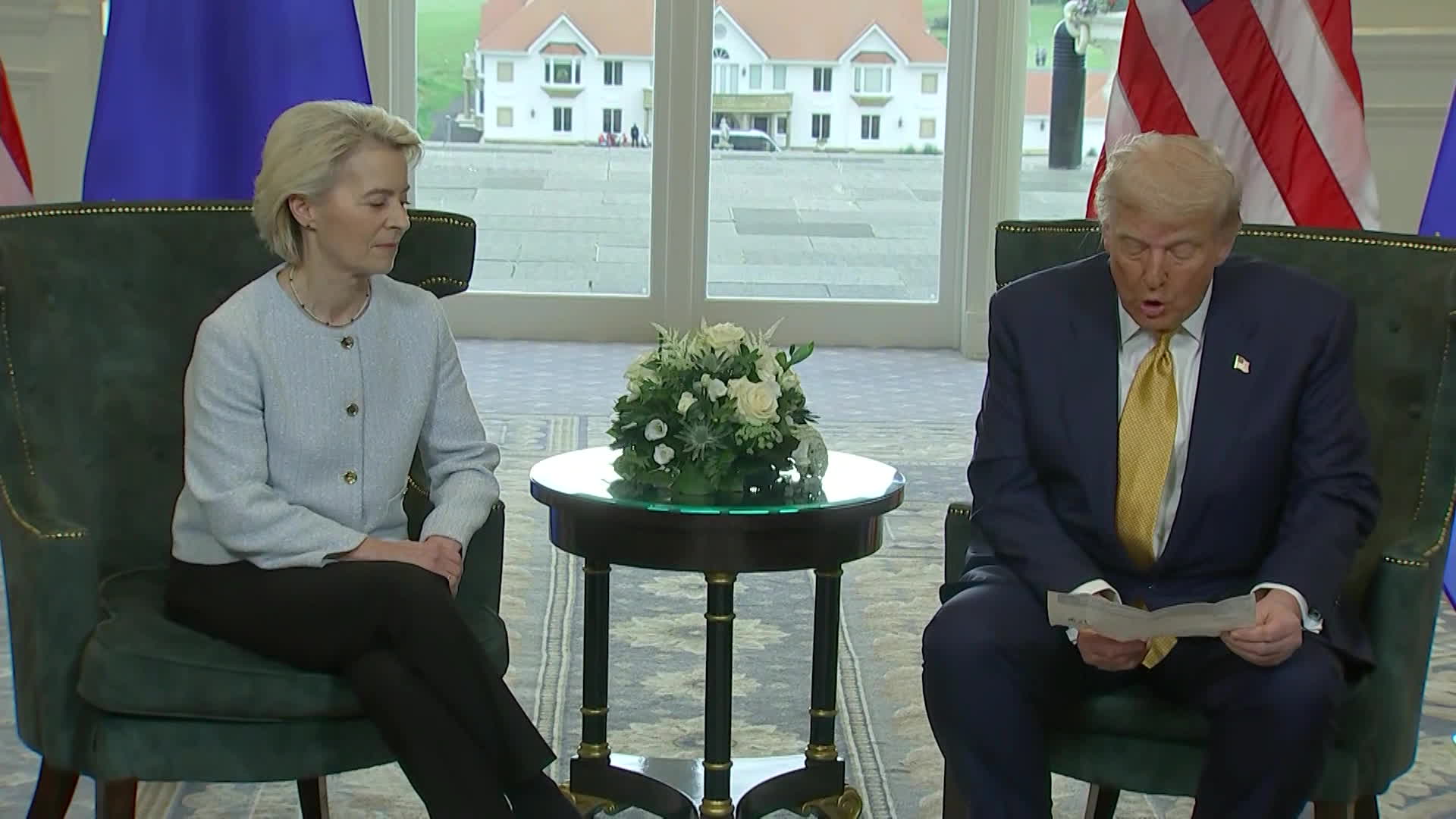
European Commission President Ursula von der Leyen and US President Donald Trump reached an agreement on July 27, where the EU will face 15% tariffs on most exports, including automobiles. This deal, struck at Trump Turnberry, is significant as it successfully averts a broader trade war that could have delivered a substantial blow to the global economy.
A trade agreement has been reached between the US and the European Union, resolving a significant source of global economic uncertainty. The deal, announced on July 27, stipulates a 15% tariff on most EU exports to the US. While the imposition of new tariffs presents a headwind, the market's moderately positive reaction, reflected by a sentiment score of 0.6, indicates that this outcome is preferable to the feared alternative of a full-scale trade war, which the article notes could have delivered a "hammer blow" to the economy. The European automotive sector is specifically identified as being impacted by these new duties, which will directly affect the cost structure and competitiveness of European car manufacturers in the US market. The high market impact score of 0.7 highlights the importance of this development in de-risking the geopolitical landscape, providing businesses and investors with a clear, albeit costly, framework for transatlantic trade, rather than continued ambiguity.
AI-powered research, real-time alerts, and portfolio analytics for institutional investors.
Request DemoOverall Sentiment
moderately positive
Sentiment Score
0.60
