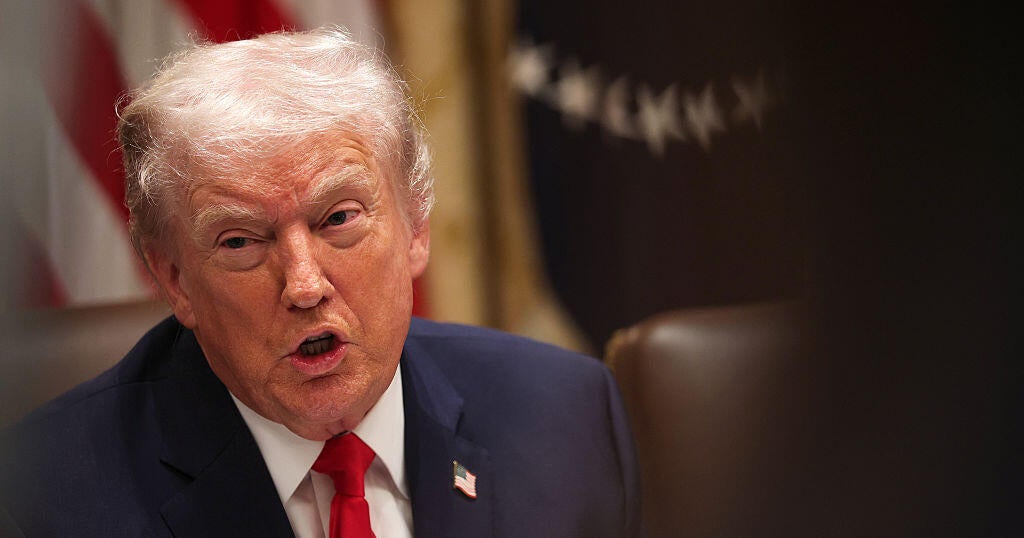
President Trump signed an executive order establishing the White House Great American Recovery Initiative to coordinate federal efforts on addiction prevention, treatment, recovery support and re-entry, to be chaired by HHS Secretary Robert F. Kennedy Jr. and Kathryn Burgum. The move follows a reversal of planned cuts to SAMHSA programs (about $2 billion) and cites 2024 SAMHSA data showing 40.7 million adults with substance use disorder who did not receive treatment and that 95.6% of untreated individuals did not recognize they needed it. For investors, the order signals potential prioritization and redirection of federal grant funding toward addiction recovery programs and related providers, but is unlikely to be an immediate market mover.
Market structure: Federal coordination and a visible White House initiative structurally favors payors/providers of addiction treatment (inpatient/outpatient specialty operators), medication‑assisted treatment (MAT) manufacturers, and tele‑behavioral platforms because grants and referral flows raise demand for capacity and reimbursable services. Expect a reallocation of incremental public funding (hundreds of millions annually plausible) away from generic community mental health to certified recovery programs, improving pricing power for accredited providers over the next 12–36 months.
Risk assessment: Key tail risks are political (initiative led by a controversial chair could slow appropriations), administrative (grant-award delays or fraud controls), and operational (capacity constraints raising labor costs). Immediate reaction (days) will be headline-driven, short-term (1–6 months) depends on SAMHSA/HHS grant notices, and structural effects materialize over 6–24 months as funds are deployed and reimbursement patterns change.
Trade implications: Favor mid-cap specialty behavioral health operators, MAT-centric biopharma, and telehealth names—these should outperform broad hospitals. Use concentrated, size-limited exposure and options to express convexity around grant announcements and FY appropriations windows (60–180 days). Monitor SAMHSA grant timelines and state plan approvals as execution triggers.
Contrarian angles: The market may underprice political execution risk—if funding is symbolic rather than budgetary, multiple compression on small outpatient operators could follow. Conversely, stronger-than-expected enforcement of supply routes would boost treatment demand, creating asymmetric upside for capacity owners who can scale quickly (6–18 months). Historical precedent: federal behavioral‑health funding often has a 3–12 month lag from announcement to cashflow.
AI-powered research, real-time alerts, and portfolio analytics for institutional investors.
Request DemoOverall Sentiment
neutral
Sentiment Score
0.10
