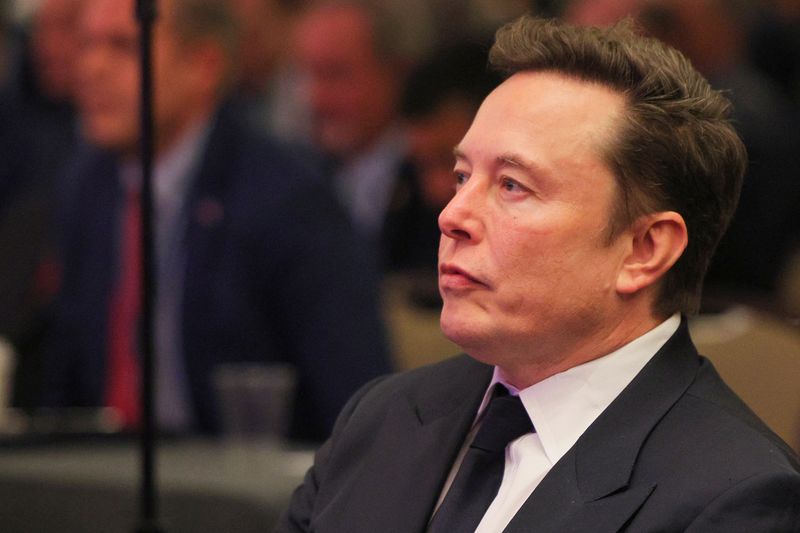
Elon Musk announced the Terafab project in Austin — a joint Tesla/SpaceX advanced fab targeting 2-nanometer chips to support up to a terawatt of annual computing and specialized variants for Optimus/robotaxi and SpaceX/xAI. The plan ties into orbital 'mini' AI data centers (scaling from ~100 kW toward megawatt-class) and is linked to a proposed record-setting $50 billion IPO to fund space infrastructure; Tesla has also committed $2 billion and integrated Grok into vehicles. The initiative materially reduces external supply reliance but faces significant engineering and capital hurdles inherent in high-end semiconductor manufacturing.
A large-scale push by a major ecosystem owner into captive silicon and orbital compute will re-price the marginal economics of advanced-node fabs across the next 3–7 years. Building and qualifying bleeding-edge process capability typically requires upfront tool and facility investments in the low tens of billions and a multi-year yield cliff (ramp-to-volume often spans 36–60 months), so market expectations about near-term displacement of foundry revenues are likely premature.
The true second-order winners are system integrators and specialty suppliers that sell complete, radiation-tolerant, thermally-optimized stacks where unit volumes are modest but ASPs are 2–5x standard datacenter components; these vendors can capture margin expansion without competing on wafer economics. Conversely, pure-play foundries and commodity DRAM/NAND vendors face margin pressure only if they concede roadmap discounts or take share in lower-margin captive contracts — a scenario that would unfold over multiple fiscal cycles, not quarters.
Key catalysts to watch are: (1) capital allocation and balance-sheet disclosures from the parent(s) over the next 6–12 months, (2) filings/permits and long-lead equipment orders that show start dates for civil works in the next 0–18 months, and (3) early hiring and fab yield signals 24–60 months out. Tail risks include execution failure, export-control friction on advanced nodes, and a prolonged tech-capex cycle that forces asset impairments; a credible setback could compress related equities by 20–40% within 6–18 months.
The consensus underprices both the timeline and capital dilution risk: success yields meaningful unit-cost advantage for proprietary workloads (potentially 20–40% lower per-ops over time), while failure creates concentrated downside for the sponsoring public equity — a classic binary with asymmetric payoffs for option-based strategies.
AI-powered research, real-time alerts, and portfolio analytics for institutional investors.
Request DemoOverall Sentiment
mildly positive
Sentiment Score
0.30
Ticker Sentiment
