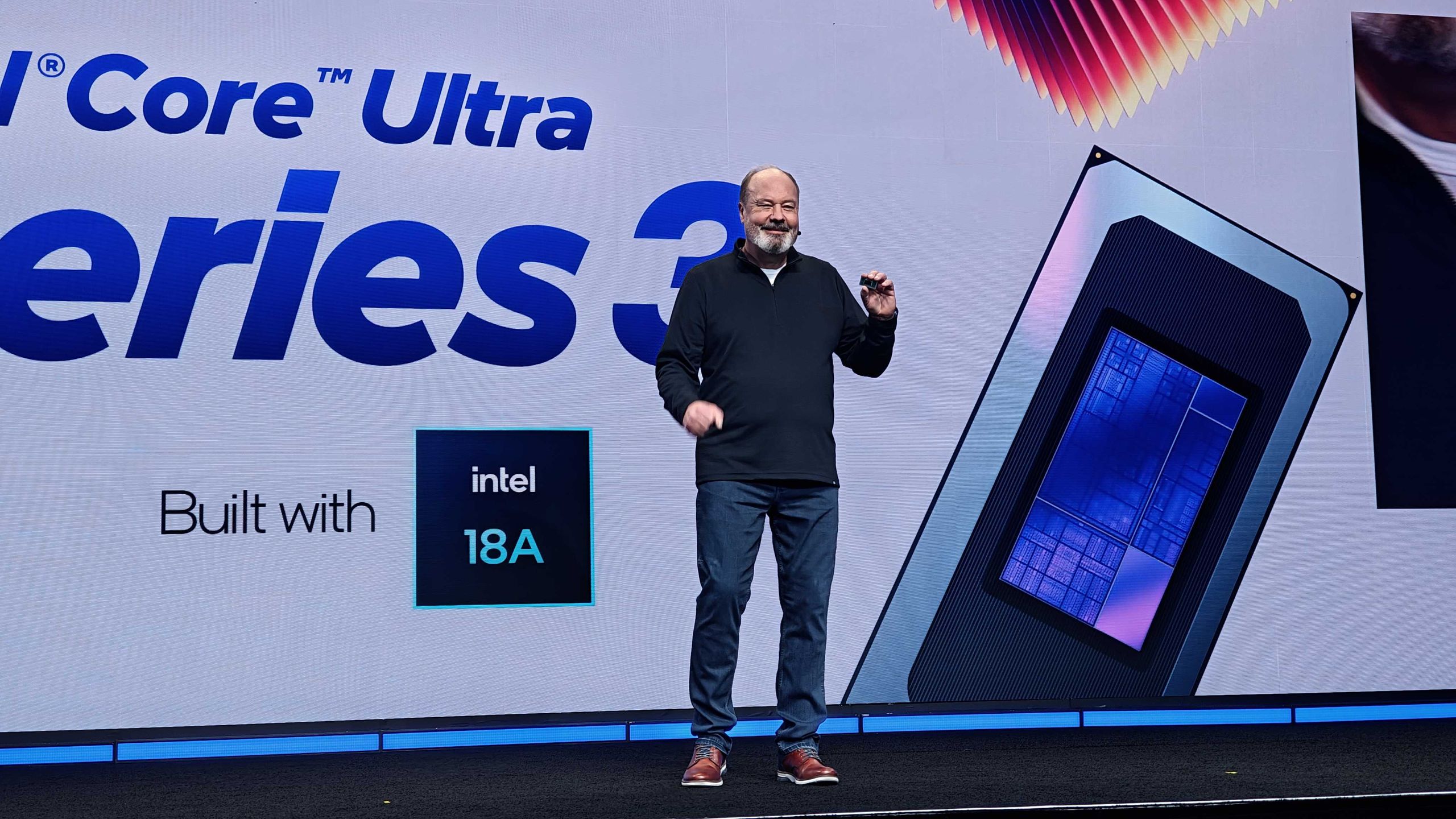
At CES 2026 AMD centered a two-hour keynote on an "AI everywhere" narrative and partner-focused announcements, largely sidelining consumer-focused details despite announcing refreshed Strix Point (Gorgon Point), Strix Halo SKUs and the Ryzen 7 9850X3D. Intel ran a concise 45-minute consumer-focused keynote around its Panther Lake platform; the piece notes AMD's client and gaming business generated roughly $4.0bn last year versus about $4.3bn for its data-center segment, and warns that AMD's shift toward AI/data-center messaging could erode consumer positioning and offer Intel an opportunity as both prepare next-generation launches (Zen 6, Nova Lake) later in 2026.
Market structure: CES optics favor Nvidia and Intel where Nvidia keeps accelerator pricing power and Intel is regaining consumer narrative; AMD risks ceding consumer wallet-share while chasing higher‑margin AI/data‑center TAM. Expect continued tight GPU supply vs. demand in H1–H2 2026 sustaining NVDA ASPs and DRAM/GPU memory price pressure; consumer OEM volumes may lag until RAM prices normalize (<–10% QoQ target).
Risk assessment: Tail risks include export/regulatory action versus NVDA/AMD (low-probability, high-impact) and node/packaging misses at Intel (18A yield shortfall) or TSMC capacity constraints; operational delay would compress margins industry‑wide. Immediate window (days–weeks) is sentiment driven; short term (1–3 quarters) earnings/guidance will reflect product ramps and memory pricing; long term (H2 2026+) hinges on Zen 6 vs. Nova Lake outcomes and ecosystem lock‑in (CUDA vs ROCm).
Trade implications: Favor asymmetric exposures: buy selective NVDA convexity via limited-risk call spreads and establish a tactical long INTC cash position sized 2–3% to capture consumer re‑engagement into H2 2026; consider short/put exposure to AMD if share weakness >15% from run‑rate due to consumer neglect. Rotate away from pure consumer PC suppliers if RAM stays >+5% YoY by Q2 2026; hedge sector beta with short tech‑beta or long IG bonds if macro risk rises.
Contrarian angles: Consensus overstresses CES optics—AMD’s data‑center investments could produce sustainable gross‑margin expansion even if consumer mindshare slips, so a >20% selloff in AMD would likely be overdone. Intel’s narrative wins attention but is execution‑dependent; NVDA valuation remains rich and vulnerable to regulatory or demand shocks, creating tactical re‑entry opportunities on >20% pullbacks.
AI-powered research, real-time alerts, and portfolio analytics for institutional investors.
Request DemoOverall Sentiment
mildly negative
Sentiment Score
-0.25
Ticker Sentiment
