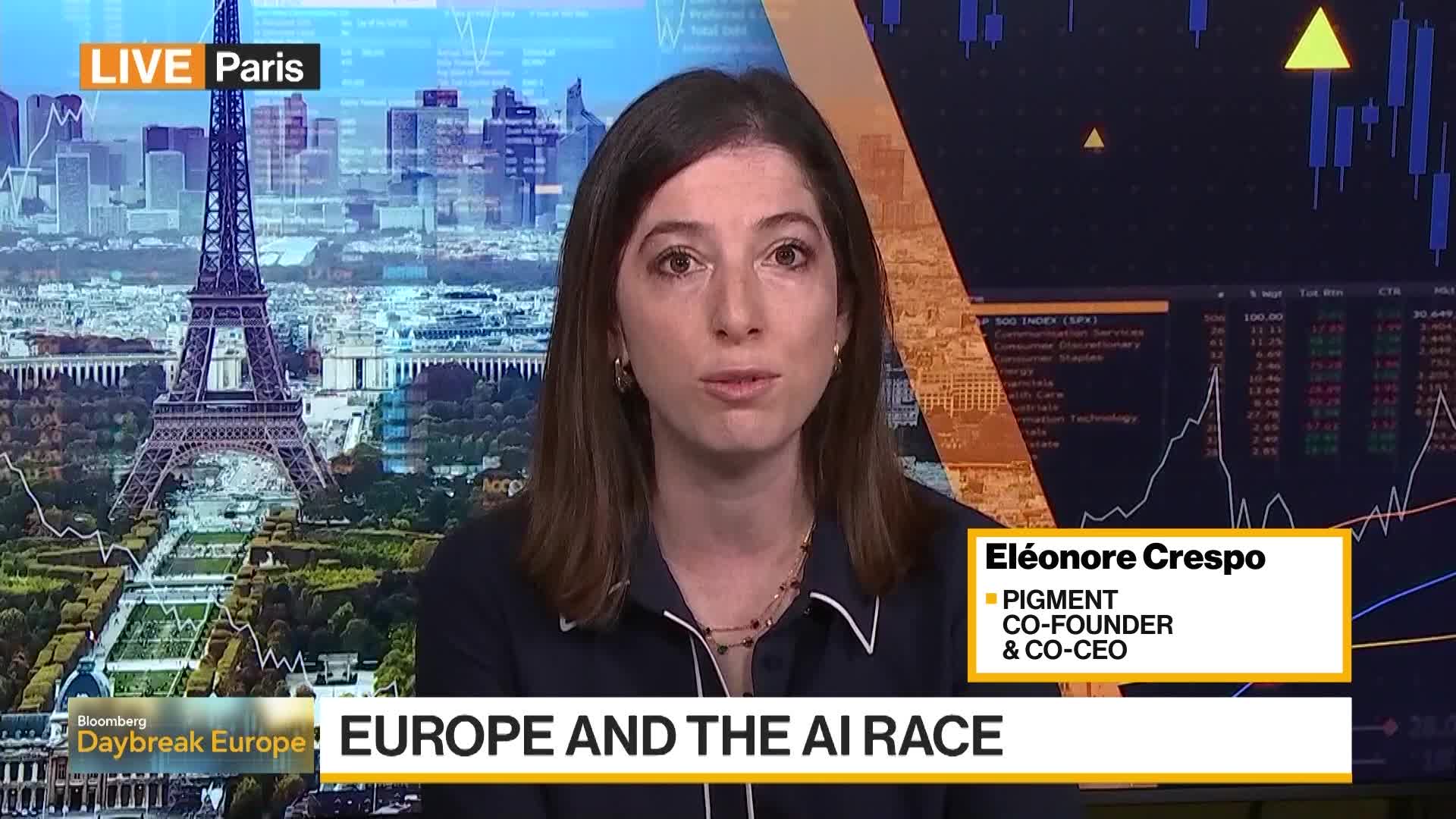
Pigment Co-Founder & Co-CEO Eléonore Crespo stated that Artificial Intelligence empowers the workforce by enabling faster decision-making and improving the quality of questions and answers, rather than replacing jobs. Speaking on Bloomberg, Crespo emphasized AI's critical role in enhancing organizational productivity and efficiency, particularly as companies face increasing pressure to make rapid decisions.
The commentary from Pigment's Co-CEO, Eléonore Crespo, presents a strongly positive viewpoint on the role of Artificial Intelligence in the corporate environment, positioning it as a tool for workforce empowerment rather than job displacement. According to Crespo, AI's primary function is to augment human capabilities by enabling employees to "ask better questions and get better answers," thereby facilitating faster and more effective decision-making. This perspective directly supports the investment thesis for enterprise software companies focused on productivity and analytics. While the statement carries an optimistic tone and contributes to the positive sentiment surrounding the AI theme, its market impact is assessed as moderate. The lack of specific financial metrics or company-specific news means this commentary should be viewed as a directional insight into corporate AI adoption trends, rather than a direct catalyst for any single security.
AI-powered research, real-time alerts, and portfolio analytics for institutional investors.
Request DemoOverall Sentiment
strongly positive
Sentiment Score
0.70
