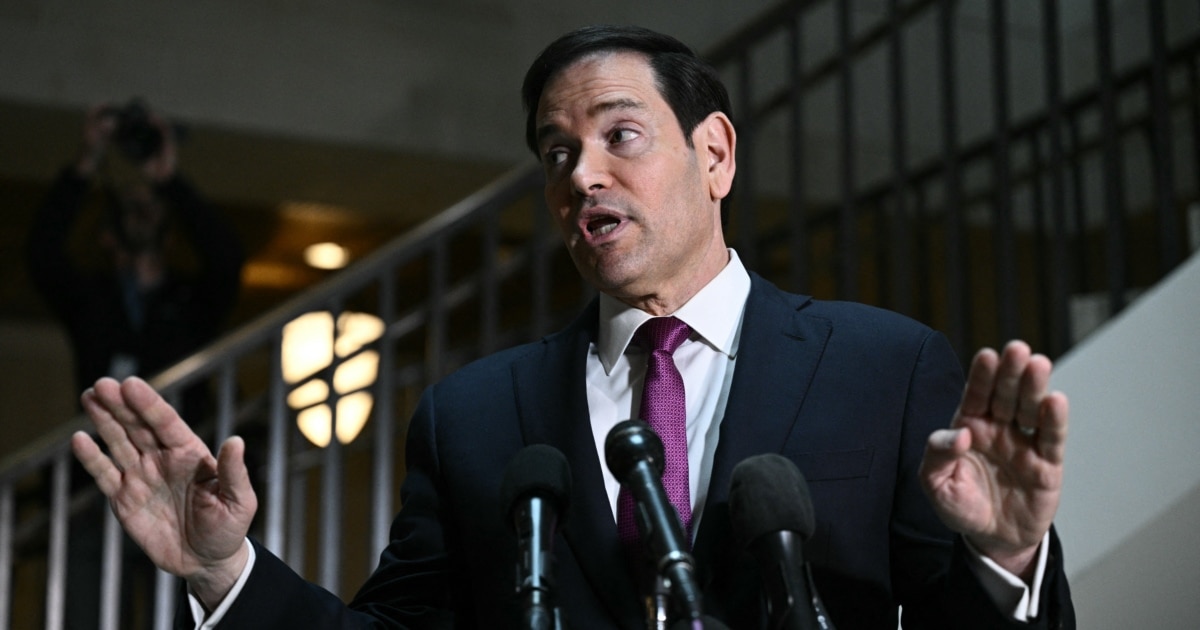
U.S. Secretary of State Marco Rubio defended U.S. and Israeli strikes on Iranian missile sites and military infrastructure on Feb. 28 as preemptive actions to protect American forces, warning further major strikes are forthcoming; Iran responded by firing missiles at U.S. bases in the region, with U.S. air defenses intercepting many incoming projectiles but some bases reporting damage and casualties. The confrontations mark a sharp escalation between Washington and Tehran that widens the Israel-Iran conflict into a U.S.-involved regional flare-up, raising the prospect of sustained military action and material risks to regional stability and energy supply dynamics.
Market structure: Immediate winners are large defense primes (LMT, NOC, RTX) and integrated energy producers (XOM, CVX) because demand shock and oil risk premia lift revenues and margins; losers are airlines (AAL, DAL), travel/hospitality (MAR), EM sovereign credits and regional banks with MENA exposure. Pricing power shifts to vertically integrated oil producers and defense contractors able to secure urgent contracts; airlines and leisure operators face fuel cost passthrough limits and capacity cuts. Cross-asset signal: expect crude Brent/WTI to jump 10–20% in days if escalation persists, VIX to rise 5–12 pts, USD strength vs EM FX (-3–8%), and Treasuries rally (10–30bp lower yields) as safe-haven flows hit.
Risk assessment: Tail-risk scenario (5–20% probability over 6 months) is wider regional war driving Brent >$130, insurers re-routing shipping and CDS on EM sovereigns widening 200–500bps. Time horizons: immediate (days) = volatility & oil spike; short (weeks–months) = defense re-rating and earnings revisions; long (quarters–years) = structural higher defense budgets and diversified energy capex. Hidden dependencies include Strait of Hormuz disruptions, insurance/freight-cost feedback into CPI, and OPEC+ spare capacity; catalysts include Iranian counterstrikes, Israeli ground campaign, and OPEC+ emergency meetings.
Trade implications: Favored plays: 6–12 month longs in LMT/RTX (revenue uplift 3–7% vs guidance) and energy majors (XOM/CVX) sized 2–4% portfolio each; short airlines (DAL/UAL) or XAL ETF sized 1–2% to capture fuel shock. Options: buy 3–6 month calls on LMT/RTX 5–10% OTM and buy protective 3-month SPY 3% OTM puts sized to cover 2–3% portfolio; use pair trades (long LMT, short DAL) beta-neutral. Entry: phase in over 3 trading days while Brent >$85 and VIX >22; trim positions if Brent falls below $75 for 7 consecutive sessions.
Contrarian angles: Consensus underprices the duration of higher defense budgets — if conflict stabilizes within 3 months markets may sell off cyclicals into rebalancing, creating buy-the-dip in large-cap defense names. Reaction may be overdone in gold/miners where supply/demand fundamentals unchanged; conversely oil could undershoot if Iran avoids major export disruptions. Historical parallels (Gulf crises 1990, 2019 tanker strikes) show initial overshoots then mean-reversion in equities over 3–6 months; plan for volatility and liquidity squeezes in EM credit and small-cap shorts.
AI-powered research, real-time alerts, and portfolio analytics for institutional investors.
Request TrialOverall Sentiment
strongly negative
Sentiment Score
-0.60
