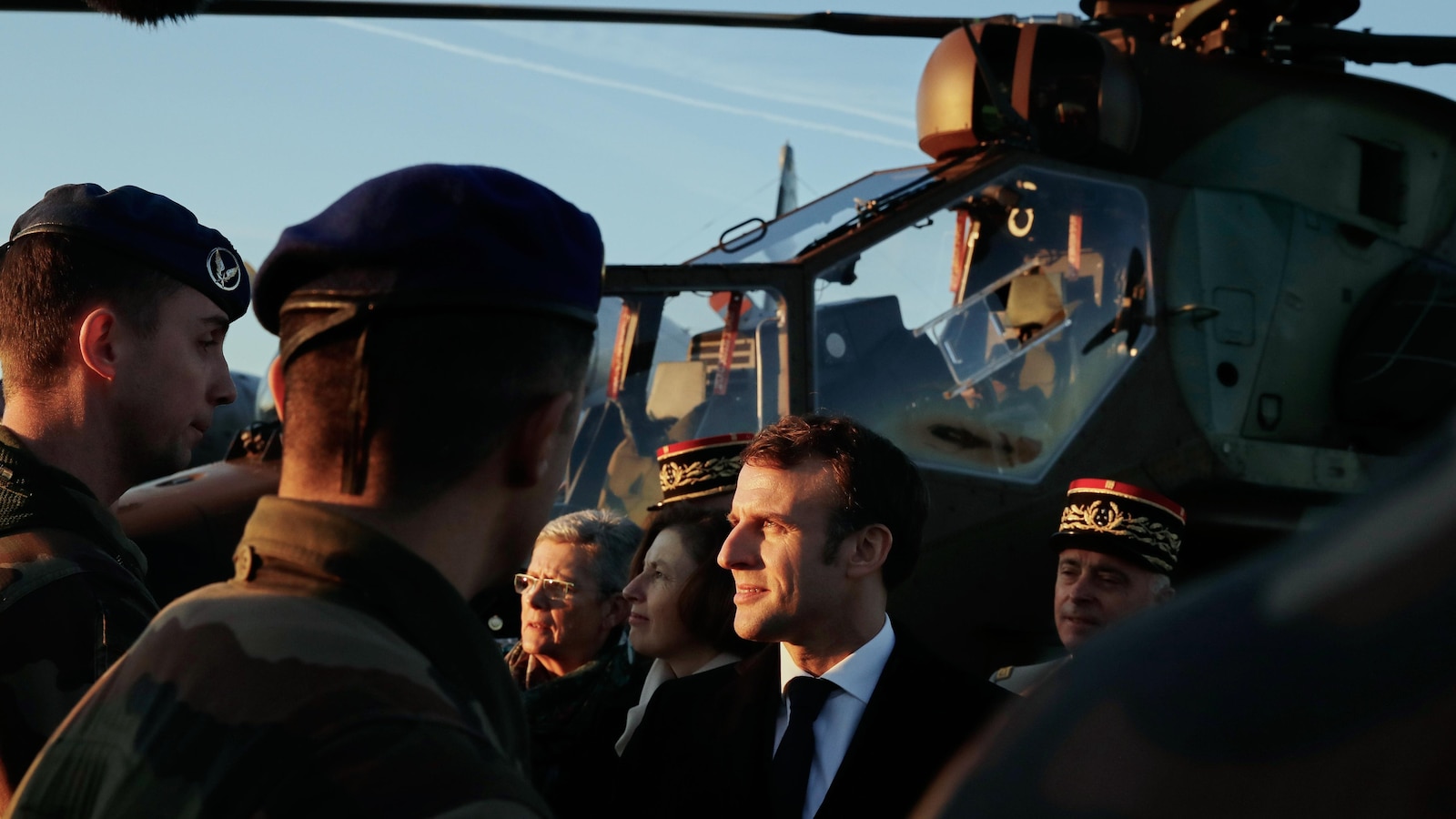
President Emmanuel Macron will unveil a plan to introduce a voluntary national military service as France boosts defence capacity amid concerns over Russia, while explicitly ruling out reinstating conscription or sending volunteers to Ukraine. The government has pledged an additional €6.5 billion in military spending over the next two years and targets €64 billion in annual defence spending by 2027 (up from €32 billion in 2017); France currently fields ~200,000 active personnel and >40,000 reservists with a goal of 100,000 reservists by 2030. The measure, subject to parliamentary approval, signals higher fiscal allocation to defence and increased geopolitical risk for Europe, supportive for defence contractors but generally risk‑off for broader markets.
Market structure: France’s announced voluntary service and €6.5bn near-term top-up (target €64bn/year by 2027) signal multi-year procurement tailwinds for defense primes, systems integrators, training/simulation vendors and ammunition/metals suppliers. Expect outsized revenue growth for EU defense contractors (Rheinmetall, Thales, Safran) and positive spillovers to US primes supplying avionics/ML systems; leisure, tourism and labor-intensive consumer names in France may see relative weakness if talent shifts and higher payroll/capex taxes follow.
Risk assessment: Tail risks include faster-than-expected geopolitical escalation (NATO-Russia confrontation) that spikes energy prices and credit spreads, or domestic political pushback that stalls budget ratification. Immediate market moves (days) should be muted; weeks–months will price in procurement contracts and FX/bond reaction; quarters–years see structural orderbooks and supplier capacity constraints (munitions, specialty metals).
Trade implications: Favor equity exposure to defense suppliers and ETFs while hedging sovereign duration and commodity risk. Tactical options (12-month call spreads) on large-cap primes limit upfront cost; short French 10y duration or widen OAT-Bund spread exposure to express fiscal pressure. Commodities (oil, nickel) and gold should be overweight as insurance if geopolitical volatility rises.
Contrarian angles: Consensus focuses on headline defense names—missed opportunities lie in training/simulation, cybersecurity, reserve logistics and small-cap subcontractors which re-rate with multi-year contracts but remain undercovered. Market may underprice sovereign funding cost: if Paris cannot fully offset spending, OAT yields could reprice 20–60bps, creating asymmetric downside for French financials versus defense equities.
AI-powered research, real-time alerts, and portfolio analytics for institutional investors.
Request DemoOverall Sentiment
mildly negative
Sentiment Score
-0.25
