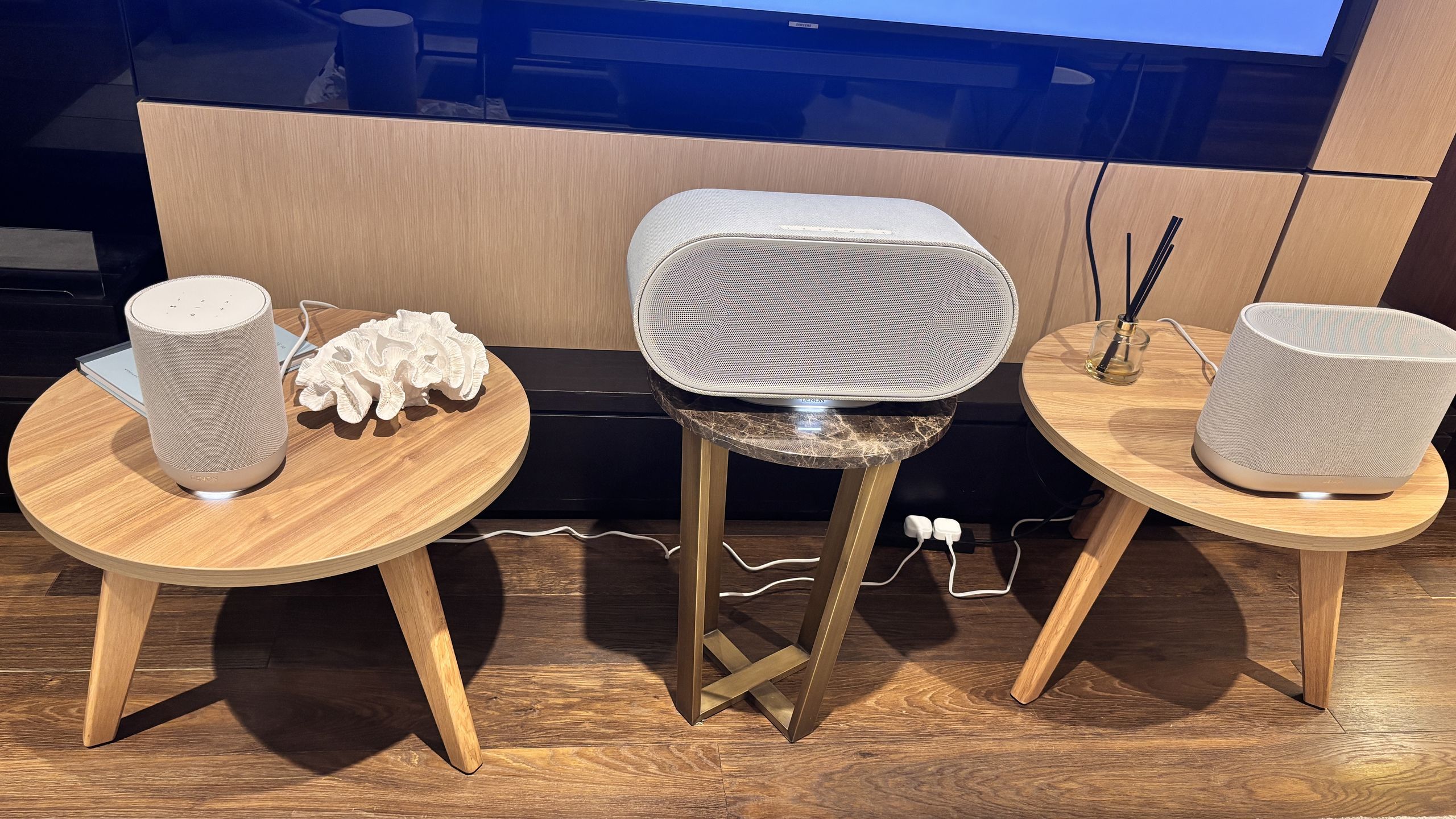
Denon unveiled the Home 2 series: Home 200 (£299 / $399 / €349, 3 drivers, 65W), Home 400 (£449 / $599 / €499, 6 drivers, 90W) and Home 600 (£599 / $799 / €699, 8 drivers, 170W). All models run HEOS, support hi-res up to 24-bit/192kHz and DSD128, Dolby Atmos spatial audio, AirPlay 2/Bluetooth and wired inputs, with stereo pairing and app-based spatial tuning. Early demo impressions are positive and suggest Denon could pressure Sonos—which has faced recent app problems and a CEO resignation in 2025—but substantive competitive impact will depend on longer-term independent reviews and consumer adoption.
A well-executed new entrant into the multi-room speaker category is a direct negative for Sonos' growth multiple because Sonos' premium valuation is predicated on ecosystem share and recurring service monetization; even a 2-3ppt channel share loss over 12 months would compress consensus EBITDA by a material amount given Sonos' high fixed-cost base. The biggest second-order beneficiary is streaming service volume (Spotify/Qobuz/Tidal) and any platform that increases time-spent in paid-tier ecosystems — incremental active device installations tend to show a lagged 6–12 month uplift to paid conversion and ARPU, especially when manufacturers push preloads or simplified account linking. Hardware suppliers (driver/amp IC vendors) and retail distribution partners will see churn in SKU mix and promotional cadence; expect short-term downward pricing pressure and margin compression at specialty retail but potential upside for mass retailers able to capture volume-led cross-sell (think accessories and extended warranties).
Key risks and catalysts are concentrated in execution and software stability: product previews matter less than real-world returns — firmware/voice/app UX failures or supply hiccups can erase early press gains in 60–90 days. Near-term catalysts to watch are independent long-form reviews, aggregate sell-through data from major retailers (weekly sell-thru in the 4–8 week window post-launch), and Sonos’ upcoming earnings cycle where management may be forced to disclose promotional spend or channel share trends; any guidance revision within 1–2 quarters will be catalytic. A reversal is plausible if Sonos responds with aggressive pricing, bundling, or improved app stability — those moves would be expensive but quick to shore up retention.
The market currently underweights the sticky value of Sonos’ installed base and overweights the headline grab from a new product launch; the consensus misses the fact that most share movement in this category is incremental and drawn out over 12–24 months, not instantaneous. For streaming platforms, hardware diversification is a structural positive but translation to monetization is uneven — expect a modest tailwind to Spotify over 6–12 months rather than a discrete re-rating. Position sizing should reflect a high execution risk environment: trade around discrete catalysts and hedge any directional exposure with event-dated options or paired hedges.
AI-powered research, real-time alerts, and portfolio analytics for institutional investors.
Request DemoOverall Sentiment
mildly positive
Sentiment Score
0.25
Ticker Sentiment
