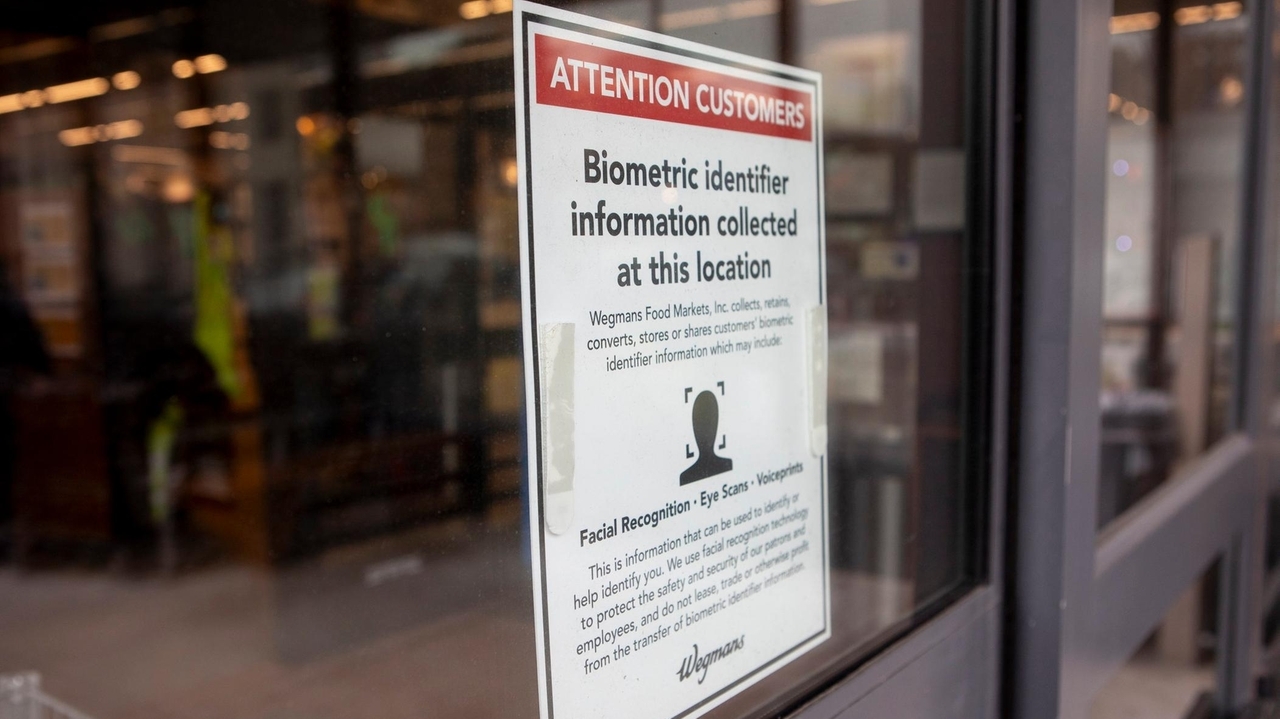
Wegmans has deployed facial recognition cameras at its two New York City stores to identify repeat theft offenders as retailers respond to rising shoplifting (the National Retail Federation reported a 19% average increase in theft incidents from 2023 to 2024). The move follows similar implementations by major chains and is permitted in NYC only with signage under a 2021 disclosure law, but it has sparked privacy, bias and data-security concerns that could prompt regulatory scrutiny or reputational risk. For investors, immediate financial impact appears limited, though potential compliance costs, litigation risk, and brand damage in key urban markets are relevant downside considerations.
Market Structure: Retailers and third-party AI/video-analytics vendors are the direct winners — expect incremental demand for MSI-style physical security integrators and SaaS analytics (recurring revenues) as chains try to curb a reported 19% rise in theft. Brick-and-mortar grocers (Wegmans, regional chains) gain modest margin relief if shrink falls 10–20% within 6–12 months, translating to an estimated 5–20 bps gross-margin tailwind for large grocers; reputational losers are consumer-facing brands vulnerable to privacy backlash and reduced foot traffic.
Risk Assessment: Key tail risks are municipal/state bans, class-action biometric suits, and a major data breach; a worst-case cascade (multi-state bans + litigation) could impose $50–300M hits on large national retailers over 1–3 years and materially raise insurance/loss-prevention OPEX. Near-term (days–weeks) risk is PR-driven sales volatility; medium-term (3–12 months) is regulatory action and litigation; long-term (2–5 years) is sector-wide policy uncertainty that reallocates tech spend into privacy-first alternatives.
Trade Implications: Favor long exposure to security/software vendors with recurring revenue (e.g., CRWD, FTNT, MSI) sized 1–3% positions with 6–12 month horizons and 10–15% stop-losses; consider short 1–2% positions in discretionary retail names with elevated customer-sensitivity (M) where brand/footfall risk is highest. Options: buy 3–6 month call spreads on CRWD/MSI to cap premium, and buy protective puts on exposed retailers (M) sized to offset short delta.
Contrarian Angles: The market overestimates immediate regulatory paralysis — historically (PCI/EMV) regulation created durable security spend, not demand destruction, suggesting an underappreciated multi-year TAM expansion for privacy-compliant surveillance and cyber-insurance. Unintended consequence: bans could premiumize third-party 'privacy-first' vendors and boost valuation dispersion; hunt for winners that pivot to on-device/ephemeral biometric hashing.
AI-powered research, real-time alerts, and portfolio analytics for institutional investors.
Request DemoOverall Sentiment
mildly negative
Sentiment Score
-0.25
Ticker Sentiment
