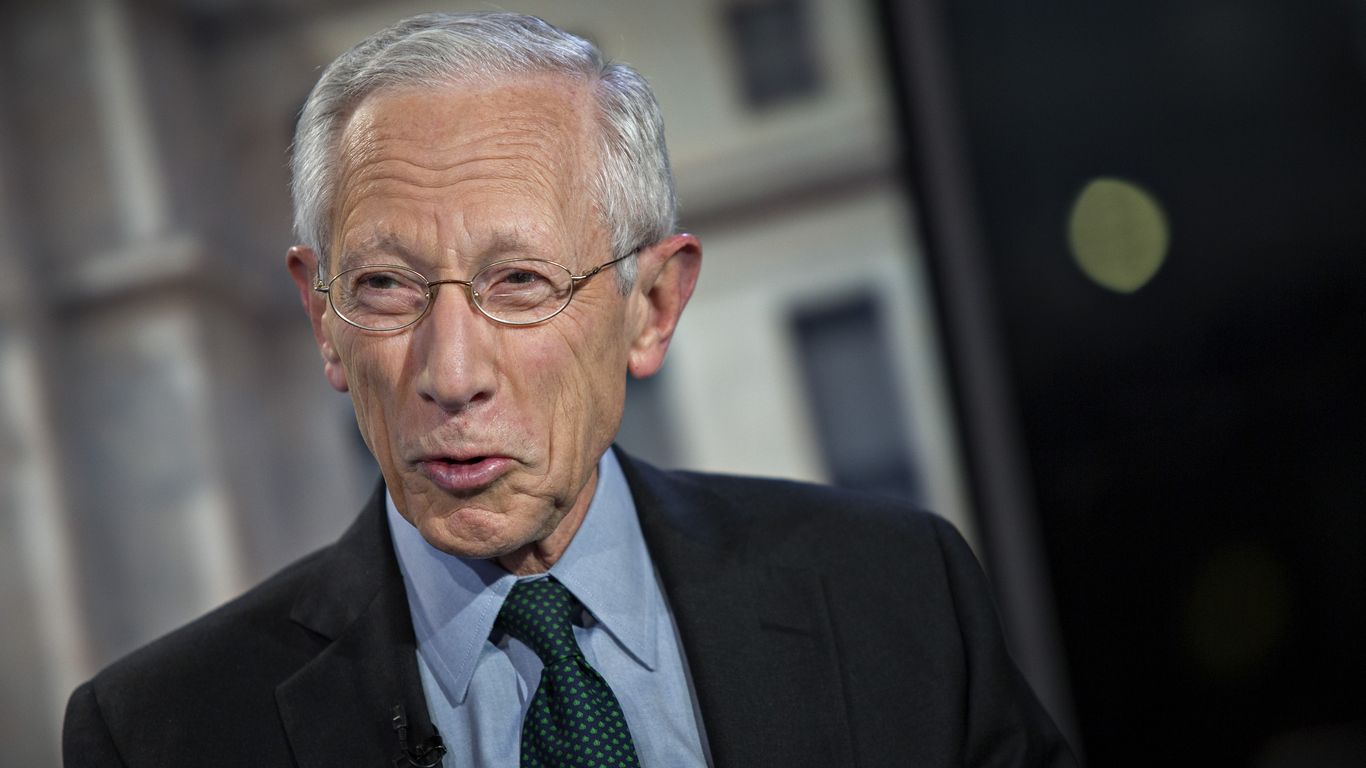
Stanley Fischer, a highly influential economist and central banker, has died at age 81, leaving behind a legacy of intellectual leadership and mentorship. Fischer trained generations of top economists, including Ben Bernanke, Mario Draghi, and Kazuo Ueda, at MIT and held prominent positions at the IMF, the Federal Reserve, and the Bank of Israel. He played a key role in navigating the East Asian crises and the Global Financial Crisis, leaving a lasting impact on global economic policy and its practitioners.
Stanley Fischer's passing at age 81 marks the end of an era for a pivotal figure in global economic policy, whose primary impact stemmed from his intellectual leadership and extensive mentorship over four decades. His tenure at the Massachusetts Institute of Technology cultivated a generation of influential economists, including former Federal Reserve Chair Ben Bernanke, former ECB President Mario Draghi, and current Bank of Japan Governor Kazuo Ueda, ingraining in them an economic philosophy that was both intellectually rigorous and practically applicable to policymaking during recessions or crises. Fischer's direct policy contributions were substantial, holding the No. 2 positions at the International Monetary Fund (1994-2001) and the Federal Reserve (2014-2017), and serving as Governor of the Bank of Israel (2005-2013). He skillfully navigated the IMF through the East Asian crises of the late 1990s, balancing financial rescues with demands for structural reforms that, despite initial pain, contributed to subsequent economic booms in affected nations like Thailand and South Korea. His leadership at Israel's central bank successfully steered the nation through the Global Financial Crisis with relative resilience. While the sentiment surrounding his legacy is strongly positive (0.85), the minimal market impact score (0.05) suggests his passing is viewed as a historical marker rather than an immediate market-moving event, with his influence now primarily carried forward by the many prominent policymakers he trained.
AI-powered research, real-time alerts, and portfolio analytics for institutional investors.
Request DemoOverall Sentiment
strongly positive
Sentiment Score
0.85
