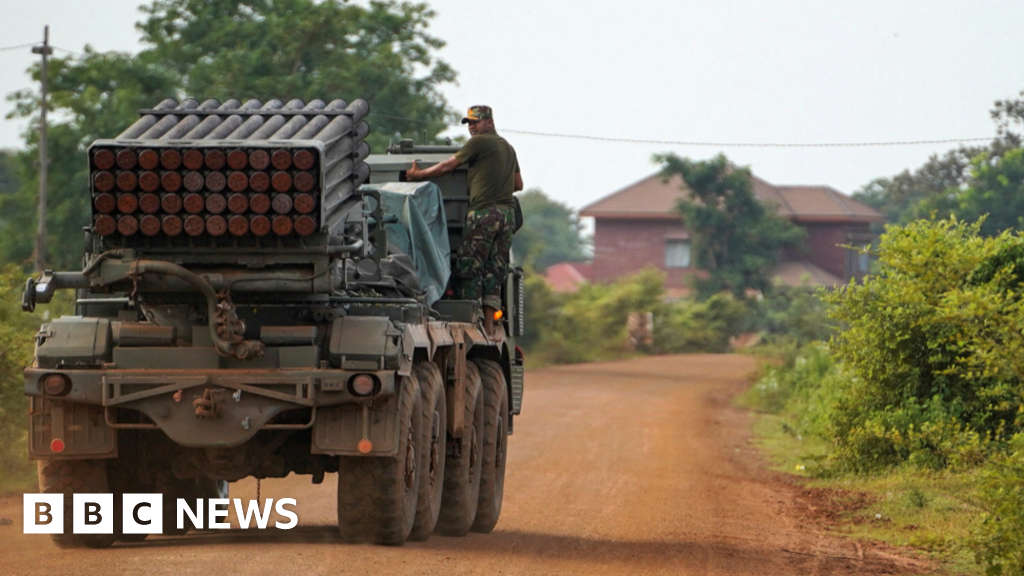
Donald Trump announced he brokered an "immediate ceasefire" between Thailand and Cambodia, linking the resolution of their border conflict to the resumption of trade talks and the avoidance of impending 36% US tariffs on goods from both nations, set to commence August 1. While Thailand confirmed an agreement in principle, the intervention, which follows deadly clashes and significant displacement, highlights the direct influence of US geopolitical actions on regional trade and supply chain stability. This development is critical for investors monitoring geopolitical risk and its impact on international commerce.
A significant geopolitical development with direct economic repercussions is unfolding as the U.S. has brokered a ceasefire between Thailand and Cambodia. The intervention is explicitly tied to trade policy, with President Trump linking the cessation of hostilities to the avoidance of a 36% U.S. tariff on goods from both nations, set to take effect on August 1. While this presents a potential de-escalation for a conflict that has caused 33 fatalities and displaced thousands, the resolution remains uncertain. Thailand's acting prime minister confirmed only an "in principle" agreement, contingent on observing Cambodian sincerity. This situation injects considerable near-term risk and uncertainty into supply chains reliant on the region, as the outcome of these diplomatic efforts in the coming days will directly determine whether significant tariffs are imposed on U.S. importers.
AI-powered research, real-time alerts, and portfolio analytics for institutional investors.
Request DemoOverall Sentiment
mixed
Sentiment Score
-0.10
