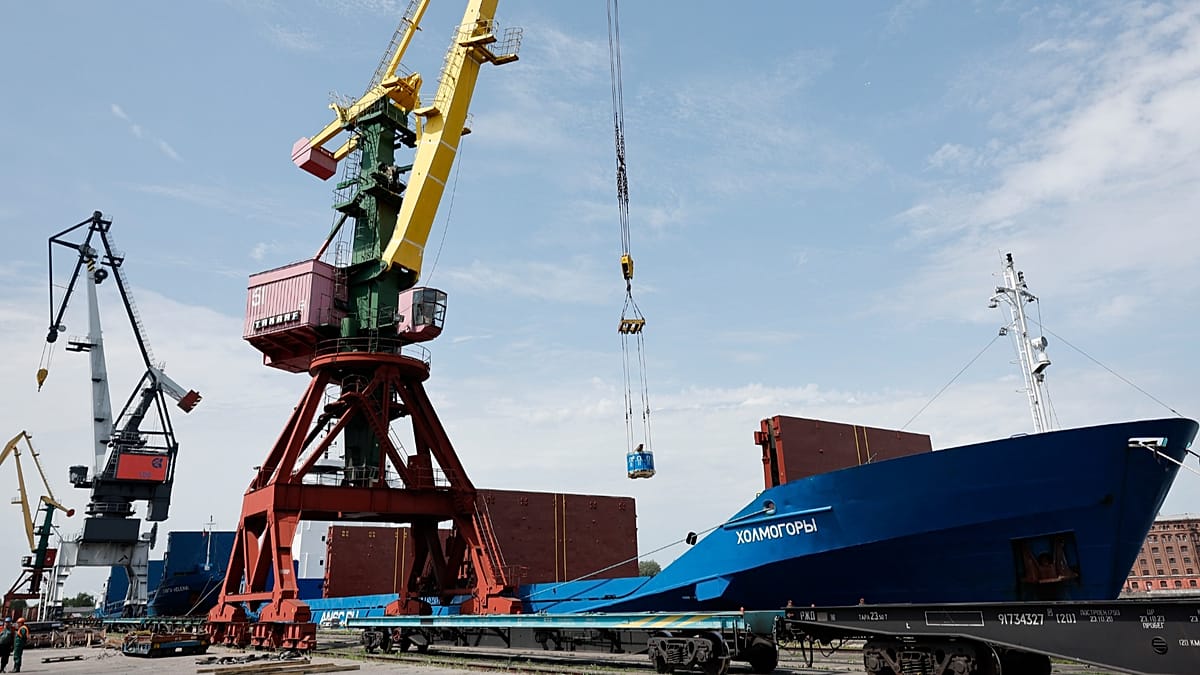
Spanish investigators believe the Russian cargo ship Ursa Major sank on 23 December 2024 while secretly carrying components for two submarine nuclear reactors, likely bound for North Korea. The probe suggests the vessel may have been deliberately attacked to block transfer of advanced nuclear technology, with 2 crew still missing and Russia-North Korea military cooperation under scrutiny. The findings heighten geopolitical and sanctions risk around Russian military logistics, North Korea proliferation, and maritime security.
This is less a single-ship headline than evidence of a wider hardening in the Russia/North Korea supply chain. If Moscow is willing to move sensitive reactor modules by sea under sanctions, the marginal cost of proliferating strategic capability to Pyongyang is falling, which raises the probability of more aggressive allied interdiction, tighter maritime monitoring, and secondary-sanctions pressure on facilitators over the next 3-6 months. The market implication is not immediate commodity disruption so much as a higher-regime geopolitical premium in defense, surveillance, and cyber/electronic warfare spend.
The second-order winner is the maritime security stack: subsea sensing, ISR drones, satellite analytics, and dual-use inspection technology. Any escalation around the wreck site, or credible evidence of covert transfer routes, increases procurement urgency for NATO navies and Asian partners worried about nuclear smuggling and shadow logistics. The loser set is broader logistics intermediaries with state-linked exposure: insurers, ship managers, port-service providers, and niche heavy-lift operators tied to sanctioned jurisdictions will face more diligence drag, higher premiums, and a non-trivial risk of account termination even without direct naming in the press.
The key catalyst path is not the original sinking, but whether investigators or intelligence services can attribute the cargo chain and publicize names, routes, or enabling infrastructure. That would convert a headline event into a sanctions-compliance case with a 6-12 month enforcement tail. The contrarian point: some of the move in defense and sanctions beneficiaries may already be partially priced, but the underappreciated angle is the administrative burden on global shipping—every new interdiction scare raises transaction costs for benign cargo too, which can widen spreads in smaller freight and marine insurance markets faster than it moves headline freight rates.
AI-powered research, real-time alerts, and portfolio analytics for institutional investors.
Request DemoOverall Sentiment
strongly negative
Sentiment Score
-0.65
