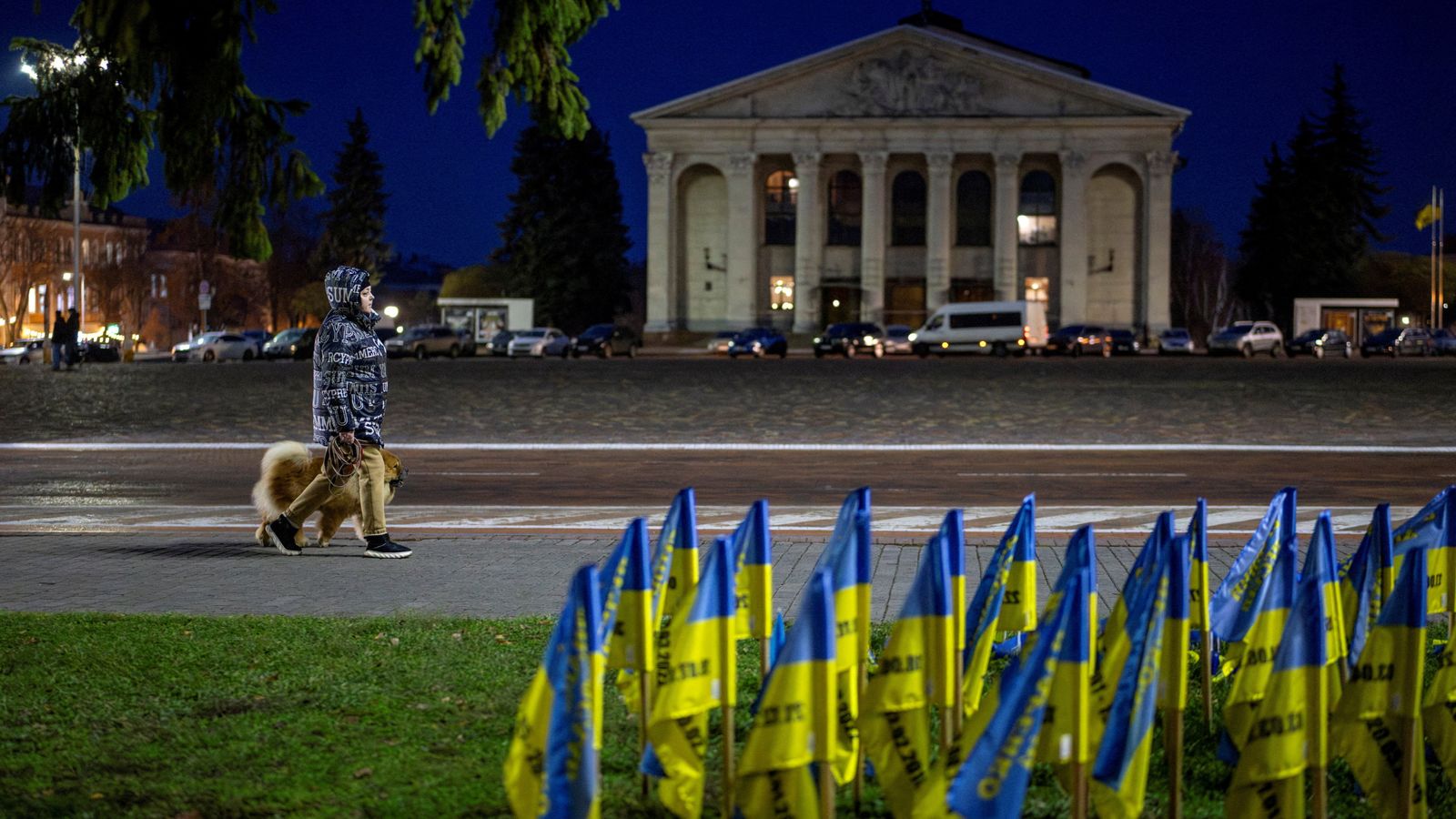
Russian state channels and the Kremlin have claimed capture or 'liberation' of the eastern city Pokrovsk and reported gains in Vovchansk, assertions not independently verified, while President Putin was briefed at a command post. Diplomatically, US special envoy Steve Witkoff is due in Moscow as Washington expresses cautious optimism about talks, Downing Street signals interest in using frozen Russian assets to support Ukraine, and political fallout in Kyiv includes the resignation of top aide Andrii Yermak after an anti-corruption raid; these developments raise short-term geopolitical risk and potential market sensitivity in defense and sanctions-exposed sectors.
Market structure: Escalation or protracted fighting benefits Western defense primes (Lockheed LMT, Raytheon RTX, Northrop NOC) and commodity exporters (Brent, wheat) via persistent demand for munitions and energy; expect incremental revenue tailwinds of ~5–15% for major defense contractors over 6–12 months and a 5–12% upside to oil on renewed supply risk. Losers are Europe-exposed banks (UniCredit UCG.MI, Raiffeisen RBI.VI) and insurers with Russian exposure, plus EM sovereigns; credit spreads should widen 25–75bps in a negative scenario. FX and safe-haven flows will push USD and gold higher on risk-off moves while RUB stays volatile.
Risk assessment: Tail risks include NATO direct engagement (<10% probability, catastrophic market shock), rapid negotiated ceasefire (~25% within 30 days) causing a 10–25% de-rating in defense stocks, and legal/political fights over frozen Russian assets that could re-price sovereign-risk premiums. Near-term (days) volatility will spike around the Witkoff visit and official statements; medium-term (weeks–months) outcomes hinge on U.S. political support and Ukrainian governance (Yermak resignation). Hidden dependencies: weapon transfer chains through NATO members create supply bottlenecks for artillery/ammo components and semicustom electronics.
Trade implications: Favor a tactical overweight to defense equities (2–3% portfolio weight in a basket: LMT, RTX, NOC) with 6–12 month horizon and 8% stop-loss; implement pair trades by shorting UCG.MI (1.5%) vs long LMT (2.5%) to play security premium vs European bank stress. Use options: buy 3-month Brent call spread (buy $85 / sell $105) size 1% notional to capture oil upside; buy 3-month puts (10–15% OTM) on a Europe-bank ETF or UCG.MI sized 1% as tail hedges. Rotate into reconstruction/EM Europe infra names only if formal, funded settlement emerges (monitor 30–90 day funding cadence).
Contrarian angles: Consensus may overpay defense upside if a diplomatic deal materializes quickly—histor analogue 2015–2016 saw defense rerate reversal of 10–20% after de‑escalation. Using frozen Russian assets for reconstruction could compress expected Western fiscal support to arms suppliers, creating mispricings in defense OEMs and Europe banks; watch crude breakpoints (> $95/bbl to reinforce buys, <$75 to trim). Key short-term triggers to reassess: public communiqué from Witkoff within 72 hours and any US congressional action on aid in the next 14 days.
AI-powered research, real-time alerts, and portfolio analytics for institutional investors.
Request DemoOverall Sentiment
moderately negative
Sentiment Score
-0.30
