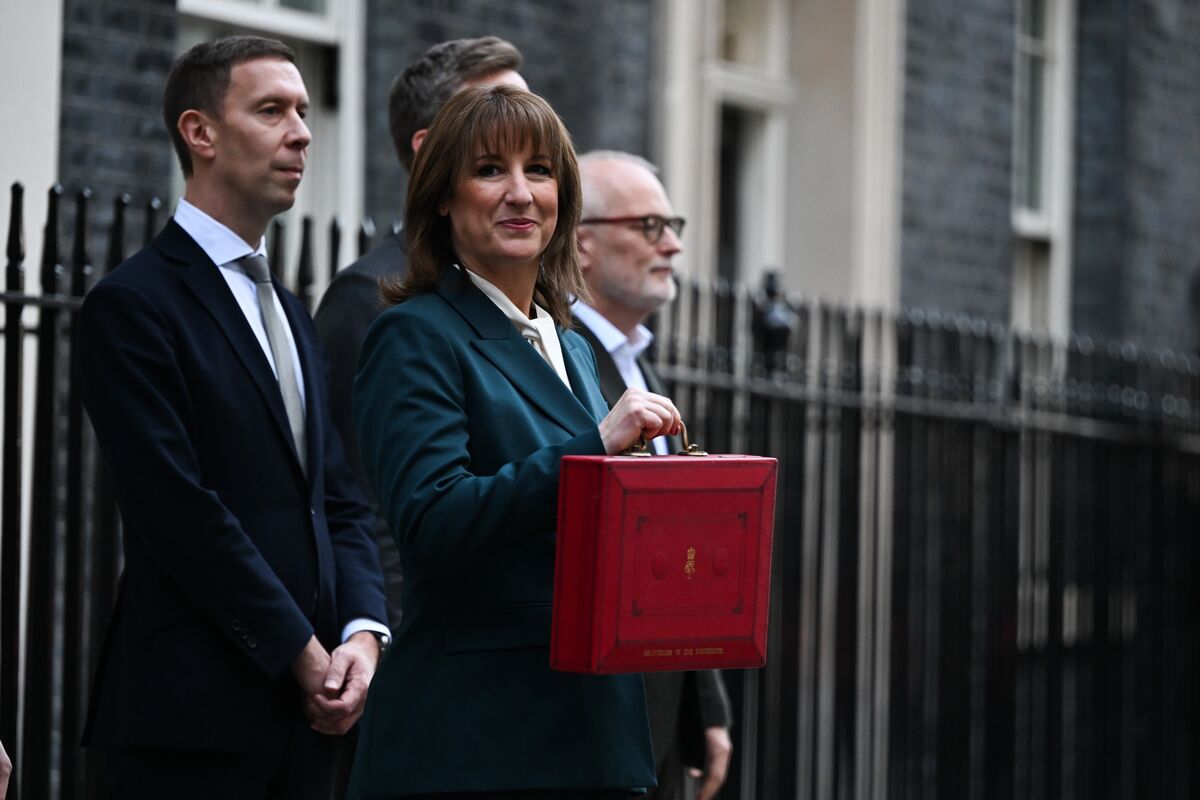
The UK’s Office for Budget Responsibility says it was not responsible for a high-profile tax U-turn that unsettled markets after Chancellor Rachel Reeves had privately learned there was more fiscal room than expected and publicly prepared for a manifesto-breaking income-tax rise in a pre-budget speech at the start of November. Reeves spent over a week advocating a single large tax increase to shore up public finances and calm borrowing concerns, but officials later abandoned that approach for a fragmented, “bits and pieces” budget, a move critics say injected policy uncertainty and shocked investors.
Market structure: The Chancellor’s U-turn increases sovereign supply/risk ambiguity — investors should expect higher volatility and a repricing of term premia, with a plausible 10y Gilt yield move of +20–60bp over 1–3 months if markets demand fiscal credibility. Short-term winners are UK consumer-facing names (retail, leisure) as consumer after‑tax incomes are likely to be relatively stronger versus a large income-tax shock; losers are long-duration assets (gilts, long-duration REITs, housebuilders) and bank net interest margins could be compressed if funding volatility rises.
Risk assessment: Tail risks include a sovereign rating downgrade (estimated 20–30% chance over 6–12 months) which could add 50–150bp to yields, and a confidence shock that amplifies GBP weakness (>3–5% in a severe episode). Near-term (days) expect volatility spikes in gilts and GBP; medium-term (weeks–months) depends on clarity in the Autumn Statement and any OBR commentary; long-term (quarters) depends on whether fiscal credibility is reestablished or structural deficits persist.
Trade implications: Tactical ideas are to short 10y UK Gilt futures or buy OTM calls on gilt yields (buy put spread on long-dated gilt ETF/ETN equivalents) with a 1–3 month horizon, and buy 3-month GBP puts (put spread sized ~0.5–1% NAV) if 10y yields widen >15–20bp. Rotate away from housebuilders/long-duration UK equities (e.g., PSN.L, BDEV.L) and add selective consumer staples/retail longs (TSCO.L, SBRY.L) for 3–6 months; use option overlays to cap downside.
Contrarian angles: Consensus may over-emphasize immediate gilt selling; history (post-2010 UK fiscal scares) shows mean-reversion after political clarity — so short positions must be sized with strict stop-losses and convex hedges. The underpriced outcome is a rebound in sterling and gilts if markets conclude the U-turn reduces fiscal shock risk; size trades to avoid large short-gamma exposure and monitor rating-agency timelines (30–90 days) as key reversal catalysts.
AI-powered research, real-time alerts, and portfolio analytics for institutional investors.
Request DemoOverall Sentiment
moderately negative
Sentiment Score
-0.40
