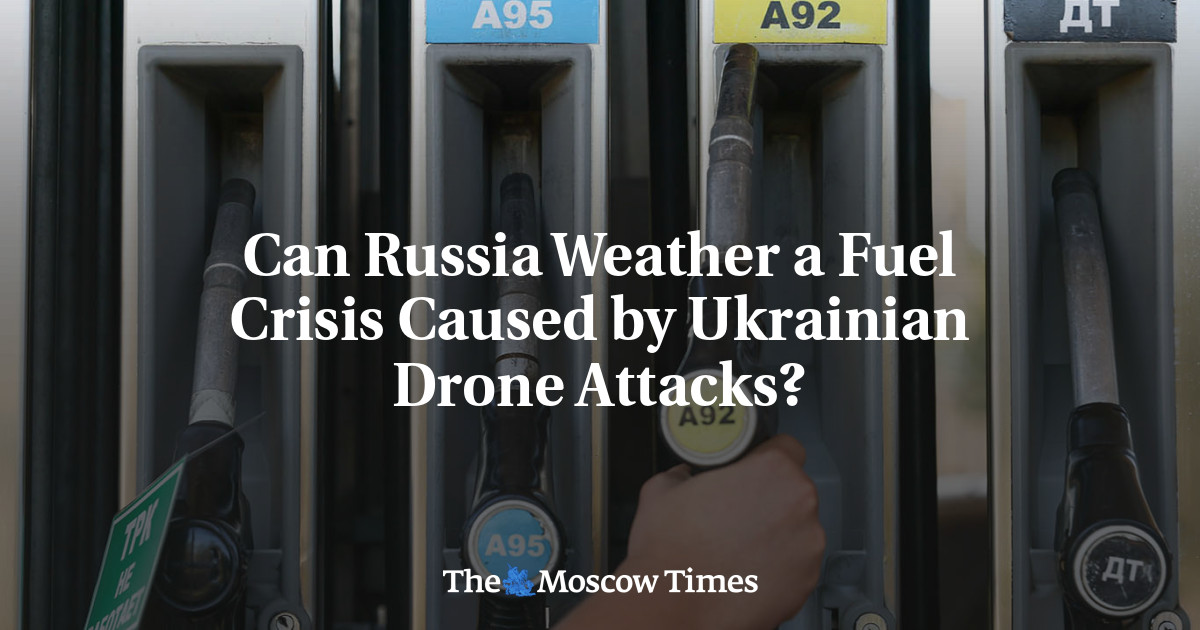
Russia is experiencing a significant gasoline crisis, characterized by rising prices and shortages, primarily driven by intensified Ukrainian drone attacks since August 2025 on key domestic refineries serving critical consumption regions. This situation is exacerbated by seasonal demand peaks (harvest, vacations) and annual refinery maintenance, while government price controls and high interest rates are impeding market rebalancing by discouraging supply increases and stockpiling. While currently manageable due to Russia's overall fuel surpluses and strategic reserves, sustained disruptions could compel Moscow to implement more drastic measures, including potentially abandoning price controls, which would have significant domestic economic and social implications.
Russia is facing a significant gasoline supply crisis driven by a new wave of more effective Ukrainian drone attacks that began in August 2025. Unlike previous campaigns, these attacks involve swarms and repeated strikes, successfully damaging key refineries in the Samara, Ryazan, and Volgograd regions that are crucial for domestic supply. The disruption is compounded by seasonal factors, as the attacks coincide with peak demand from the harvest season and vacation travel, alongside scheduled refinery maintenance. Government policy is exacerbating the imbalance; established price controls are stifling market-based supply responses, while high interest rates have disincentivized the typical seasonal stockpiling of fuel. This has led to a rapid increase in wholesale gasoline prices, which in August surpassed 2023 crisis levels, with the wholesale-to-retail spread narrowing dramatically—for A-92 gasoline, the wholesale price of 53.5 rubles per liter is now approaching the retail price of 59.5 rubles. Despite these pressures, the situation is currently considered manageable. Russia maintains a substantial production surplus, with annual gasoline output exceeding demand by up to 20% and diesel production more than doubling domestic needs. The government is also utilizing state reserves and redirecting fuel from unaffected regions. Consequently, a full-scale crisis impacting the military or broader economy is not yet imminent, but sustained damage to refining capacity could force Moscow to consider more drastic measures, such as lifting price caps or rationing.
AI-powered research, real-time alerts, and portfolio analytics for institutional investors.
Request DemoOverall Sentiment
Mixed
Sentiment Score
-0.25
