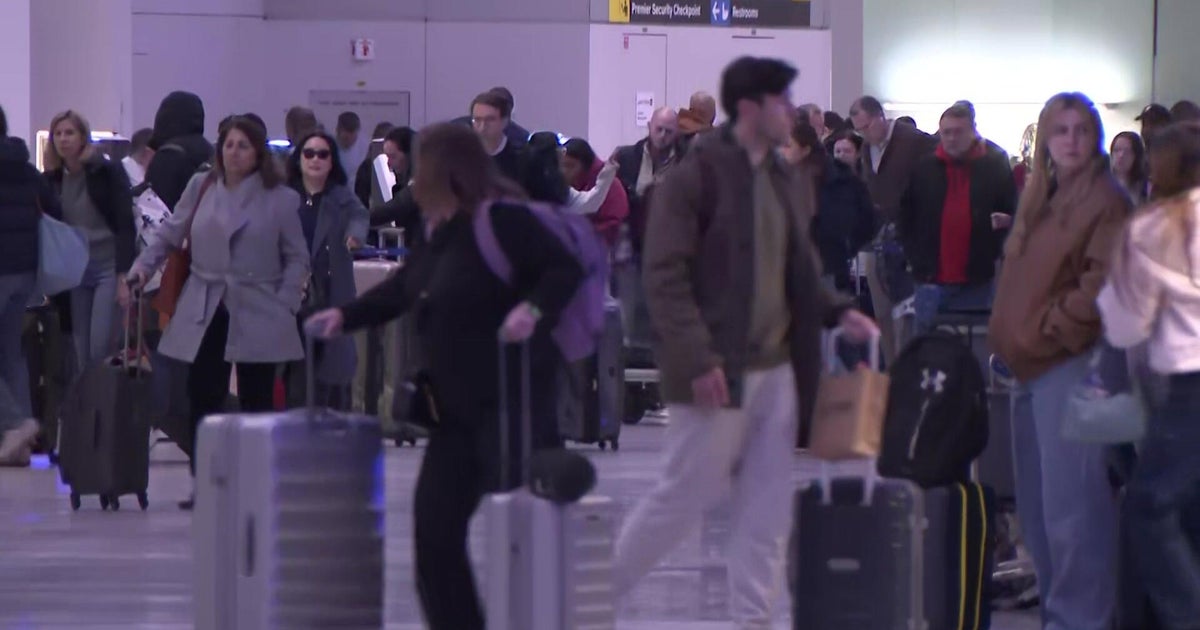
Tri-State airports, led by Newark Liberty, are entering a heavy holiday travel period with airlines braced for peak days immediately before Christmas; AAA projects more than 8 million domestic flyers over the next few days, up 2.3% year-over-year. Carriers say they are staffing up, deploying larger aircraft and relying on mobile apps, but expect fewer backup flights and heightened weather-related risk that could produce cascading delays and limited operational flexibility.
Market structure: Holiday demand is firm (AAA: +2.3% YOY to ~8M domestic flyers over the next few days) so incumbents with scale (UAL, DAL, AAL) get pricing leverage on full flights and ancillary revenue. Airports, ground-handling, and travel-app vendors win from volume; ultra-low-cost carriers (LUV) and regional operators with thin schedules/less spare aircraft are vulnerable to cascading cancellations because the system now runs with fewer backup flights.
Risk assessment: Immediate (days) risk is weather-driven operational disruption; a single major storm at a national hub can cascade into a 5–15% short-term revenue hit for an affected carrier and a multi-week reputational impact. Short-term (weeks–months) risks include higher jet-fuel volatility and customer compensation costs; long-term (quarters–years) hinges on labor stability, crew scheduling rules and whether carriers rebuild spare capacity — a structural decision that will change unit costs.
Trade implications: Favor scale and tech-enabled incumbents but hedge operational tail risk. Expect near-term implied vol spikes around weather windows — use short-dated options to monetize that; use 2–3 month directional structures to express medium-term demand recovery while limiting downside. Monitor jet-fuel crack spreads and OAG/FAA disruption reports as catalysts to reweight positions.
Contrarian angles: The consensus underprices nonlinear cascade risk — full planes + fewer spares amplify downside gap risk on bad-weather days, so plain longs without hedges are exposed to rare but material drawdowns. Historical parallels (post-2017 winter storms) show share-price gaps that often recover in 4–12 weeks; that creates mispriced option premium opportunities for disciplined sellers and entry points for patient buyers.
AI-powered research, real-time alerts, and portfolio analytics for institutional investors.
Request DemoOverall Sentiment
neutral
Sentiment Score
0.00
Ticker Sentiment
