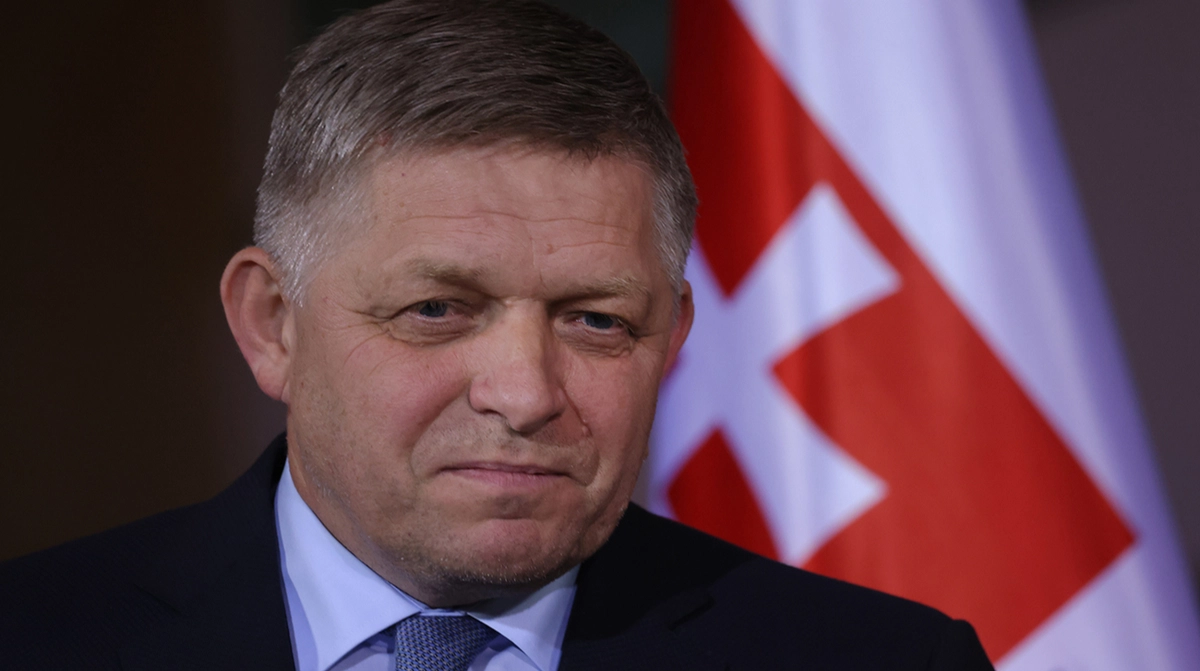
Slovak PM Robert Fico urged the EU to immediately resume dialogue with Russia and lift sanctions on Russian gas and oil, echoing Hungary's call to restore flows via the Druzhba pipeline and criticizing the European Commission. If these political pressures persist they could increase the probability of policy shifts that ease European gas/oil supply constraints and lower regional energy prices, but they also raise intra-EU political tensions and near-term uncertainty for energy markets.
Political leverage by fringe EU members elevates the probability of tactical carve-outs from the collective Russian-energy stance, which would compress the current Europe gas risk premium quickly if implemented. Restoring pipeline flows (even partially) would re-route 5–15 bcm/year of demand away from spot LNG markets in the 3–9 month window, tightening arbitrage economics for US and Qatari cargoes and pushing TTF prompt prices down an estimated 20–30% versus current stressed levels.
A fragmented sanctions stance creates a two-speed Europe: countries able to re-access pipeline supply will see sharply lower input-cost volatility while Atlantic-facing exporters and LNG-levered producers face stranded cargos and margin compression. That divergence is a structural reallocation risk for energy-intensive EM and EU corporates and for European banks with concentration in CEE sovereigns—expect cross-asset rerating rather than a uniform commodity move.
Second-order winners are industrials with large gas-feedstock or power exposure (chemicals, fertilizers, glass) and utilities that can arbitrage lower gas into higher power margin capture; losers are LNG exporters and midstream firms whose long-term capex plans assume sustained high continental prices. The operational risk profile remains binary: partial Druzhba restart or sanctions carve-outs can move markets within weeks, but reversals tied to broader geopolitics (Ukraine/Iran) can snap flows back within months, keeping realized volatility elevated.
For portfolio construction, prioritize option-based exposure to capture asymmetric upside from a rapid price dislocation while limiting drawdown if political noise fails to translate into physical flows. Monitor three near-term catalysts: formal EU voting behavior, physical reconnection tests on pipelines, and cargo re-routing announcements from major LNG sellers; each has outsized information value for positioning.
AI-powered research, real-time alerts, and portfolio analytics for institutional investors.
Request DemoOverall Sentiment
mildly negative
Sentiment Score
-0.30
