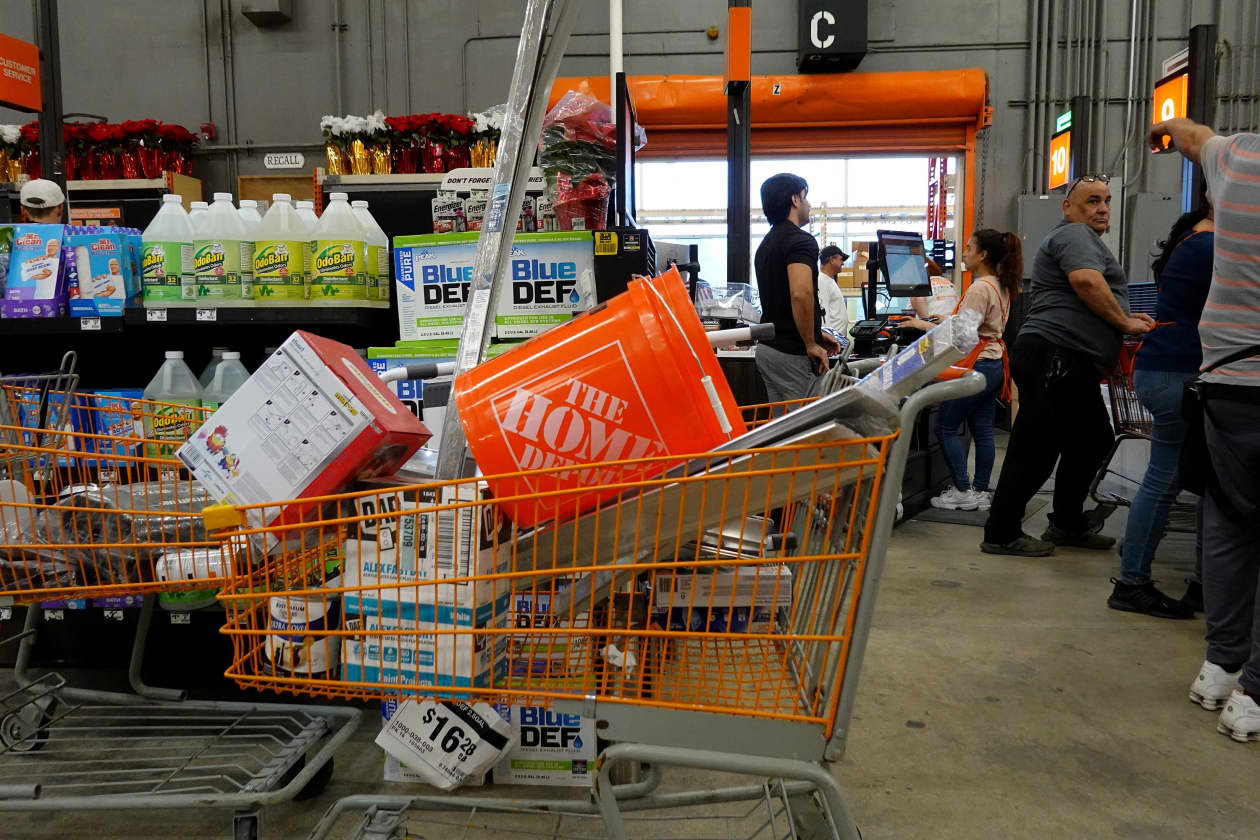
UBS says aging housing stock and older pandemic-era durable goods could drive an extra $1 billion to $2 billion in annual home-improvement spending. The note is constructive for Home Depot and Lowe’s after a weak year, as homeowners eventually face unavoidable repair and replacement demand. The article is an analyst-driven demand outlook rather than a company-specific earnings update.
The setup is less about discretionary demand and more about deferred maintenance becoming non-optional. If repair intensity inflects, the first-order beneficiaries are HD and lowes-like peers, but the bigger second-order winner is the broader ecosystem of contractors, pro-grade brands, and consumables, because urgent repairs skew toward higher-frequency basket items with better margins than big-ticket remodels. That mix shift matters: even modest unit growth can translate into disproportionate EBIT leverage if traffic improves without a matching increase in price competition.
The market may still be underestimating timing. This is not a clean cyclical recovery; it is a backlog release tied to asset age and wear-and-tear, which can produce a stair-step demand profile over 12-24 months rather than a sudden surge. A frozen housing market can actually help the thesis by reducing move-related spending and forcing owners to patch and maintain instead of trade up.
Key risks are macro and financing-related: if unemployment rises or credit tightens, homeowners can continue deferring non-emergency work, pushing the inflection further out. The other reversal is weather normalization and a cooling commodity basket for home goods, which could dilute ticket growth even if traffic improves. In that scenario, the earnings upgrade story would be more about stabilization than acceleration, limiting multiple expansion.
The consensus may be too focused on transaction volume and not enough on the aging-install base interacting with pandemic-era purchases rolling into replacement cycle. If the repair basket is gaining share, margin leverage can surprise even with flat housing turnover. UBS itself is a modest signal here, but the real insight is that a prolonged soft housing market can be bullish for home-improvement retail because repair is the last spend homeowners cut.
AI-powered research, real-time alerts, and portfolio analytics for institutional investors.
Request DemoOverall Sentiment
mildly positive
Sentiment Score
0.25
Ticker Sentiment
