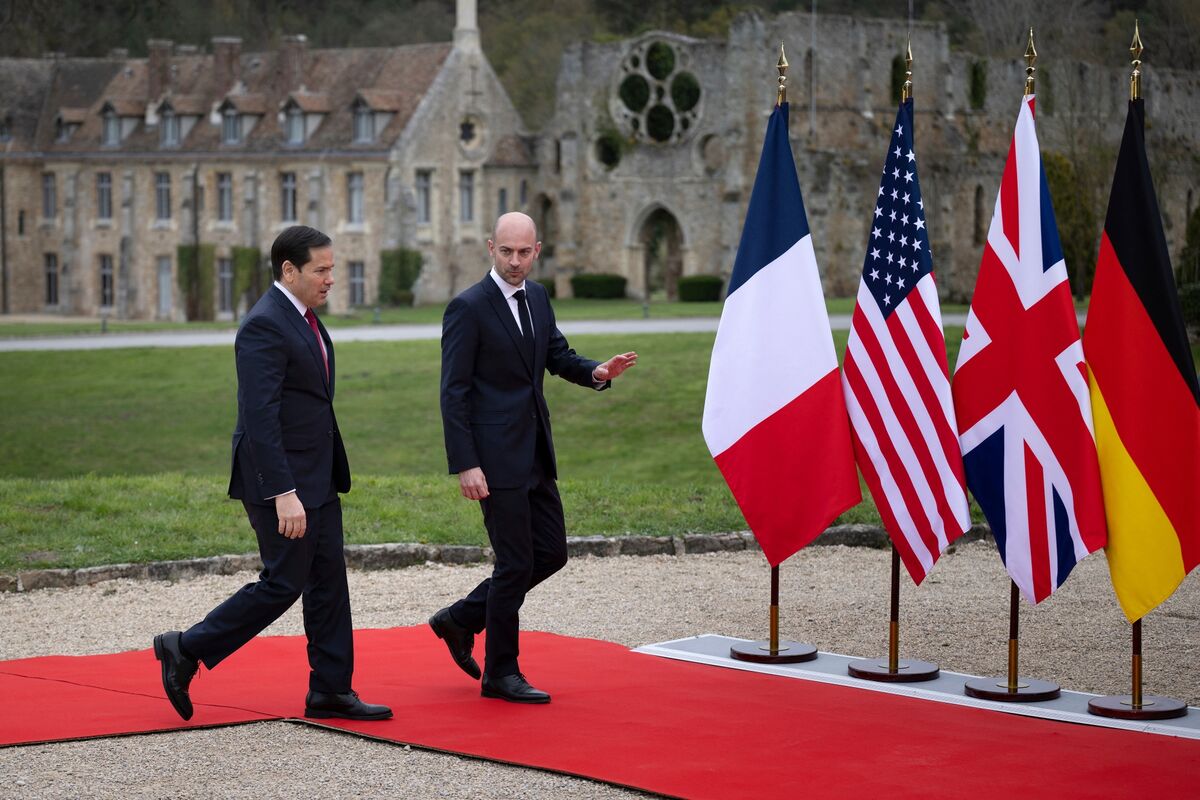
G-7 diplomats publicly clashed over the wars in Iran and Ukraine, with Marco Rubio highlighting US requests for military help in the Persian Gulf and criticizing European responses to Donald Trump’s demands. The spat increases geopolitical uncertainty that could modestly raise risk premia for defense contractors and energy-sensitive assets, but contains no new policy actions and is unlikely to be immediately market-moving.
The recent diplomatic friction increases the probability the US leans toward unilateral posture adjustments in the near term, which tends to create concentrated, short-duration demand for naval logistics, munitions, and expeditionary support. Historically, surge deployments and contingency support translate into a measurable bump in prime contractors’ backlog within 3–12 months and a visible revenue cadence shift for mid-tier suppliers with available capacity.
A second-order supply effect to watch is the pressure on specialized supply chains (radiation-hardened electronics, guided munitions subsystems, composite ship components) — lead-times that are currently months-long could stretch another 25–50% if multiple theaters require replenishment simultaneously, favoring firms with excess domestic capacity or dual-use inventories. Energy-market risk premia also rise asymmetrically: a short, intense bout of Gulf-related incidents would push Brent/WTI volatility and tanker insurance spreads higher for weeks, but a credible European diplomatic accommodation would reverse much of that in 2–8 weeks.
Key catalysts that will move markets are (1) new US deployment orders or procurement notices (days–months), (2) any maritime interdiction or insurance-rate announcements (days), and (3) NATO/EU formal commitments to joint missions or funding increases (months). The primary reversal path is diplomatic burden-sharing or an EU-led non-military solution that contains spillovers — that outcome would compress defence re-order expectations and energy premia rapidly, so position sizing should assume binary outcomes over 1–6 months.
AI-powered research, real-time alerts, and portfolio analytics for institutional investors.
Request DemoOverall Sentiment
neutral
Sentiment Score
0.00
