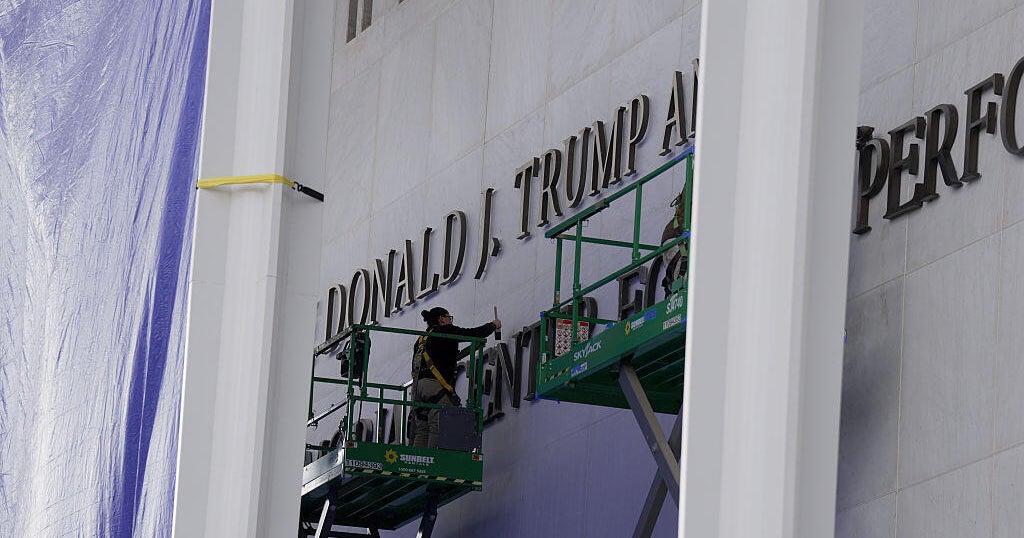
A long-running Kennedy Center Christmas Eve jazz concert was canceled after musician Chuck Redd objected to the White House-directed renaming of the facility to the "Trump-Kennedy Center," a move that was publicly reflected on the building facade. The renaming—approved by the board appointed under President Trump and defended by center president Richard Grenell—has drawn legal challenges and condemnation from congressional Democrats and some members of the Kennedy family who say a 1960s law forbids altering the memorial without Congress. The dispute has prompted multiple artist cancellations and raises governance, reputational and legal risk for the institution, with potential congressional or court action ahead.
Market structure: This is a reputational/governance shock concentrated in cultural institutions but with outsized asymmetric spillovers to publicly listed live-entertainment and venue owners (e.g., LYV, MSGE). Expect a small reallocation of consumer attention and corporate sponsorship dollars toward streaming/at-home media (NFLX, DIS) in the next 1–3 months; a sustained artist boycott could reduce incremental ticket revenue for promoters by an estimated 3–7% over a quarter. Competitive dynamics favor large vertically integrated streaming platforms that can absorb content displacement; smaller promoters/venues with tight margins see pricing power erode.
Risk assessment: Tail risks include escalation to congressional action cutting funding or forcing governance changes (probability <10% but high impact on sector sponsorship flows) and protracted litigation (30–180 days) that keeps headlines active. Immediate risk (days) is headline-driven volatility and sponsorship announcements; medium-term (weeks–months) is revenue pressure from canceled shows; long-term (quarters) is potential donor/sponsor reallocation and stricter governance oversight. Hidden dependencies: corporate advertisers and municipal partners may quietly pause commitments, producing second-order revenue hits of 2–5% to affected venues.
Trade implications: Tactical short exposure to live-entertainment equities and protective options on LYV/MSGE is preferred for a 1–3 month trade; favor modest long exposure to streaming/at-home names (NFLX, DIS) for a 3–6 month time horizon. Use defined-risk options (put spreads) to monetize headline volatility and pair trades (long DIS or NFLX vs short LYV) to isolate reputational risk. Key catalysts: court rulings, sponsor withdrawal announcements, and any congressional action within 30–90 days will materially reprice positions.
Contrarian angle: Consensus may overstate persistence — historical artist boycotts typically fade within 30–90 days absent broader political contagion, creating a potential 5–15% mean-reversion upside in live-event stocks if legal resolution favors the status quo. Therefore size shorts conservatively and keep dry-powder to add on >10% drawdowns; conversely, a rapid settlement reversing the rename would trigger short-cover rallies within days.
AI-powered research, real-time alerts, and portfolio analytics for institutional investors.
Request DemoOverall Sentiment
moderately negative
Sentiment Score
-0.35
