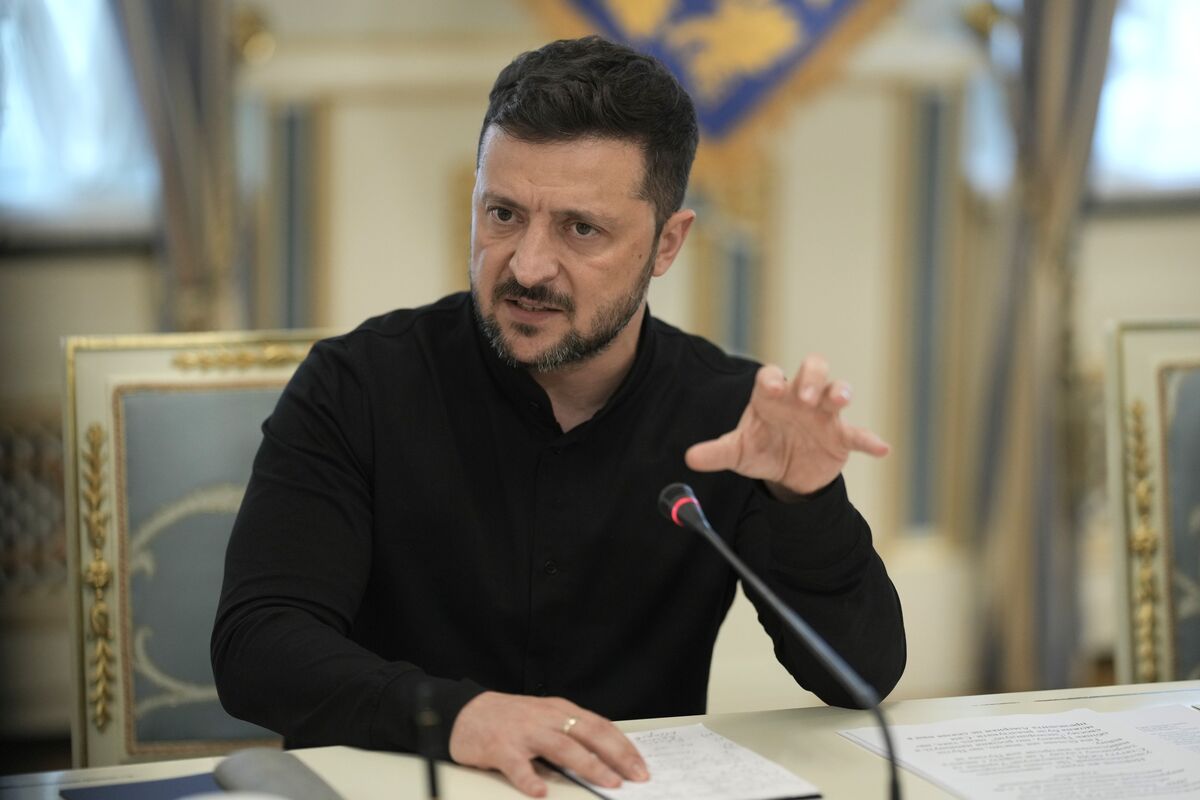
Ukrainian President Volodymyr Zelenskiy has declared Ukraine will not cede the Donbas region, including Donetsk and Luhansk, to Russia, directly rejecting Vladimir Putin's key demand for a ceasefire and peace negotiations. This firm position, articulated ahead of upcoming US-Russia talks, highlights the persistent geopolitical deadlock and Zelenskiy's insistence on Kyiv's direct involvement in any discussions, signaling a prolonged conflict without a clear path to de-escalation.
Ukrainian President Volodymyr Zelenskiy's categorical refusal to cede the Donbas region represents a significant hardening of Kyiv's negotiating stance, directly rejecting a core precondition from Russia for a ceasefire. This declaration, made ahead of US-Russia talks, signals a diplomatic impasse and diminishes the probability of a near-term de-escalation. The associated data signals, including a "strongly negative" sentiment score (-0.6) and a high market impact score (0.6), reflect investor perception that this development prolongs the conflict. A protracted war sustains uncertainty and upward price pressure on key global commodities, notably energy and agricultural products, and maintains elevated geopolitical risk premiums across asset classes. Zelenskiy's insistence on direct inclusion in high-level talks further complicates the path to a resolution, suggesting that any peace accord remains distant.
AI-powered research, real-time alerts, and portfolio analytics for institutional investors.
Request DemoOverall Sentiment
strongly negative
Sentiment Score
-0.60
