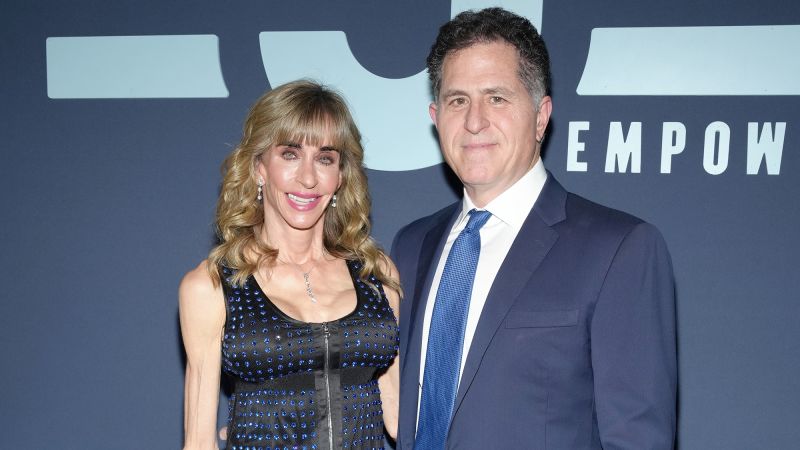
Michael and Susan Dell pledged $6.25 billion to seed investment accounts for at least 25 million U.S. children by funding $250 deposits for eligible kids born before the Treasury's $1,000 government seed window (children born Jan 1, 2025–Dec 31, 2028 receive $1,000 from the Treasury). The “Trump Accounts,” enacted under the One Big Beautiful Bill Act and launching for sign-ups July 4, 2026, are tax‑deferred, IRA‑style accounts (locked until age 18) that will permit private contributions up to $5,000/year and be invested in mutual/index funds tracking the S&P 500 or other benchmarks. For investors, the program implies a long‑duration boost to household savings and potential steady inflows into index funds over decades, while carrying policy and political implications given its administration backing and targeted geographic/income focus.
Market structure: Direct winners are custodial/platform providers and large passive managers that will capture default S&P-style flows (think SCHW, BLK, STT; passive ETFs SPY/IVV). Net new seeded equity demand is modest but persistent — $6.25bn private + potential $10–20bn+ of federal seeding and recurring private contributions over 4–8 years concentrates incremental demand into large-cap US indices, slightly improving pricing power for core ETFs and lowering search for retail liquidity. Losers: niche 529/municipal-education product distributors and regional banks that rely on small-balance custodial deposits may see relative outflows or fee compression.
Risk assessment: Tail risks include a policy reversal or successful litigation within 6–24 months, operational/custodial rollout failures, or a market drawdown that crystallizes losses before accounts mature. Near-term (days–months) market impact is immaterial; short-term (3–12 months) depends on which firms win administration contracts; long-term (5–20 years) compounding creates durable AUM and fee streams. Hidden dependency: uptake rate and employer contribution behavior — if uptake <25% the economics are 50–75% weaker than headline math.
Trade implications: Tactical, low-conviction allocation to ETF/ custody winners: establish 1–3% long positions in BLK and SCHW (or IVZ/STT) with target holding 12–36 months; buy core S&P ETFs (IVV) opportunistically on pullbacks as structural marginal demand supports multiples. Pair trade: long BLK (+1.5%) / short TROW or small-cap active manager (-1.5%) to capture fee-share shift. Options: sell covered calls or sell put spreads on BLK to earn premium while acquiring shares; buy 9–18 month low-cost put protection on SPX if allocating >3% to this theme.
Contrarian angles: Consensus understates political fragility and the program’s concentration risk into mega-cap equities — that could exaggerate outperformance for AAPL/MSFT/GOOG over the next decade while seeding valuation premiums that are vulnerable to mean reversion. Historical parallel: the UK Child Trust Fund showed high policy reversibility; hedge with 12–36 month downside protection and rotate into custodians only after Treasury contract awards (watch RFPs in next 30–90 days).
AI-powered research, real-time alerts, and portfolio analytics for institutional investors.
Request DemoOverall Sentiment
mildly positive
Sentiment Score
0.35
Ticker Sentiment
