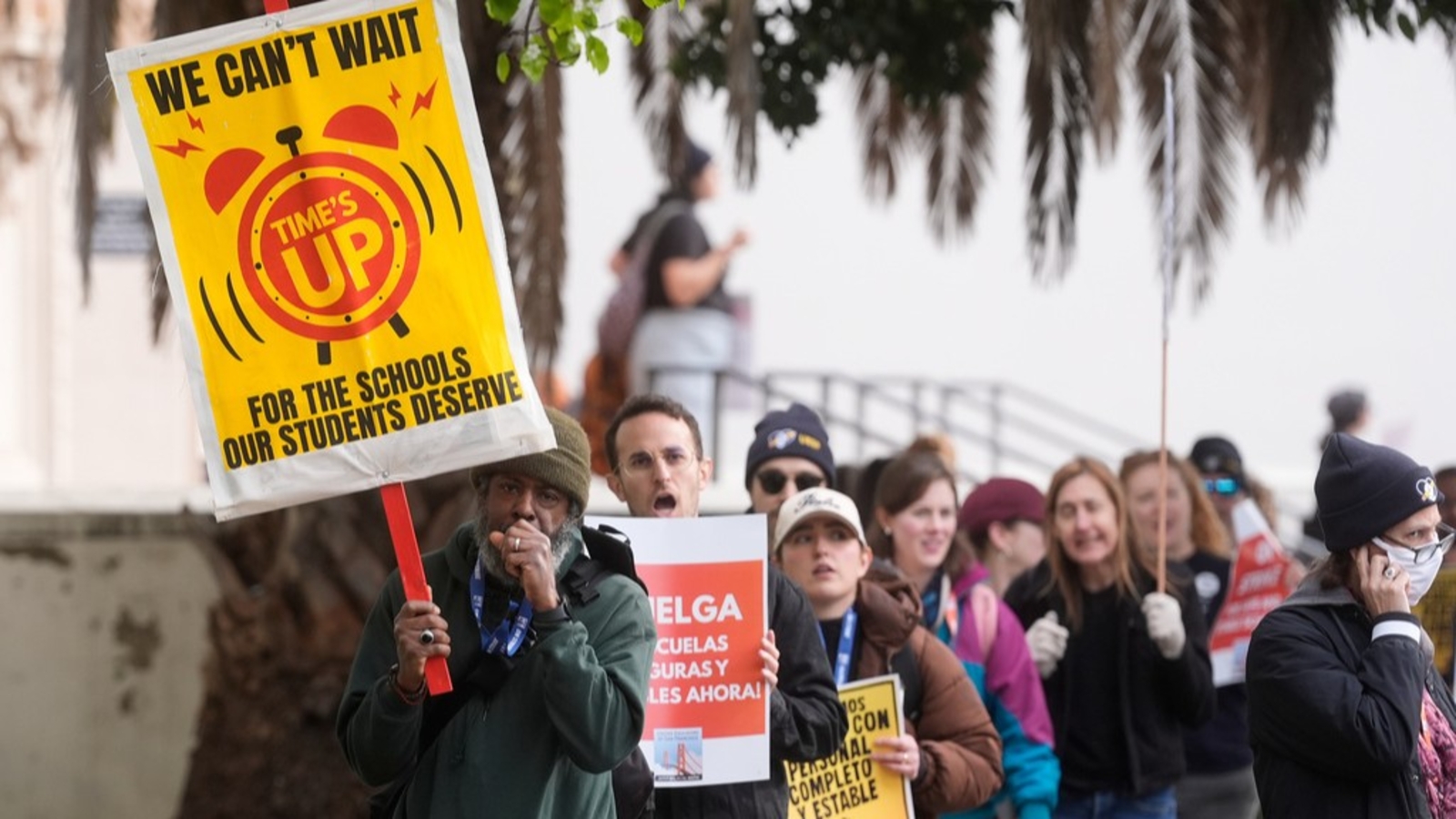
San Francisco Unified School District faces a multi-day teachers strike with roughly 6,000 teachers off the job, about 50,000 students affected and 120 schools closed; the district estimates revenue losses of $7–$10 million per day. Negotiations center on wages (union sought 9% over two years; district offered various proposals including 6% for certificate staff and a 10% two-year package for support staff, with a counteroffer of 6% over three years) and fully funded family health care and special-education staffing, while the district operates under state oversight with a reported $100 million deficit. The labor action increases near-term fiscal strain on the district and could pressure local budgets and services if prolonged, with limited but tangible downside risk to municipal finances and community economic activity.
Market structure: A multi-day SFUSD strike creates clear, concentrated winners and losers—after‑school/childcare operators (e.g., Bright Horizons, BFAM) and 3rd‑party tutoring platforms (Chegg, CHGG) see near‑term demand spikes, while SFUSD itself and holders of California/school district muni debt face acute cash stress. The district is losing $7–$10M/day with a stated $100M deficit; two weeks of strike (~$98–$140M loss) would materially encroach on fiscal cushions and increase default/repayment risk for specific local issuers.
Risk assessment: Immediate risk (days) is service disruption and localized cash flow pressure; short term (weeks–months) raises muni credit spreads for Bay Area school bonds and could force state interventions or budget cuts; long term (quarters–years) higher labor cost baselines (wage + fully funded family health care) will structurally increase school operating expenses. Tail risk: a protracted strike >2 weeks triggers rating agency review or state takeover of SFUSD, widening CA muni spreads by 50–150bp in a stress scenario.
Trade implications: Shift away from concentrated CA/school‑district munis into short‑duration Treasuries (BIL/SHV) and selectively long childcare/tutoring equities (BFAM, CHGG) for 3–6 month tactical exposure. Use options: buy 3‑month call spreads on BFAM/CHGG to cap premium and buy 3‑month put spreads on high‑yield muni ETF HYD (or reduce HYD weight) to hedge widening spreads; pair trade long BFAM vs short HYD for relative exposure to childcare upside vs muni stress.
Contrarian angle: The market may underprice secular demand for paid childcare/outsourced learning during repeated labor actions—this is a 1–3 month revenue accelerator for incumbent national providers, not a one‑day bump. Conversely, broad muni ETFs mute locality risk; there is an opportunity to short underinsured, uninsured SFUSD-like paper rather than diversified muni indices. Catalyst watch: negotiated settlement within 7 days collapses the move; strike >14 days amplifies muni downside and childcare/tutoring upside.
AI-powered research, real-time alerts, and portfolio analytics for institutional investors.
Request DemoOverall Sentiment
moderately negative
Sentiment Score
-0.35
