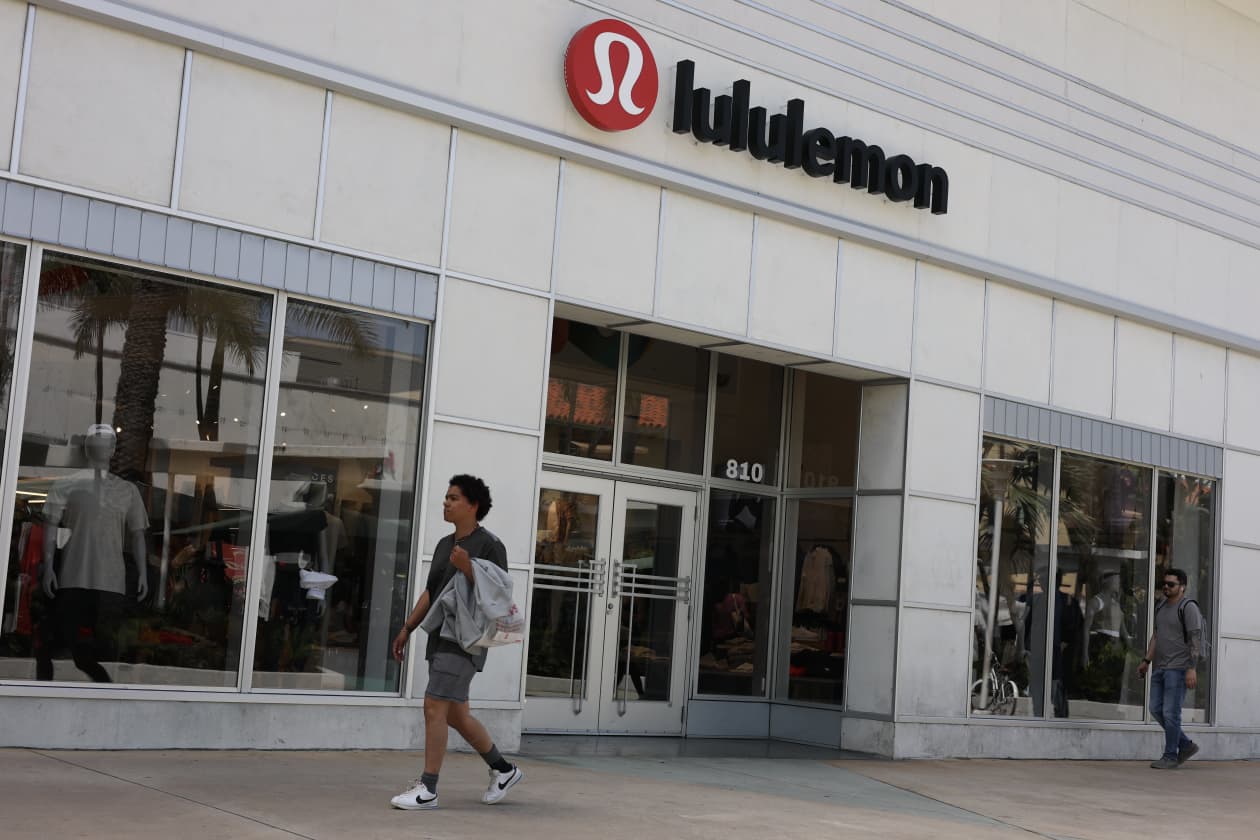
Lululemon publicly pushed back against founder and major shareholder Chip Wilson, saying his views are outdated, he has troubling conflicts of interest, and his three board nominees lack board experience. The dispute highlights ongoing governance pressure at the struggling retailer and may add near-term uncertainty around board control and strategy. The article is primarily about an activist-style shareholder conflict rather than a fundamental financial update.
The immediate market issue is not the founder feud itself, but the governance overhang it creates for a consumer brand already fighting for narrative control. When a founder with meaningful ownership goes public with criticism, it tends to widen the valuation discount because every strategic move gets interpreted through an activism lens: inventory corrections, merchandising resets, and management turnover all become higher-friction and slower to execute. That matters most over the next 1-3 quarters, when apparel names are typically most sensitive to gross margin and sell-through data.
The second-order effect is that LULU’s competitors can benefit from distraction without needing to “beat” LULU on product. In premium athletic wear, share shifts often come from allocation and consumer confidence, so even a modest slowdown in LULU’s brand heat can redirect demand to comparable full-price operators and off-price channels. If the board is forced into defensive mode, capex and innovation cadence can also slip, which is a bigger multi-year risk than any single quarter’s earnings miss.
The contrarian read is that public conflict can become a catalyst if it forces governance cleanup or accelerates a strategic refresh. The market is usually too quick to price activism as purely negative; in consumer, a sharper board and a clearer operating plan can re-rate the stock if execution stabilizes. But that requires visible proof fast — otherwise the “conflicted founder” story compounds with already weak fundamentals and keeps multiple compression in place.
Near term, the setup favors using any bounce to lean short or express the view through puts rather than naked stock, because headline risk can still create sharp squeezes. The trade becomes much more attractive if management guidance implies another 1-2 quarters of margin pressure or if the board fight escalates, since that would extend the de-rating window from days into months.
AI-powered research, real-time alerts, and portfolio analytics for institutional investors.
Request DemoOverall Sentiment
mildly negative
Sentiment Score
-0.25
Ticker Sentiment
