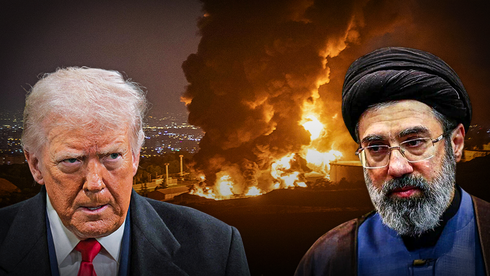
President Trump gave Iran 48 hours to reopen the Strait of Hormuz or face "severe consequences," including potential U.S. strikes on Iranian infrastructure. The Strait carries roughly one-fifth of global oil supply, and disruptions have already pushed energy prices higher and raised economic uncertainty. A failure to comply would be a significant geopolitical shock likely to raise oil risk premia and trigger risk-off moves across markets.
The threat of kinetic action around the Strait of Hormuz sharply raises the near-term probability of meaningful oil-market dislocations; a sustained closure or damage to export infrastructure would plausibly add $10–30/bbl to Brent within weeks due to the ~20% flow concentration through the choke point and limited spare capacity globally. That shock propagates non-linearly — shipping rerouting (Cape of Good Hope) adds ~7–12 days transit and incremental bunker costs that widen refining feedstock differentials, advantaging US inland heavy crude producers relative to import-dependent coastal refiners. Marine insurance and freight rates will spike immediately, creating a 2–6x uplift in spot tanker/day rates for product and crude tankers and a durable revenue tail for owners with time-charter exposure.
Policy levers that can blunt the move are visible and time-bound: coordinated SPR releases, Saudi/OPEC+ incremental barrels, or immediate diplomatic de-escalation can shave $5–15/bbl off peak moves within 2–8 weeks; conversely, targeted strikes on Iranian power or export infrastructure create a multi-quarter disruption scenario with higher tail risk. Secondary effects include accelerated energy subsidy pressures in EM imports (widening fiscal deficits) and renewed political momentum for LNG/strategic storage investments in Europe and Asia over 12–36 months. Markets will price big-ticket uncertainty in volatility instruments first — expect VIX-like flows into energy vol products and cross-asset risk-off into gold and defensive sectors.
Tradeable asymmetries exist between owners of physical freight capacity, integrated producers, and consumer cyclicals exposed to fuel costs. Tanker equities and short-dated energy vol offer high convexity to a shipping chokepoint shock, while integrated majors provide lower-beta exposure with optionality from higher downstream margins over months. The most likely reversals are policy coordination or output backfills from allied producers; position sizing should assume a knee in realized volatility over the initial 48–96 hour window followed by directional follow-through if military action occurs.
AI-powered research, real-time alerts, and portfolio analytics for institutional investors.
Request DemoOverall Sentiment
strongly negative
Sentiment Score
-0.60
