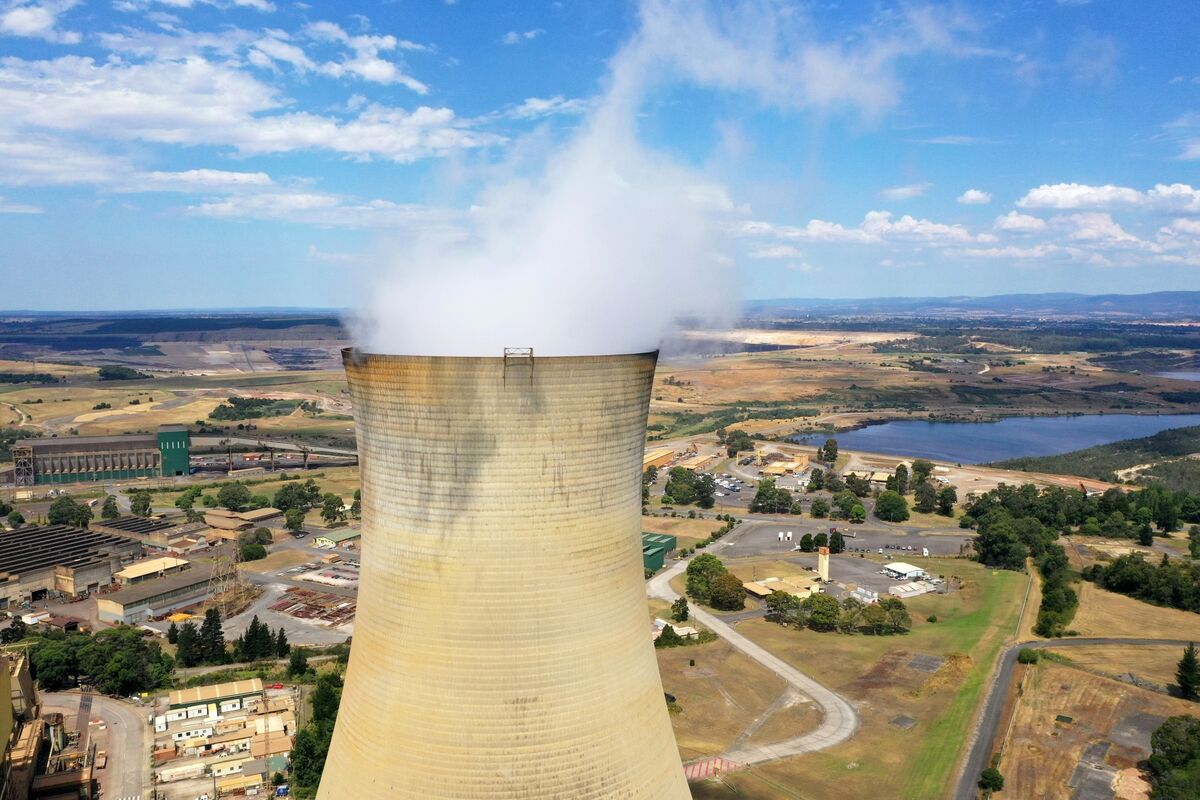
Australia’s government secured passage of a controversial overhaul of environmental protection laws with Greens support even as a new report warns the country is at risk of missing its 2035 emissions targets without deeper pollution cuts. The developments, combined with elevated wildfire risks this summer and the failed bid to host next year’s COP summit, increase policy and political uncertainty—raising downside risk for energy transition investment timelines and potential upward pressure on power bills and energy markets.
Market structure: The new environmental law tightens permitting and raises the cost of new fossil projects while accelerating demand for grid upgrades, storage and utility-scale renewables. Winners: renewables developers, battery/storage providers, transmission owners and green bond issuers who gain pricing power for ancillary services; losers: thermal coal miners and marginal gas generators facing higher compliance costs and politically elevated risk premia. Cross‑asset: expect temporary AUD pressure (-1–3%) on policy uncertainty, mild upward pressure on ACGB yields (10–30bp) as transition capex lifts sovereign and corporate bond issuance; thermal coal pricing is likely to underperform LNG in the next 3–12 months.
Risk assessment: Tail risks include a court challenge or a snap political reversal that stalls projects (low probability, high impact) and a severe wildfire season that triggers insurer solvency stress or large claim spikes (>5–10% industry loss ratio shock). Time horizons: immediate (days–weeks) — wildfire season and insurer volatility; short (3–12 months) — regulatory detail and budget allocations; long (1–5 years) — capital reallocation to meet 2035 targets. Hidden dependencies: transmission bottlenecks and skilled labor shortages can delay renewables buildout and inflate contractor margins.
Trade implications: Direct plays: favor ASX utilities/renewables exposure (e.g., ORG.AX, AGL.AX) and battery/copper miners (IGO.AX, OZL.AX); short marginal coal names (WHC.AX) and selectively underweight LNG exposure (WDS.AX) for 3–12 months. Options: buy 3–9 month calls on ORG.AX or IGO.AX and 3–6 month puts on WHC.AX to asymmetrically capture policy-driven moves. Sector rotation: reduce thermal/coal by ~30% and increase grid/storage/ESG credit by 10–20% over the next 60–120 days.
Contrarian angles: The market may underestimate short-term merchant opportunities — tighter permitting can elevate spot power and ancillary service prices 20–50% in stressed periods, creating windfalls for peaker plants and storage operators before renewables scale. Conversely, coal equities may already price a terminal decline; selective distressed long candidates could pay off if litigation delays force temporary supply tightness. Historical parallels (UK/Canada regulatory overhauls) show 6–12 month rallies in transmission and storage contractors of +20–35% ahead of final project approvals. Unintended consequence: stricter laws can slow project timelines, raising near-term price volatility and creating tradeable dispersion across names.
AI-powered research, real-time alerts, and portfolio analytics for institutional investors.
Request DemoOverall Sentiment
moderately negative
Sentiment Score
-0.40
