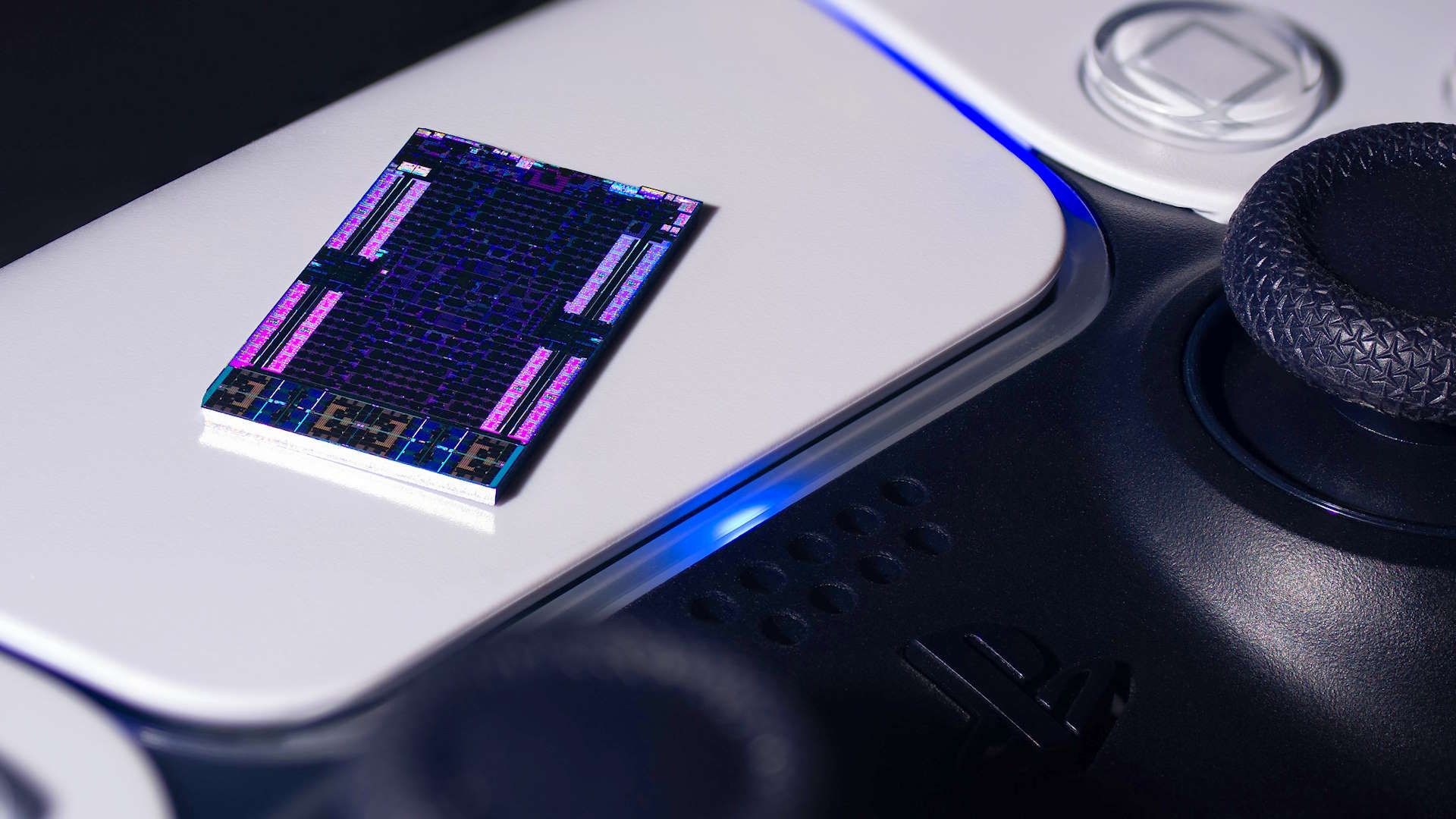
AMD is developing advanced RDNA architecture for Sony's upcoming PlayStation 6, featuring 'gamechanger' innovations like Neural Arrays for AI-driven upscaling, Radiance Cores for enhanced real-time ray tracing to compete with Nvidia, and Universal Compression for improved memory bandwidth efficiency. These developments, which follow Intel's reported exclusion from the PS6 APU competition, are currently in simulation but are expected to significantly bolster AMD's competitive position and business, with the technology likely transitioning into future PC GPUs.
AMD (AMD) is collaborating with Sony (SONY) on advanced RDNA architecture for the upcoming PlayStation 6, introducing three key innovations: Neural Arrays for AI-driven upscaling, Radiance Cores for real-time ray tracing, and Universal Compression for memory bandwidth efficiency. These technologies, currently in simulation, are touted as "gamechangers" by lead system architect Mark Cerny, promising significant performance and efficiency gains. This partnership reinforces AMD's long-standing relationship with Sony, following Intel's (INTC) reported exclusion from the PS6 APU competition due to profit margin disputes.
The introduction of Radiance Cores specifically aims to bridge the performance gap with Nvidia's (NVDA) dedicated RT cores in ray tracing, enhancing AMD's competitive stance in high-fidelity graphics. Universal Compression, by reducing memory bandwidth usage, is expected to enable lower power consumption and higher fidelity assets, creating synergies with Neural Arrays and Radiance Cores. This strategic development positions AMD to potentially gain market share in the high-performance computing and gaming segments.
While developed for the PS6, the article highlights that these AMD innovations are highly likely to transition to PC gaming, potentially within RDNA 5 architecture. This symbiotic relationship between console and PC development suggests that advancements for Sony will benefit AMD's broader GPU business, as seen with prior PS5 technologies. Sony's financial support also provides a stable revenue stream and development funding for AMD, bolstering its R&D capabilities.
AI-powered research, real-time alerts, and portfolio analytics for institutional investors.
Overall Sentiment
strongly positive
Sentiment Score
0.75
Ticker Sentiment
